
Marking the Boat to Find the Sword
刻舟求劍
A man from Chu drops his sword into a river while crossing by boat, but only carves a mark on the boat's side to remember the spot — and discovers, too late, that the boat has drifted far while the sword never moved at all.
The story
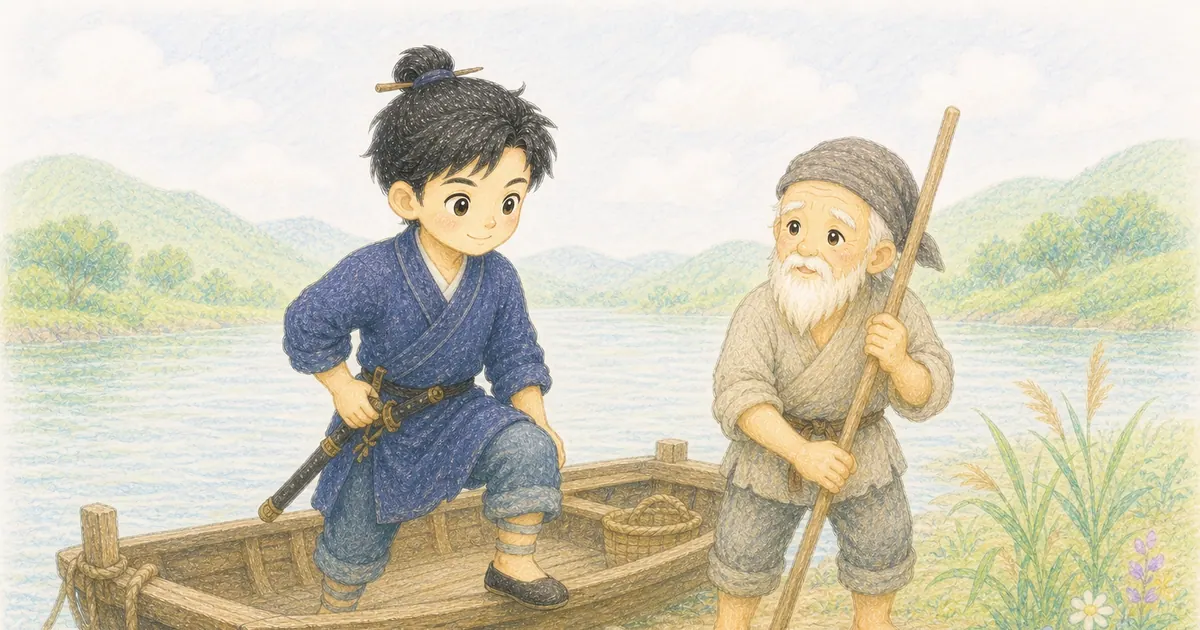
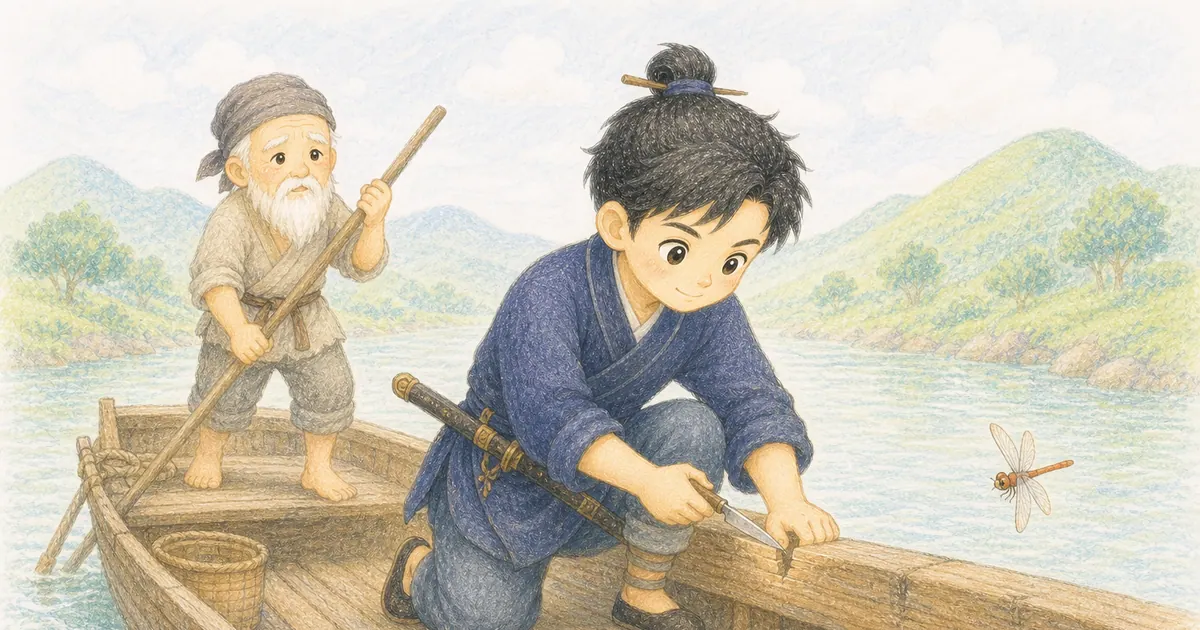
Once, during the Warring States years, in the state of Chu, there lived a young man who always wore a sword at his side. It was a treasured blade passed down from his father, its scabbard trimmed with polished bronze. One fine noon, he boarded a small ferry to cross a wide river and visit a relative on the far bank, while an old boatman stood ready with a long pole.
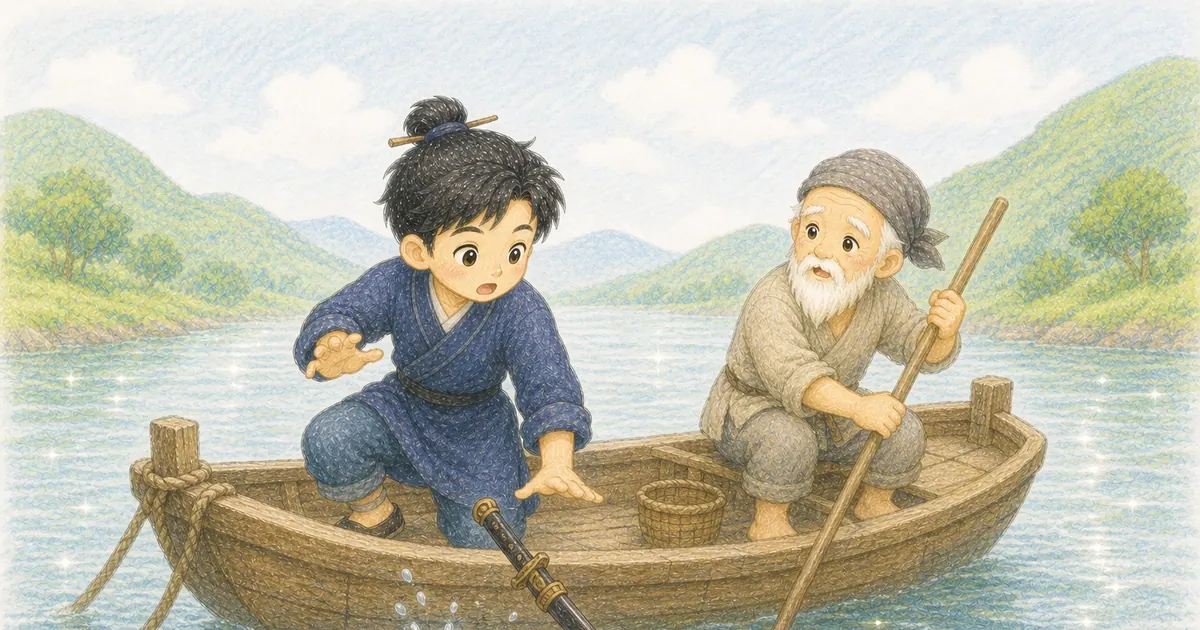
As the boat glided out toward the middle of the river, the water sparkled and the green hills slipped slowly away behind them. In good spirits, the young man drew his sword from its scabbard to show the old boatman how sharp and fine it was. Just then the boat gave a sudden lurch in the current, and the sword slipped from his hand. With a splash, it sank straight down into the river and was gone in an instant.
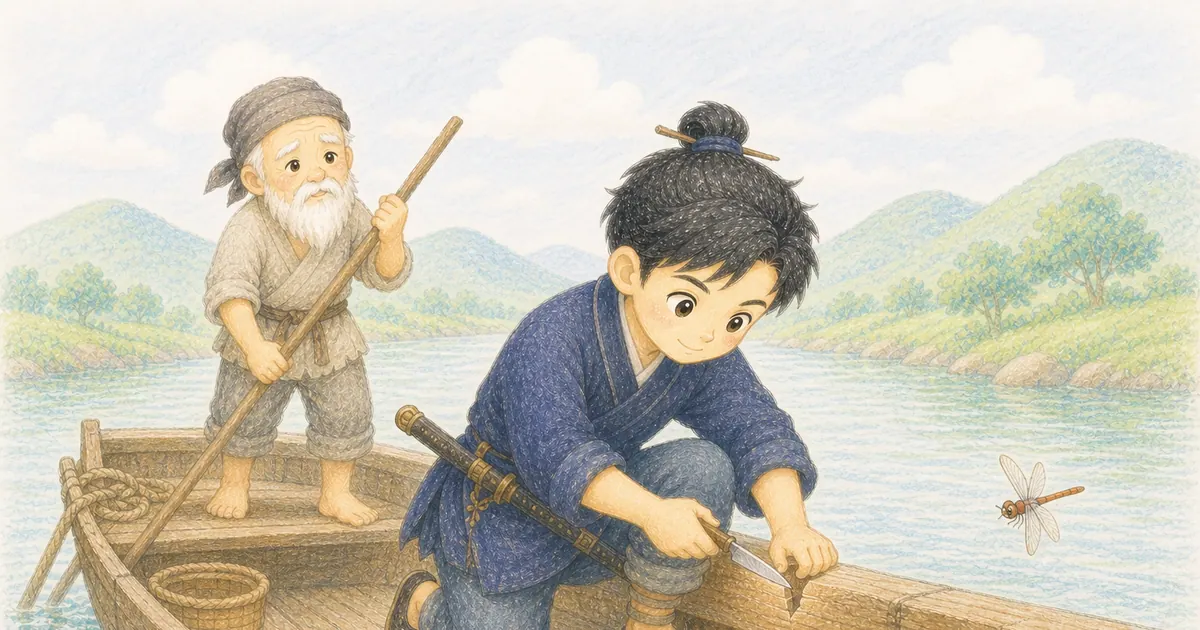
The young man gasped, but he quickly grew calm again. He pulled out a small knife, leaned over the side of the boat right where he had been sitting, and carefully carved a deep notch into the wood. "This is exactly where my sword fell," he said, satisfied. "When we reach the shore, I will dive in right below this mark and find it." And with that, he sat back down, no longer worried at all.
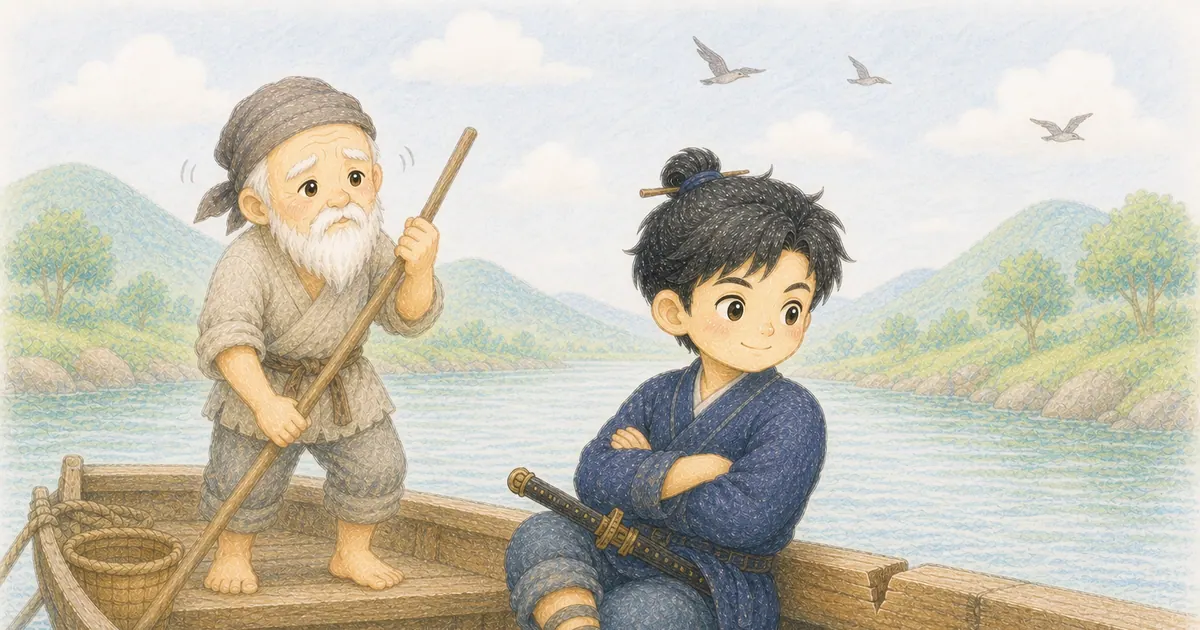
The old boatman shook his head. "The boat keeps moving forward, and so does the river," he said. "The spot where your sword fell is already far behind us. How will a mark on the boat help you now?" But the young man only waved a hand. "The mark is right here, so the sword must be right here too," he said. "There is no mistake about it." The old boatman said nothing more, and only kept poling the boat onward, all the way until evening, when they finally reached the far shore.
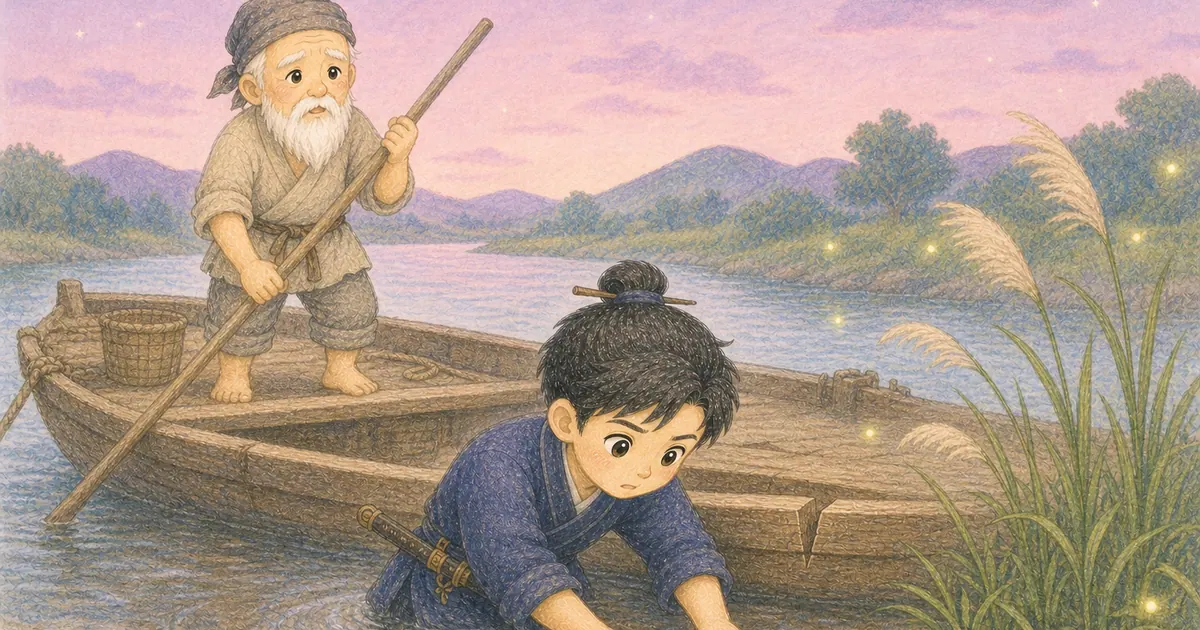
The moment the boat touched land, the young man threw off his outer robe and jumped into the water, straight below his carved mark. He felt and dove, dove and felt, stirring the muddy riverbed again and again, but he could not find the slightest trace of his sword.
He dove down over and over until he was soaked through and out of breath, and at last he gave up and climbed back onto the shore, shivering and staring blankly at the water. The old boatman came over and said gently, "The boat has carried us a long way from the middle of the river to here. But your sword sank straight down the moment it fell, and it never traveled with the boat at all. The mark moved wherever the boat moved — but the sword stayed exactly where it sank."
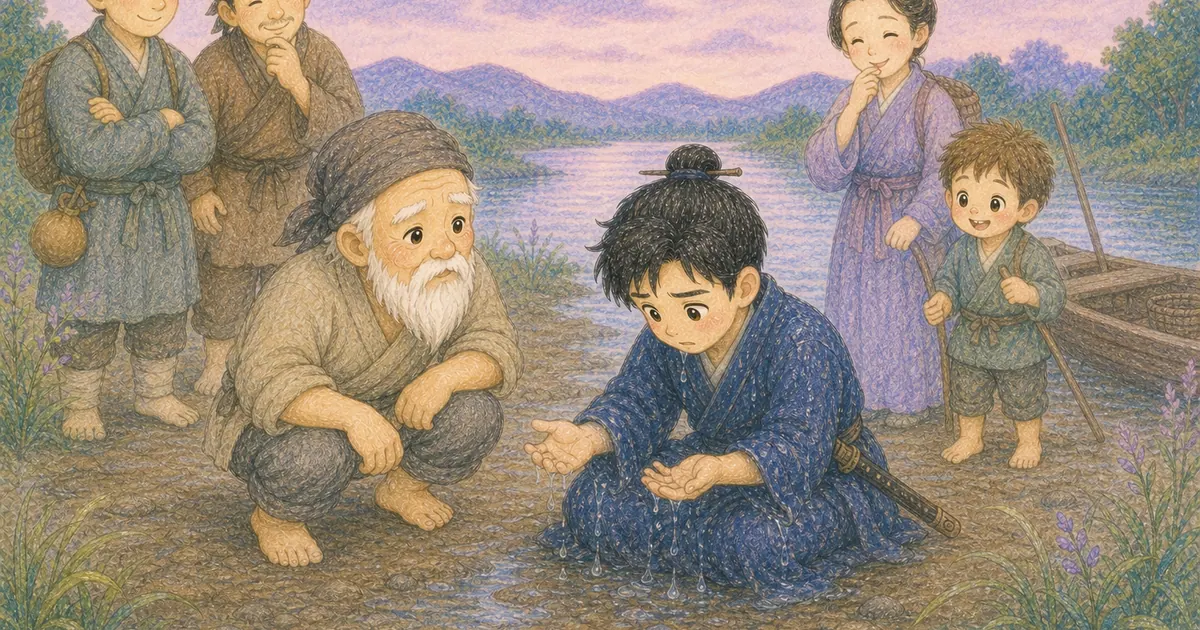
The young man's face turned red with both embarrassment and sudden understanding, and for a long moment he could not say a word. When the other travelers heard what had happened, they could not help laughing and shaking their heads. "The boat has long since sailed on," they said, "and still he searched by an old mark. What a foolish way to look for a sword."
Story takeaway
Clinging to an old mark while the world has already moved on will not bring back what was lost — real wisdom knows when to adapt.
 Talk together
If a method worked before but the situation has changed, would you keep using the old way, or think of something new?
 For grown-ups
Parent note
This story is good to share when a child insists on doing something "the old way" without noticing that things have changed. The young man believed a mark on the boat would lead him back to his sword, but the boat kept moving while the sword had already sunk and stayed in one place. Talk together about how plans and methods that worked for one moment may need to change once the situation is different — and ask if your child remembers a time when something that used to work stopped working.
 Words to learn
- mark: something drawn or cut to remember a spot. e.g. He carved a mark on the side of the boat.
- calm: steady and not panicked, even after something surprising happens. e.g. He grew calm again after the sword fell.
- realize: to suddenly understand something clearly. e.g. He finally realized what the old boatman meant.
 Reading activity
Play a little game called "has it changed?" — say a few lines and see if your child can tell whether the old way still works: "You found your toy in the living room last time, but your little brother moved it to his room — should you still look in the living room?" → No, look in his room instead. "Trash used to be collected at 7pm, but now it's picked up at 8am — should you still put it out at 7pm?" → No, follow the new time. "Your usual way to school is closed for construction today — should you still walk the same way?" → No, take a different route. At the end, wonder together: did the young man in the story ever notice that the boat and the river had already changed?
From the same story series
Read next
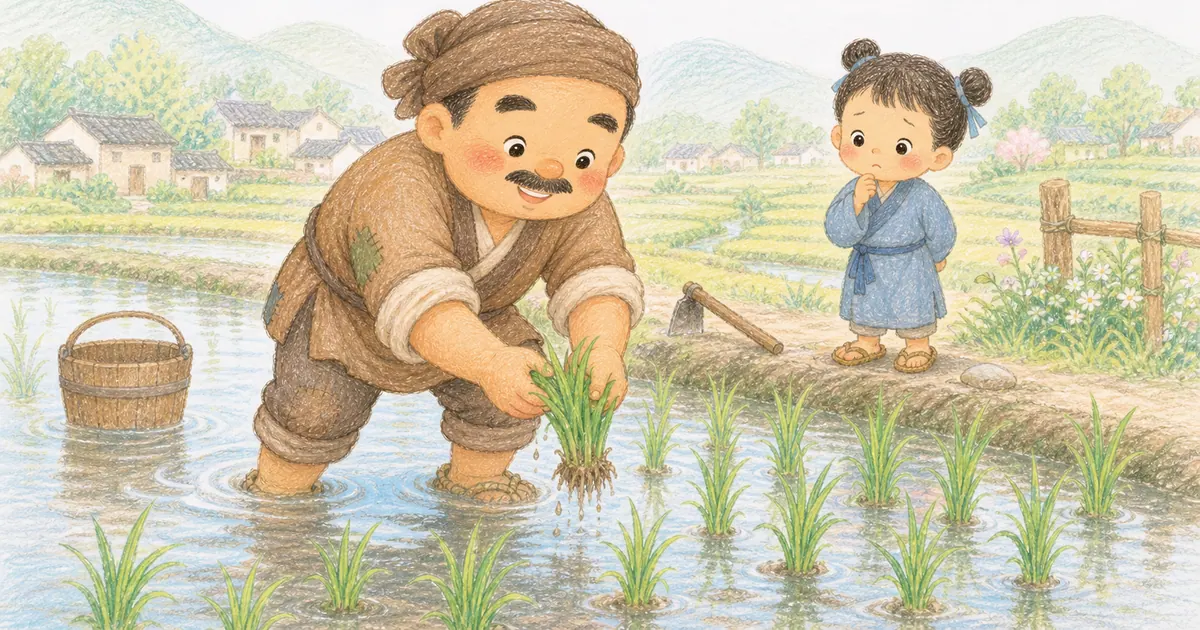
Pulling Up the Seedlings
A farmer in Song wants his seedlings to grow faster, so he pulls them taller by hand, only to learn that hurry without the right method can ruin what is slowly growing.
Read now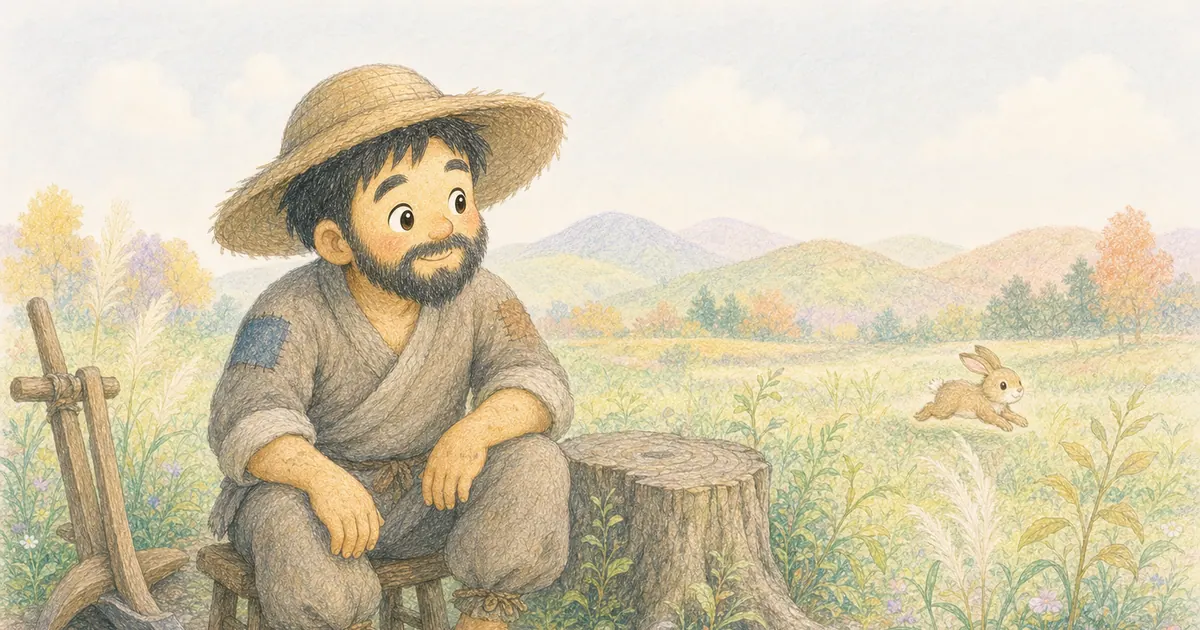
Waiting by the Stump for a Hare
A farmer in Song finds a hare that runs into an old tree stump and dies, and hopes the same luck will happen again — until his field turns to weeds and the whole village laughs.
Read now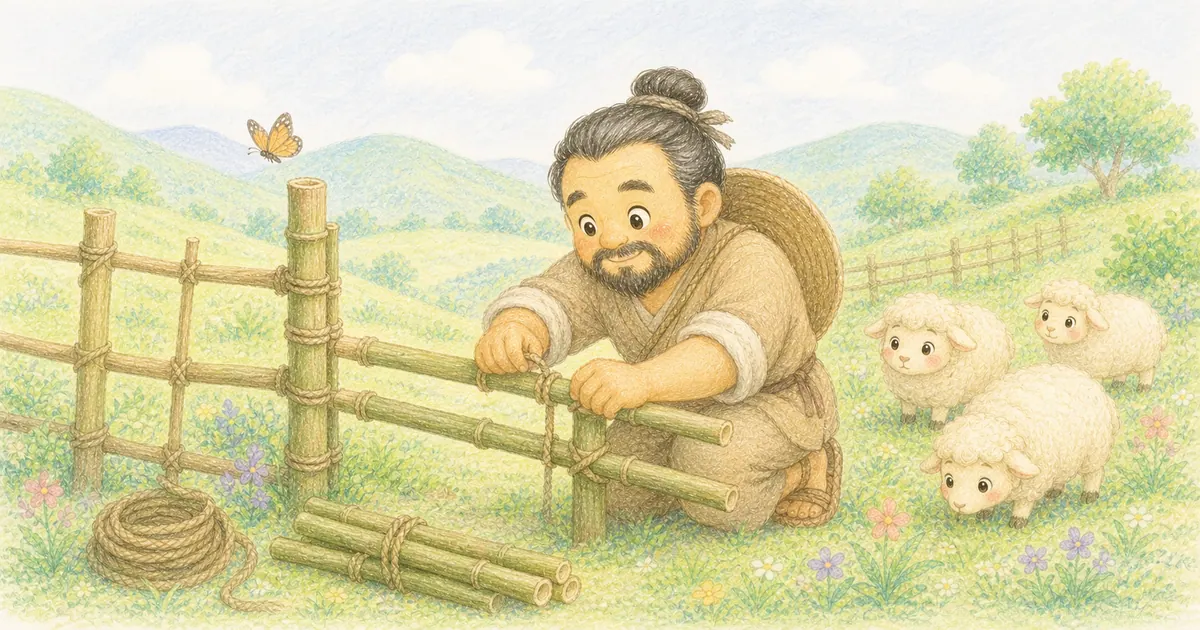
Mending the Sheepfold
A shepherd's sheepfold fence breaks open, and a wolf carries off a sheep in the night; only after losing a second sheep does he finally mend the gap, and his flock is never troubled again.
Read now