
Mending the Sheepfold
亡羊補牢
A shepherd's sheepfold fence breaks open, and a wolf carries off a sheep in the night; only after losing a second sheep does he finally mend the gap, and his flock is never troubled again.
The story
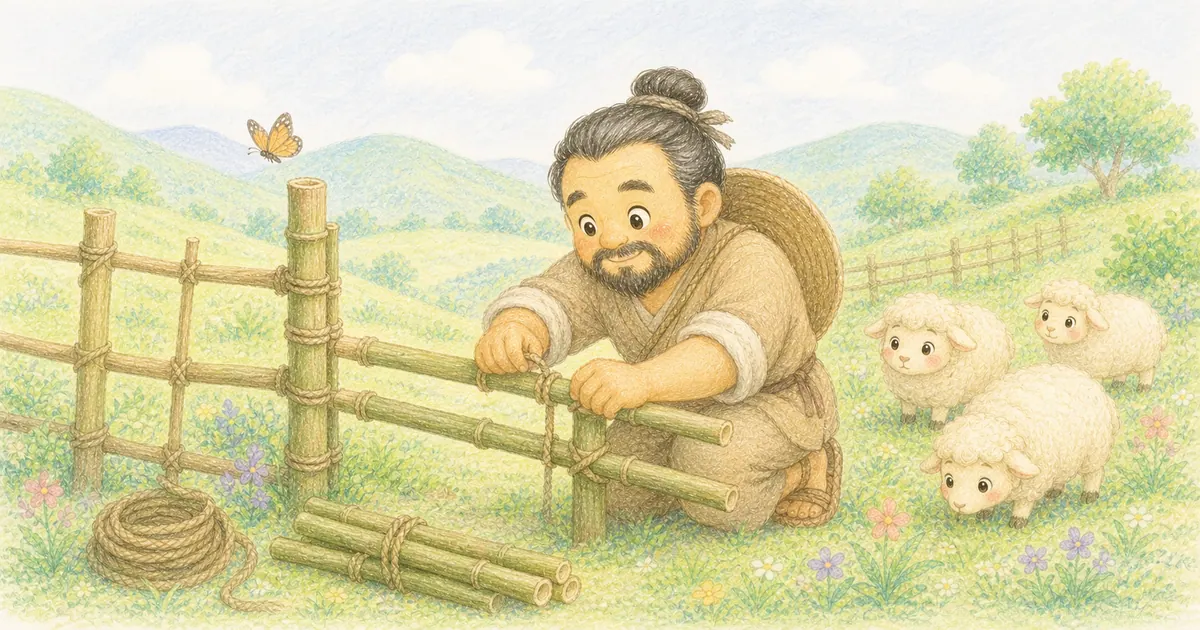
Once, in the countryside of the state of Chu during the Warring States years, there lived a shepherd. Beside a low hill he had built a bamboo-fenced sheepfold, where he kept a small flock of sheep, leading them out to graze each morning and driving them safely home again every evening. His days were quiet and steady.
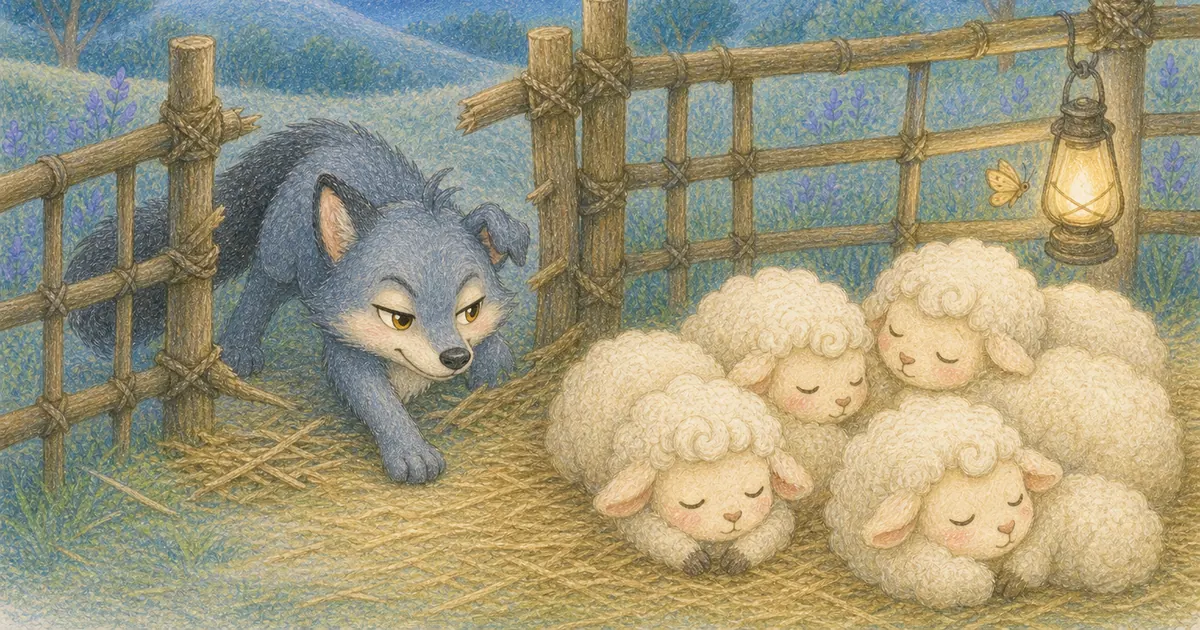
One night the wind blew hard across the hills, and the shepherd, having barred the gate, went to sleep without a worry. He did not know that in one corner of the fence, a length of bamboo had come loose, leaving a dark gap just wide enough to crawl through. In the middle of the night, a grey-blue wolf slipped in through that gap, carried off one sheep, and slipped away again the same way.
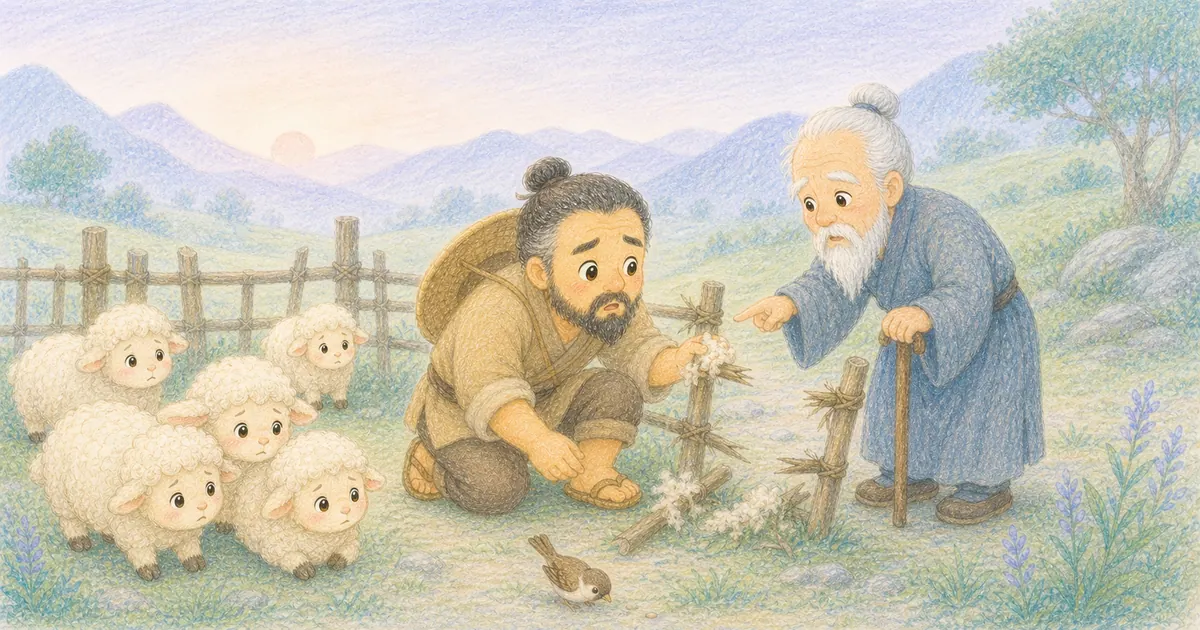
The next morning, when the shepherd opened the gate to lead his flock out, he counted them and found one missing. Crouching down, he noticed the broken gap in the corner, with a few tufts of pale wool caught on the splintered bamboo. Just then his old neighbor happened to pass by, saw the gap, and said, "Mend that hole quickly, or the wolf will surely come again." But the shepherd only waved a hand. "The sheep is already lost," he said. "What good would mending the fence do now?" And he thought no more of it.
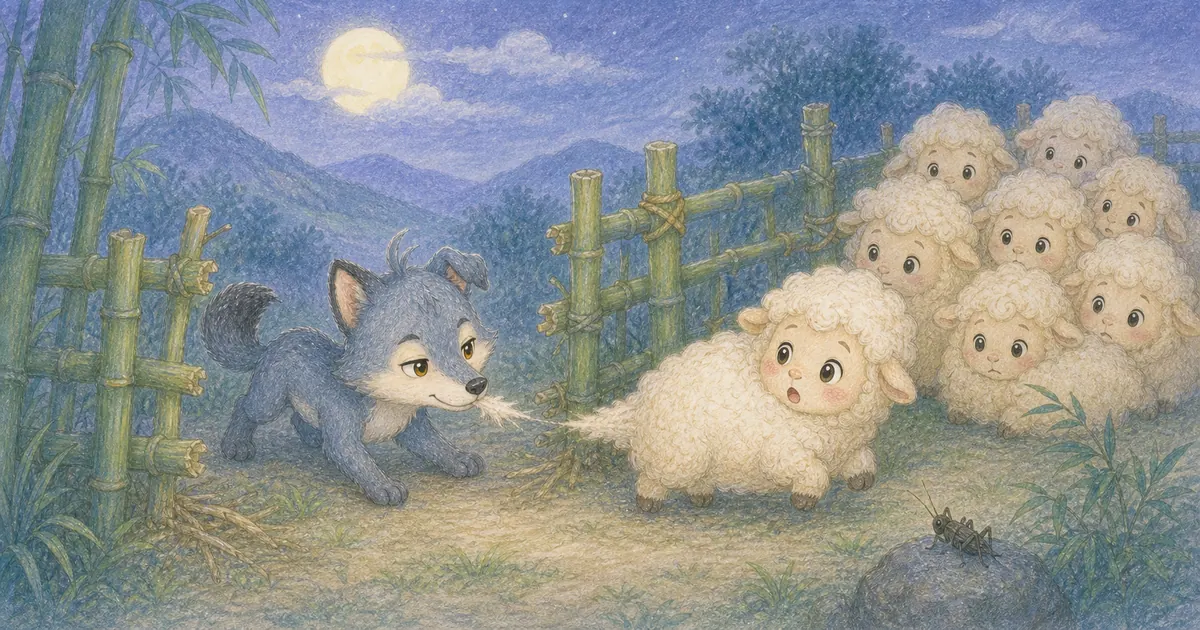
That very night, the same grey-blue wolf slipped through the same gap and carried off a second sheep. The next morning, when the shepherd counted his flock again and found one more missing, a deep regret rose in his chest. If only he had listened to his neighbor and mended the fence the first time, he would not have lost a second sheep.
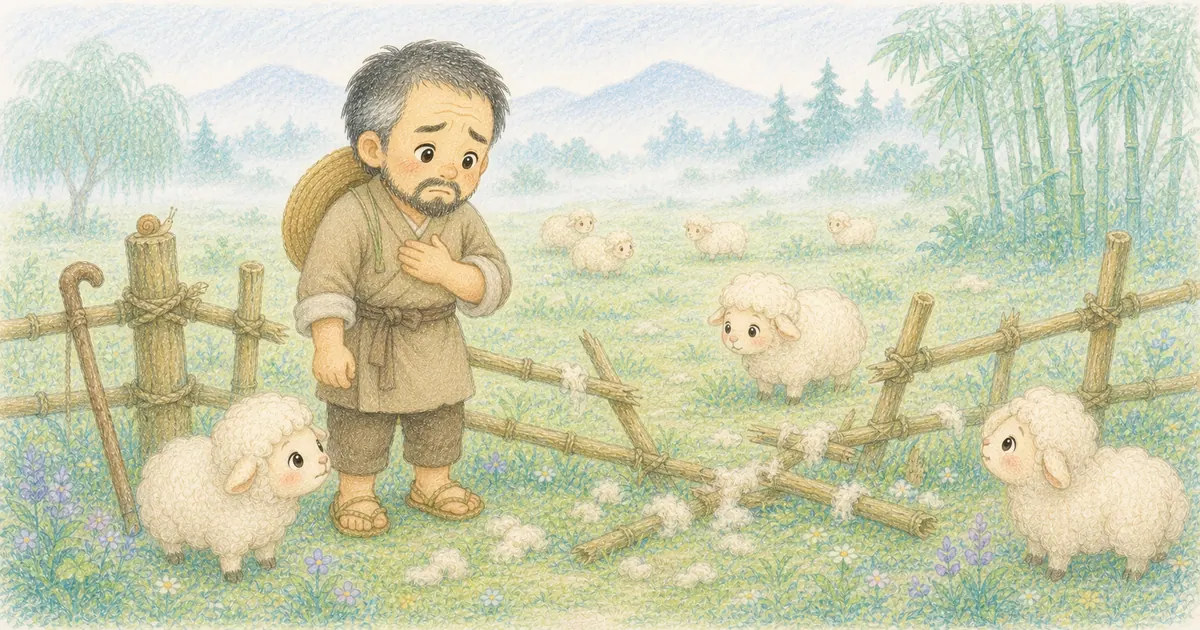
He wasted no more time. He carried fresh bamboo poles to the fold, mended the gap carefully, and checked every loose spot along the fence, tying each one firm and tight. That evening, he drove his remaining sheep safely inside, and at last his heart was at ease.
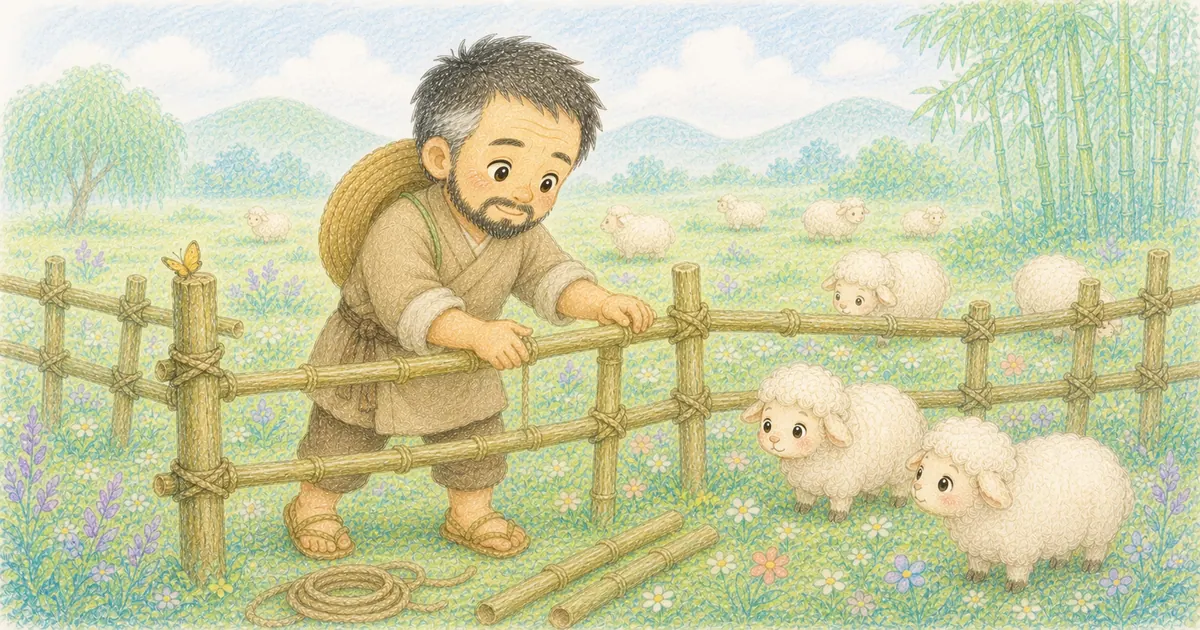
From that day on, the fence never broke again, and the grey-blue wolf never returned. Little by little, the shepherd's flock grew larger. When people in the village heard the story, they said, "He only thought of mending the pen after the sheep was lost — a little late, perhaps, but mending late is still far better than never mending at all."
Story takeaway
A loss that has already happened does not have to repeat itself — mending the problem as soon as you notice it is never too late, and always beats regret alone.
 Talk together
If you made a mistake or lost something, would you look for a way to fix it right away, or think it is already too late to matter?
 For grown-ups
Parent note
This story is good to share when a child feels that "it's already too late to fix" after making a mistake. The shepherd's second loss could have been avoided if he had mended the fence right after the first, but he chose to think it was pointless instead of acting quickly. Talk together about how the sooner a problem is noticed and repaired, the smaller the loss will be; the saying "it is never too late to mend the pen" reminds us that taking action, even a little late, always beats doing nothing at all.
 Words to learn
- sheepfold: a fenced area where sheep are kept safe at night. e.g. The shepherd drove his flock into the sheepfold every evening.
- gap: an opening left where something is broken or missing. e.g. The wolf slipped in through a gap in the fence.
- mend: to fix or repair something that is broken. e.g. The shepherd finally mended the gap in the fence.
 Reading activity
Play a little game called "still time to fix it" — say a few lines and see if your child can tell whether it is still worth taking action: "A little water spilled from the cup." → Yes, wipe it up right away. "You notice a mistake on your homework before handing it in." → Yes, just correct it. "A tire is slowly losing air, but you think you'll reach home soon anyway." → Yes, it's still worth fixing before it gets worse. At the end, wonder together: did the shepherd do the right thing after losing his first sheep? What about after the second?
From the same story series
Read next
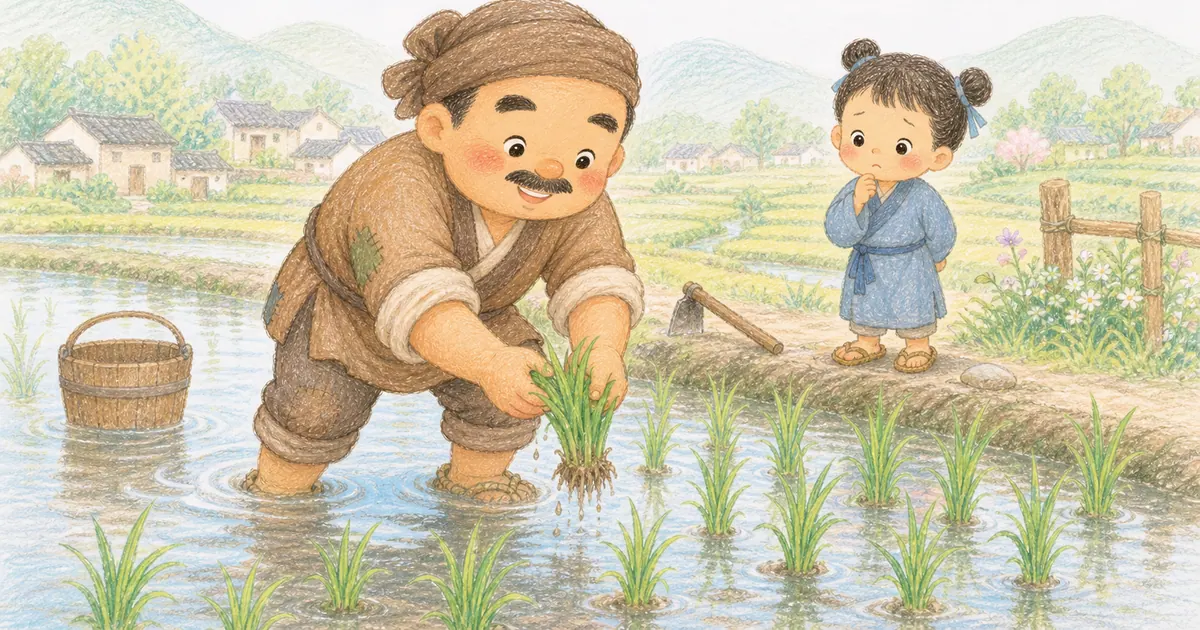
Pulling Up the Seedlings
A farmer in Song wants his seedlings to grow faster, so he pulls them taller by hand, only to learn that hurry without the right method can ruin what is slowly growing.
Read now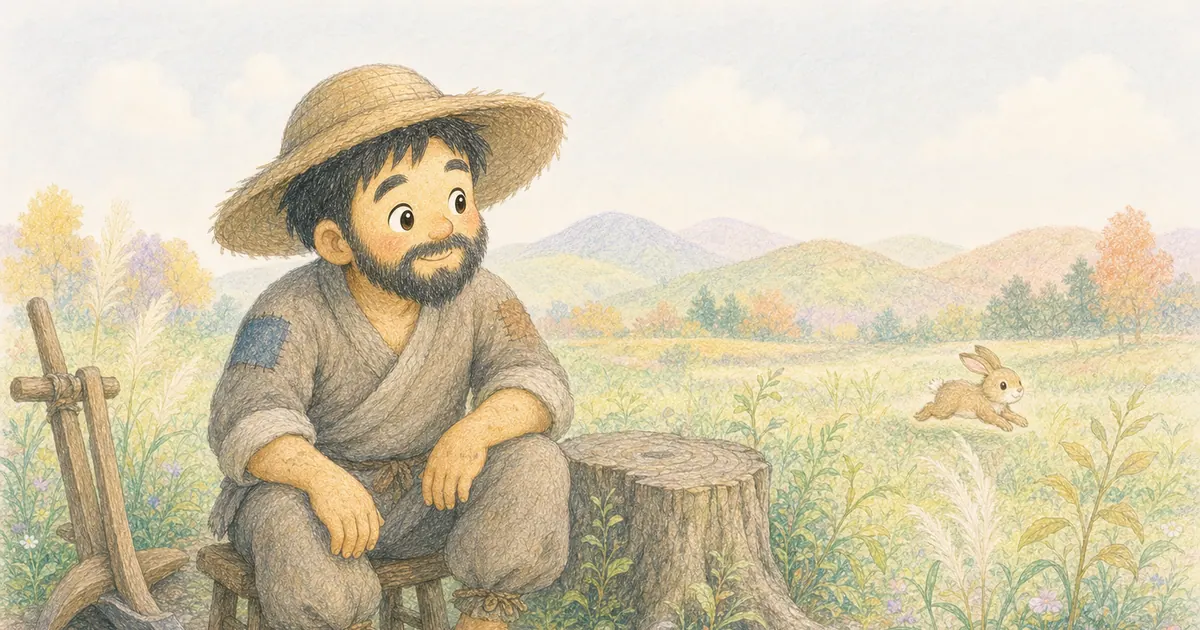
Waiting by the Stump for a Hare
A farmer in Song finds a hare that runs into an old tree stump and dies, and hopes the same luck will happen again — until his field turns to weeds and the whole village laughs.
Read now
Marking the Boat to Find the Sword
A man from Chu drops his sword into a river while crossing by boat, but only carves a mark on the boat's side to remember the spot — and discovers, too late, that the boat has drifted far while the sword never moved at all.
Read now