
Waiting by the Stump for a Hare
守株待兔
A farmer in Song finds a hare that runs into an old tree stump and dies, and hopes the same luck will happen again — until his field turns to weeds and the whole village laughs.
The story
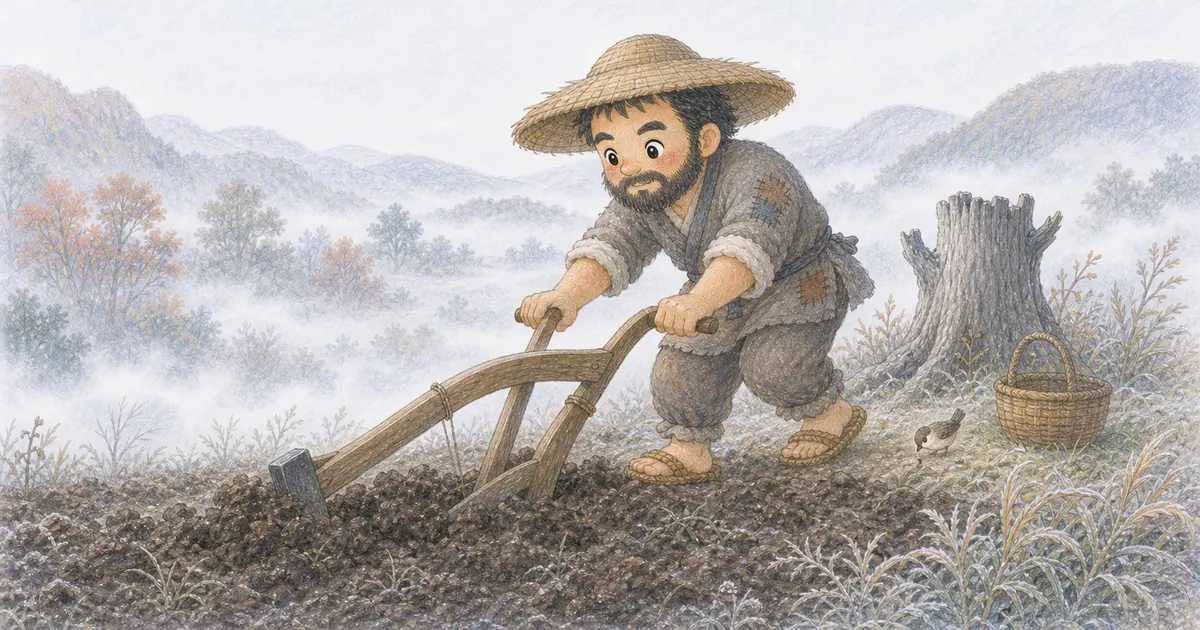
Once, in the state of Song during the Warring States years, there lived a farmer with a small field beside an old stump — all that was left of a tree cut down long before. Every day before sunrise, he shouldered his wooden plough and went out to turn the soil. His days were hard, but honest and full.
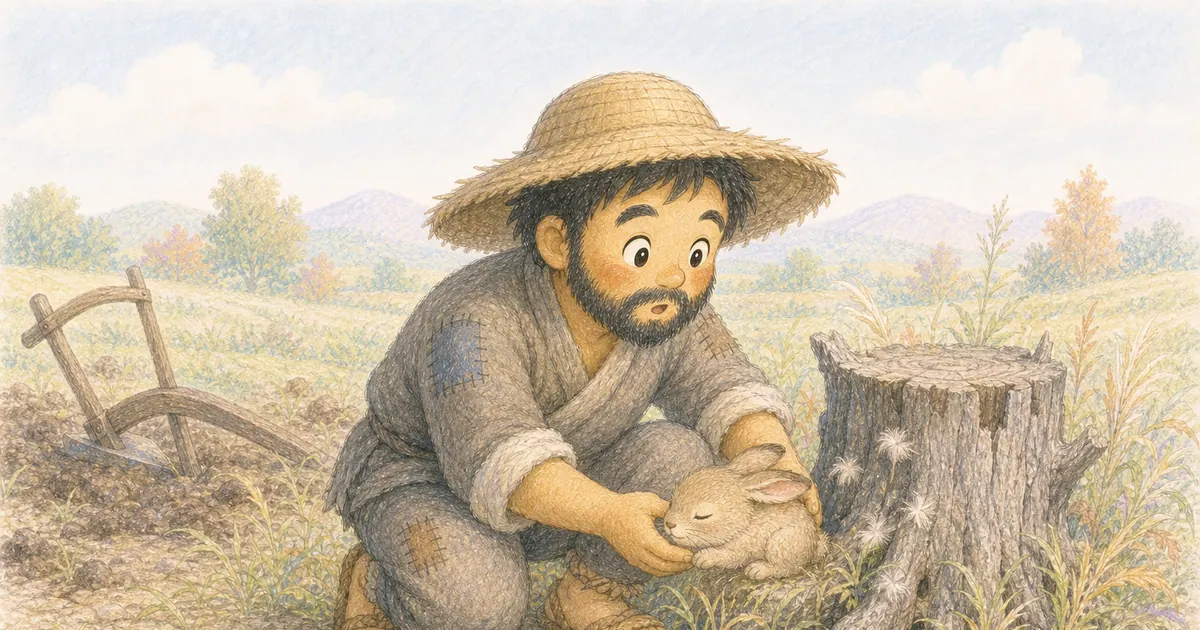
One cool autumn day, as the farmer bent low over his work, he heard a sudden rustle. A hare came bursting out of the grass, running so fast and so blindly that it struck the old stump head-on and lay still at once. The farmer straightened up in surprise, set down his plough, and hurried over to pick it up, half startled, half delighted.
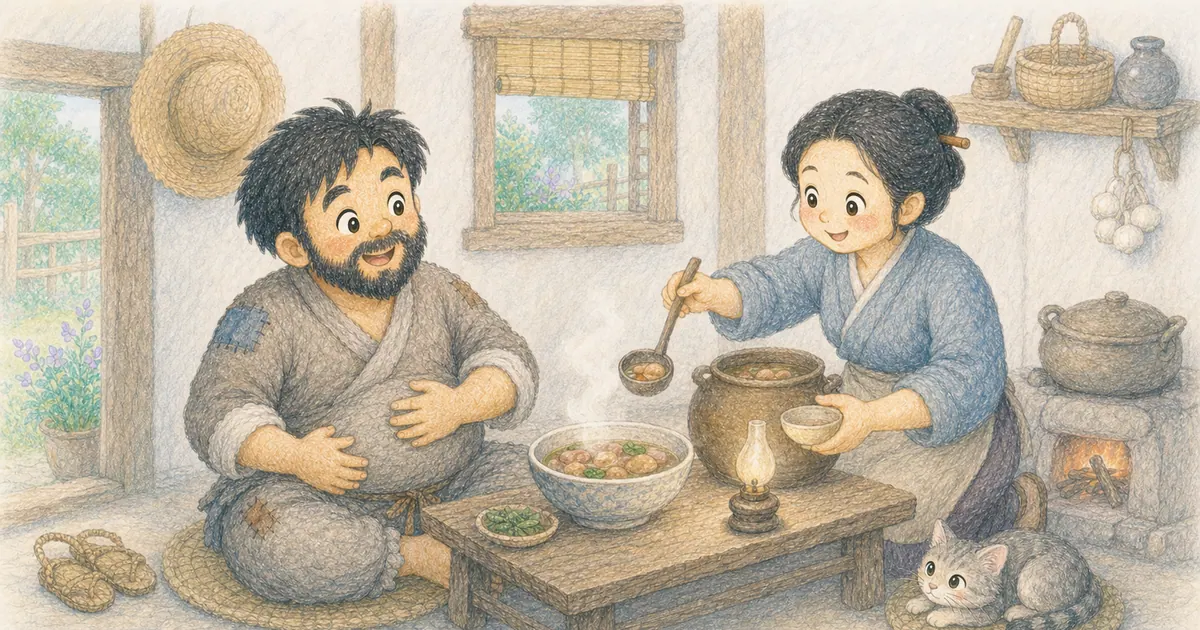
That night, his wife cooked the hare into a warm, savoury stew, and the family ate well and happily. "What good luck today," she said with a smile. The farmer rubbed his full stomach and thought to himself, "Perhaps another hare will run into that stump too."
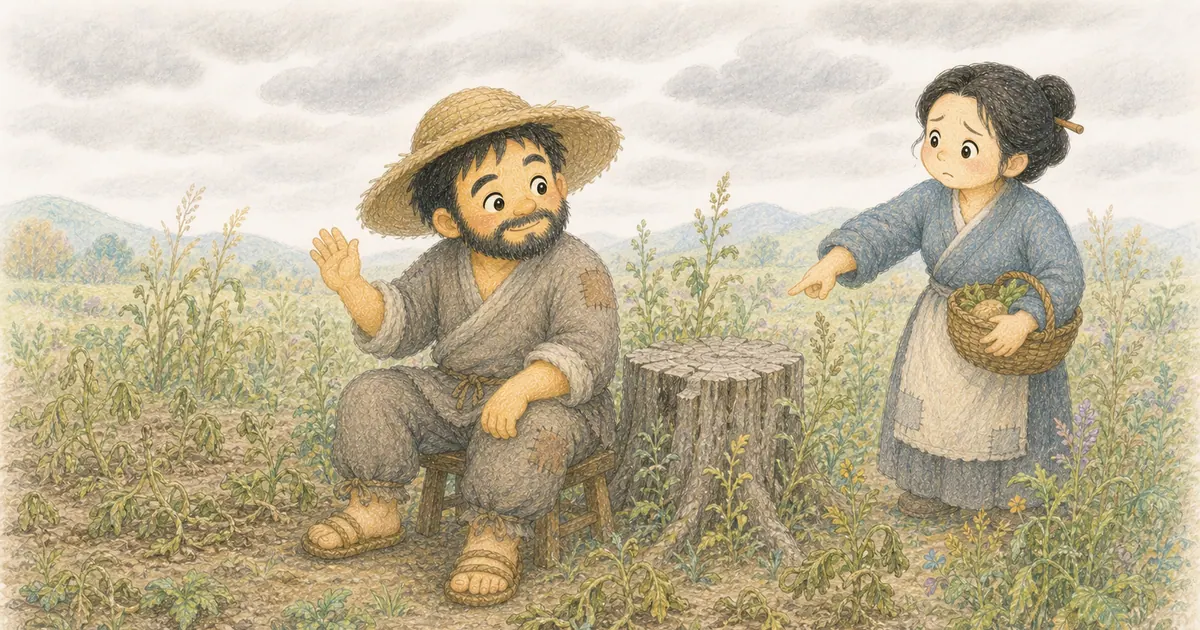
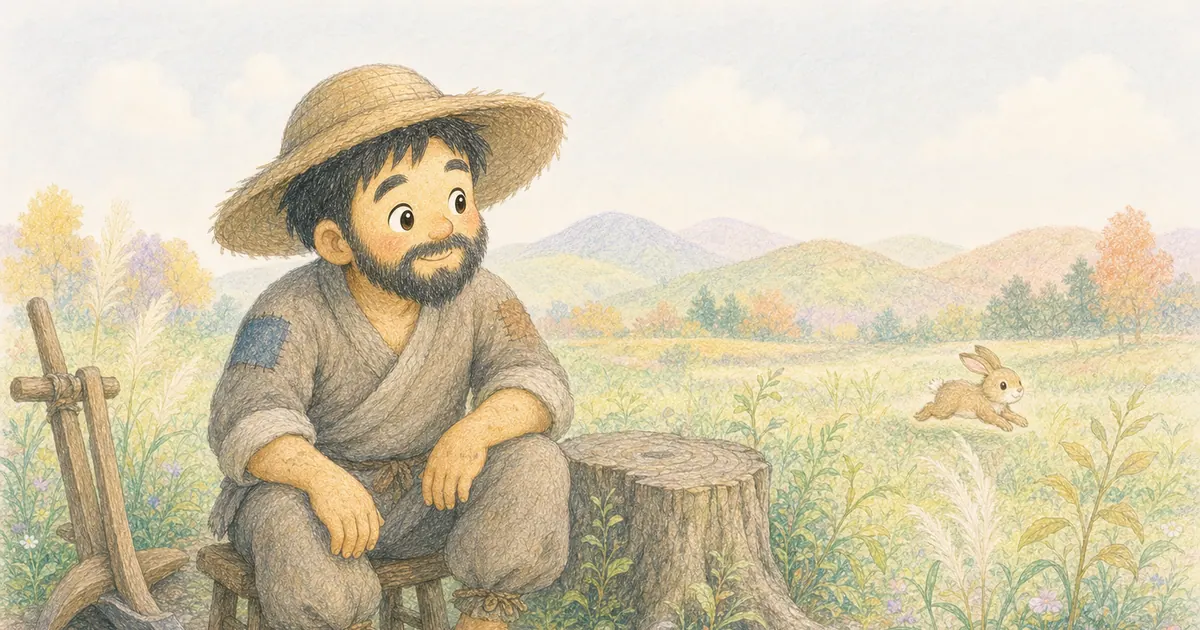
The next morning, the farmer did not take up his plough. Instead, he carried a small stool to the stump and sat down beside it, watching the grass. "If one hare ran here yesterday," he thought, "surely another will come today — and that would be far easier than ploughing." He sat there the whole day, but not so much as the shadow of a hare appeared.
Day after day, the farmer carried his stool to the same spot and waited. No one tended the seedlings, and the weeds in his field grew taller and taller. His wife came out with a basket of food, looked at the neglected field, and said gently but firmly, "You have waited so many days now. A hare will not run into the same stump so easily. Please go back to your ploughing." But the farmer only waved his hand. "Just a little longer," he said. "Maybe today is the day."
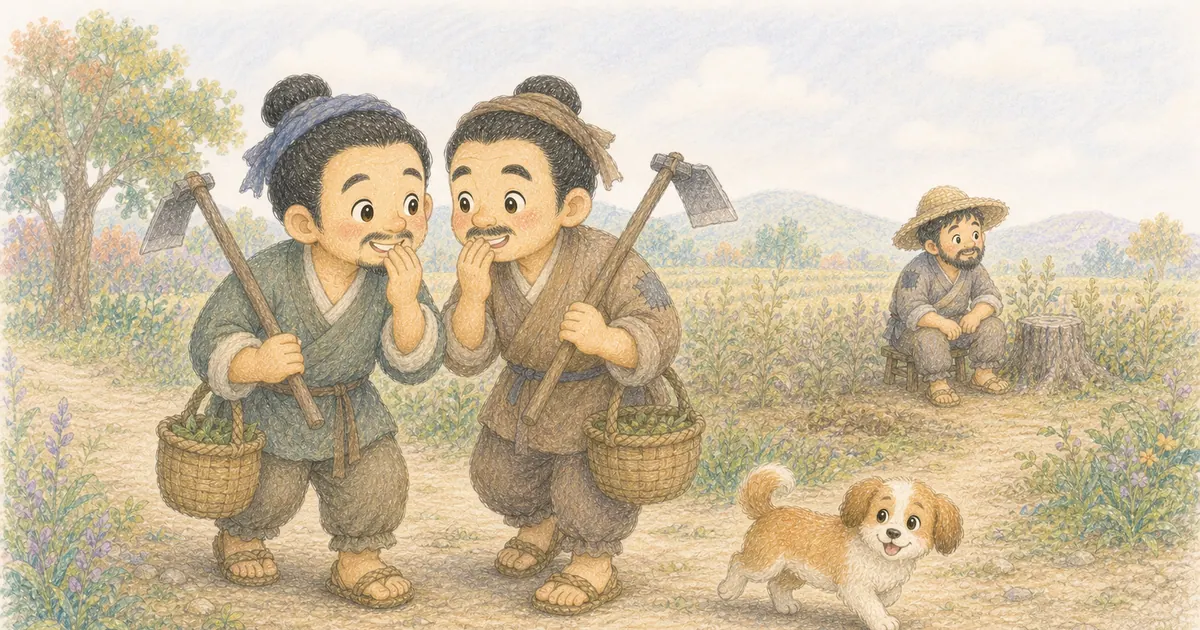
Neighbors passing by saw him sitting there day after day instead of working, and could not help laughing among themselves. "How foolish," they said, "to think a hare will run into the same stump twice." Soon the story spread, and all through Song, people spoke of the farmer who sat by a stump waiting for hares — and always shook their heads and smiled.
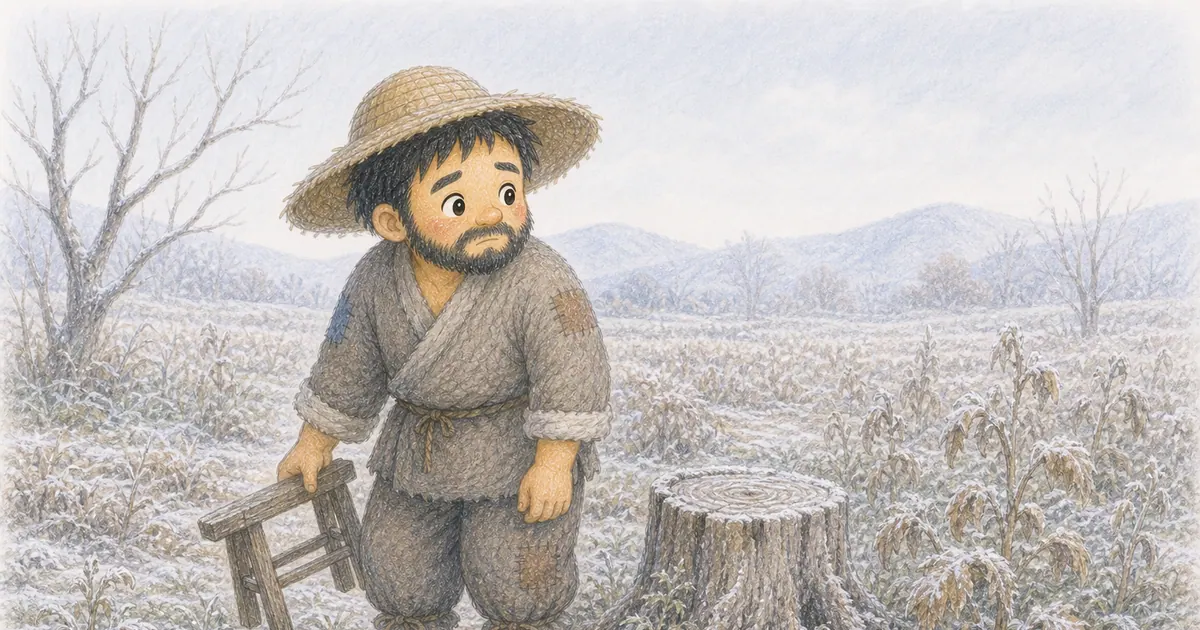
Autumn turned to winter. The weeds in the field withered and grew again, and still no second hare ever came, and the rice jar at home slowly grew empty. One cold morning, the farmer sat by the stump once more and looked out at his ruined field, and a strange, heavy feeling rose in his chest. He stood up, walked slowly home, and put the little stool away for good, never returning to wait by the stump again. But whenever people in the village spoke of it afterward, they still smiled and said, "That was the man who waited by the stump for a hare."
Story takeaway
A lucky windfall does not repeat itself just because you wait for it; a real harvest comes from steady daily effort, not from clinging to one stroke of luck.
 Talk together
If you once got a lucky result, how can you tell whether it was luck, or something you truly worked for?
 For grown-ups
Parent note
This story is helpful when a child has had one lucky win — guessing right on a test, winning a game by chance — and starts hoping good things will simply happen again without effort. The farmer's hare was pure coincidence, but he convinced himself that sitting in the same spot would bring the same luck, and let his field go to ruin while he waited. Talk together about the difference between luck, which cannot be planned for, and real, steady effort, which can always be trusted. You might also ask your child if they can think of a time they waited for luck instead of doing the work.
 Words to learn
- stump: the short piece of a tree trunk left in the ground after it is cut down. e.g. The hare ran into the old stump in the field.
- stroke of luck: a good result that happens by chance and is unlikely to happen again. e.g. Catching the hare was only a stroke of luck.
- neglected: not cared for or looked after. e.g. The field became neglected while the farmer waited by the stump.
 Reading activity
Play a small game called "luck, or earned it" — say a few lines and see if your child can tell which is just luck and which is real skill: "Finding a coin someone dropped on the road." → luck; it will not happen every day. "Practicing dribbling a ball every day until it gets fast and steady." → earned it. "Guessing the right answer on a test question." → luck; you cannot guess your way through every test. "Learning ten minutes of new words each day until you know more and more." → earned it. At the end, wonder together: which one did the farmer in the story mistake for the other?
From the same story series
Read next
Pulling Up the Seedlings
A farmer in Song wants his seedlings to grow faster, so he pulls them taller by hand, only to learn that hurry without the right method can ruin what is slowly growing.
Read now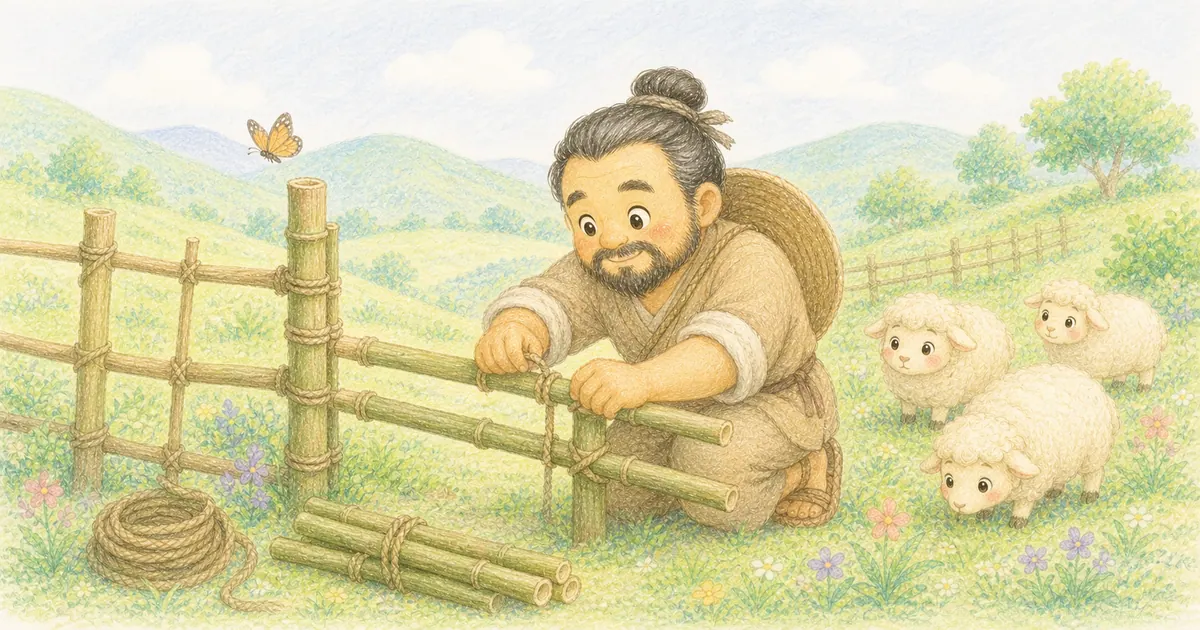
Mending the Sheepfold
A shepherd's sheepfold fence breaks open, and a wolf carries off a sheep in the night; only after losing a second sheep does he finally mend the gap, and his flock is never troubled again.
Read now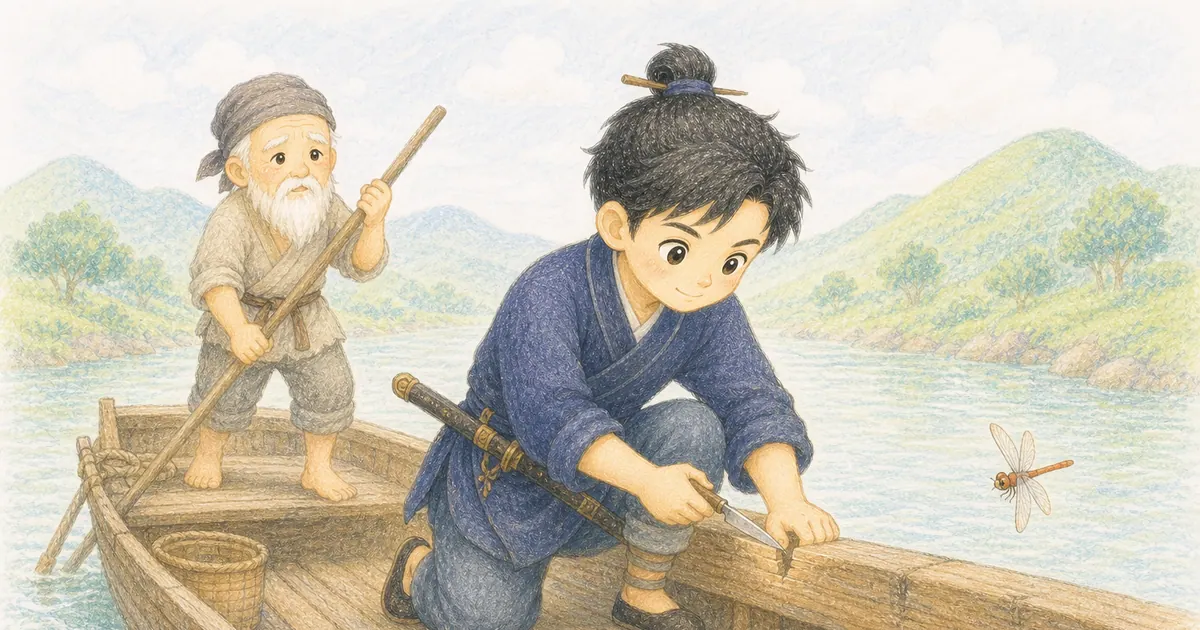
Marking the Boat to Find the Sword
A man from Chu drops his sword into a river while crossing by boat, but only carves a mark on the boat's side to remember the spot — and discovers, too late, that the boat has drifted far while the sword never moved at all.
Read now