
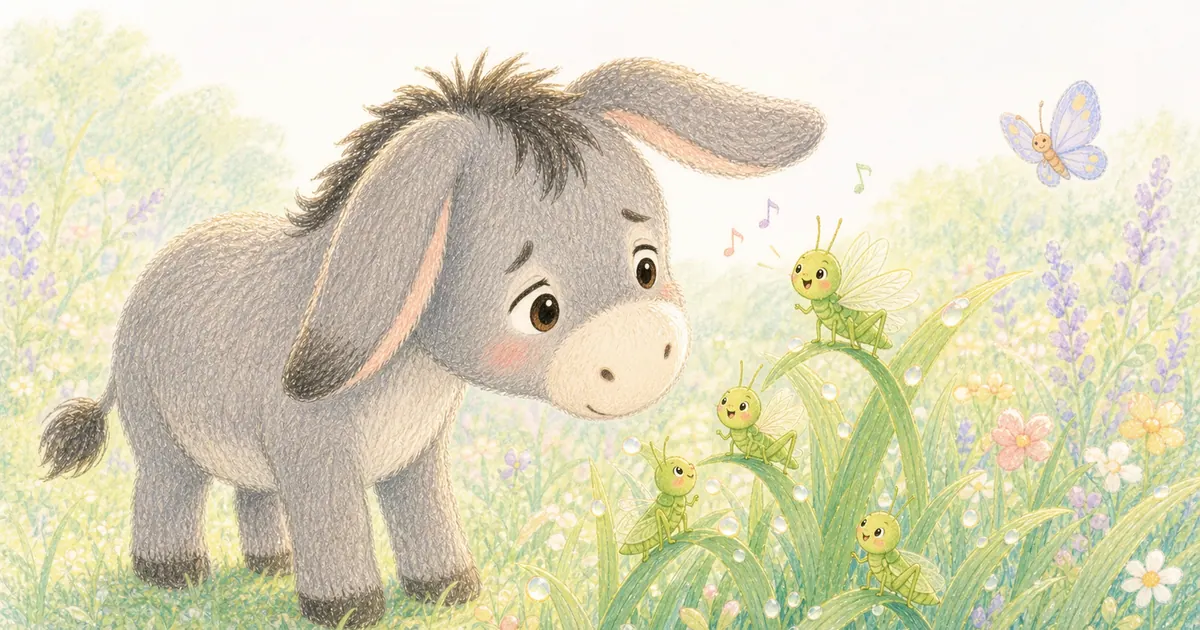
The Ass and the Grasshopper
驢子與蚱蜢
An ass envies the grasshoppers' sweet song and tries living on dew alone to learn it, only to collapse from hunger and discover that every creature needs its own true food.
The story
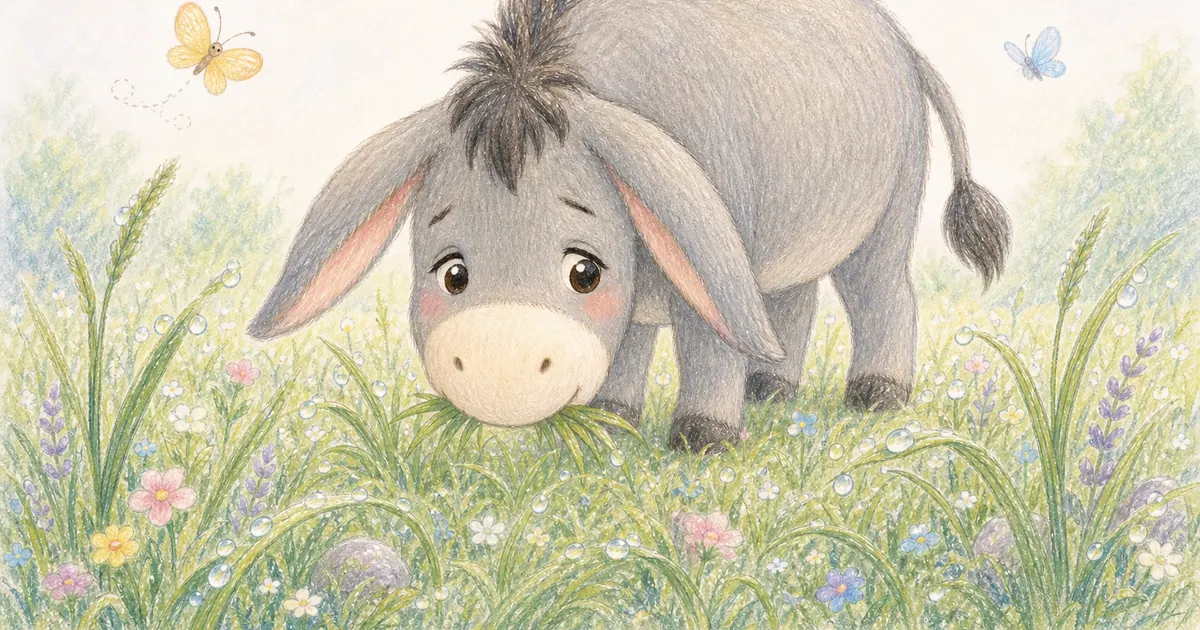
Early one morning, the meadow lay hung with bright drops of dew, and a breeze drifted low among the wildflowers. A grey ass grazed there with his head down, his two long ears swinging as he chewed. His own voice was harsh by nature, and whenever he brayed it sounded like an old, unoiled gate creaking open. For that reason he rarely felt any joy in the sound of his own voice.
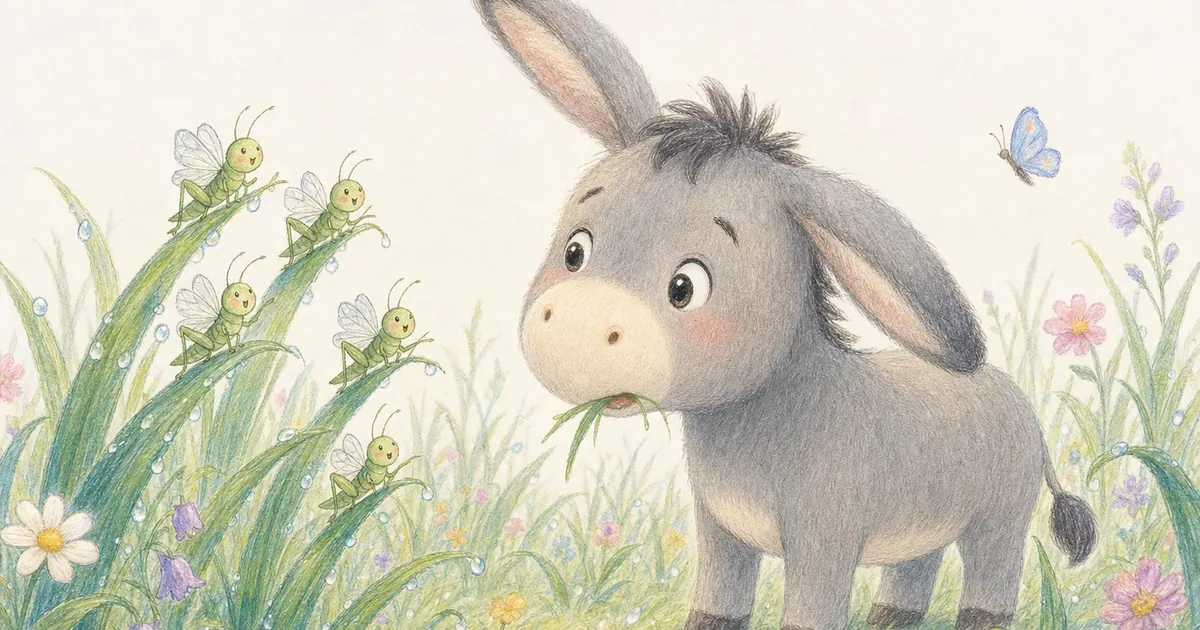
Then, from the grass, came a thin and lovely song. Several grasshoppers perched on the tips of the blades, their wings trembling gently, their voices ringing clear as tiny bells in the morning air. The ass listened, spellbound, and forgot to swallow the mouthful of grass he was chewing. "If only I could sing half so sweetly," he thought, "no one would ever laugh at my voice again."
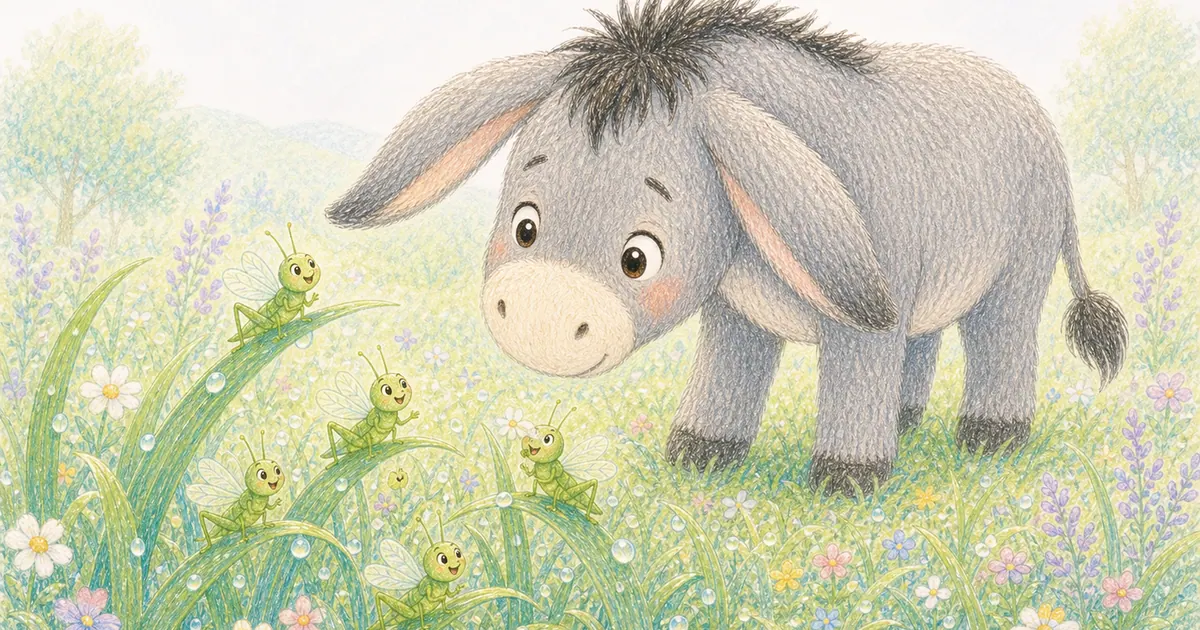
The ass stepped closer, leaning his long ears down toward the grasshoppers, and asked very earnestly, "Your song is so beautiful — what do you eat, to sing like that?" The grasshoppers glanced at one another before answering, "Why, we simply live on dew." To the grasshoppers it was only an ordinary fact about their own small lives, but the moment the ass heard it, his mind was made up.
From that day on, the ass refused his grass and would not touch the hay pile either. Each dawn he stretched out his neck and licked, drop by careful drop, the dew from the leaves. On the first day he felt proud of his resolve, and his steps even seemed a little lighter. By noon his stomach had begun to rumble, but he told himself it was only because he was not yet used to it, and that it would surely pass.
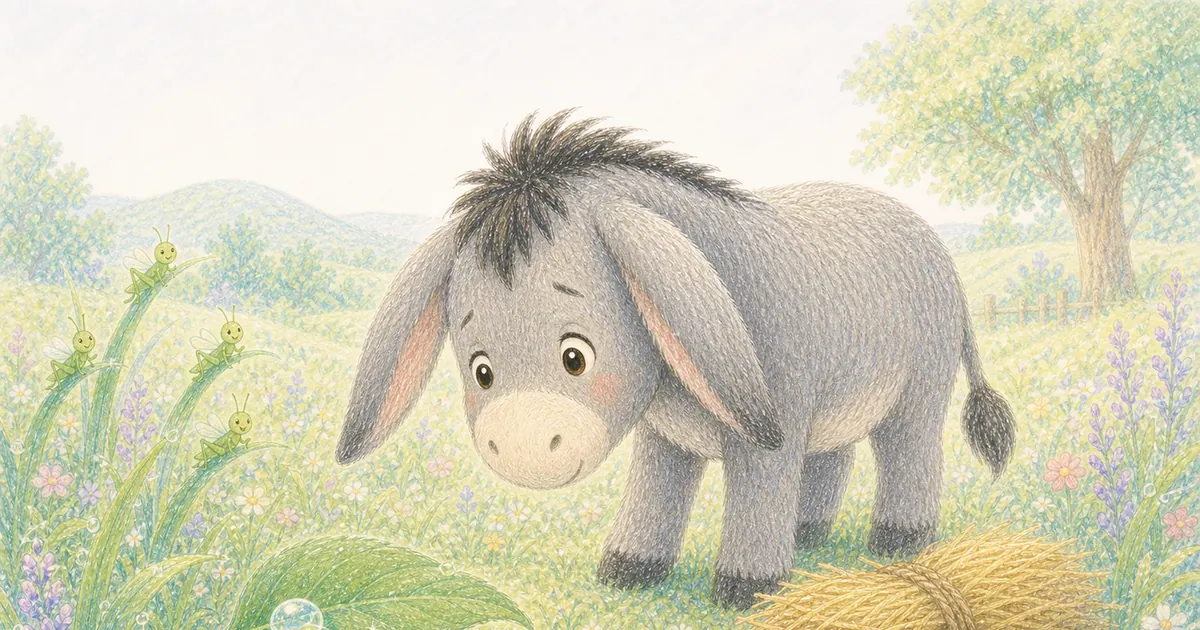
The second day came, then the third, and the ass grew hungrier still. His four legs turned soft and weak beneath him, and he had to stop and catch his breath after only a few steps. Across the meadow the grasshoppers' song rang on as clear as ever, but to the ass it now sounded a little farther away each day, no matter how he strained to catch up to it.
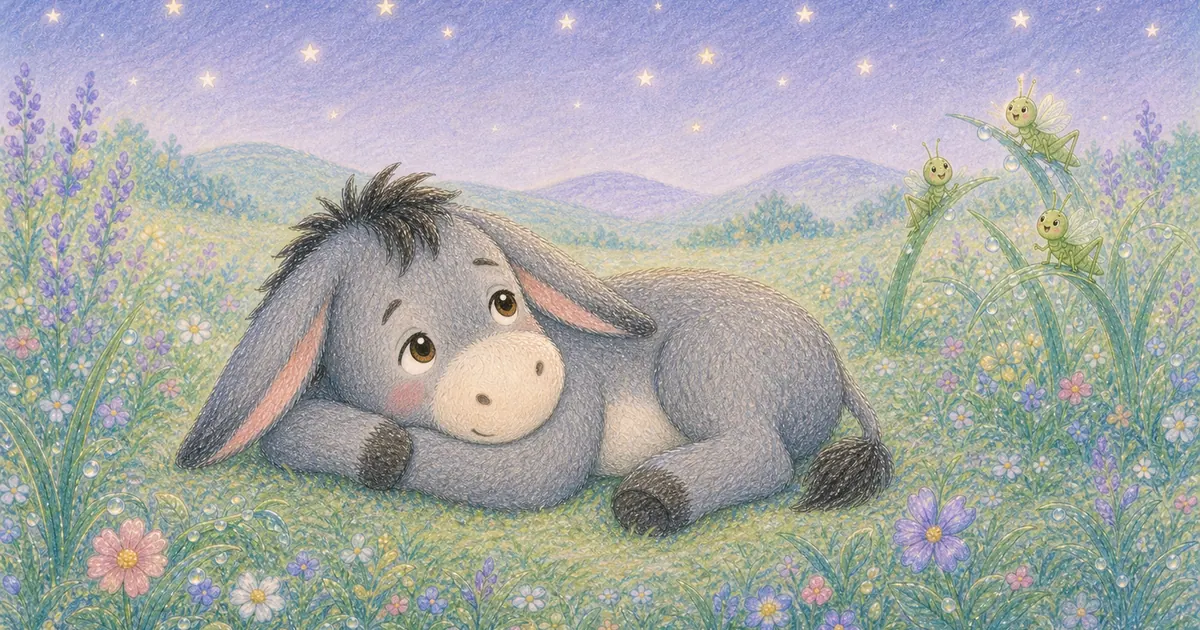
As evening fell and the light grew dim, the ass's legs finally gave way beneath him, and he sank down into the grass, too weak to rise again. Lying on his side and gazing up at the first stars, he understood at last: the grasshoppers sang sweetly on dew because dew was truly their own food, while an ass's body was made for grass and hay — and a few drops of dew could never carry him through a whole day.
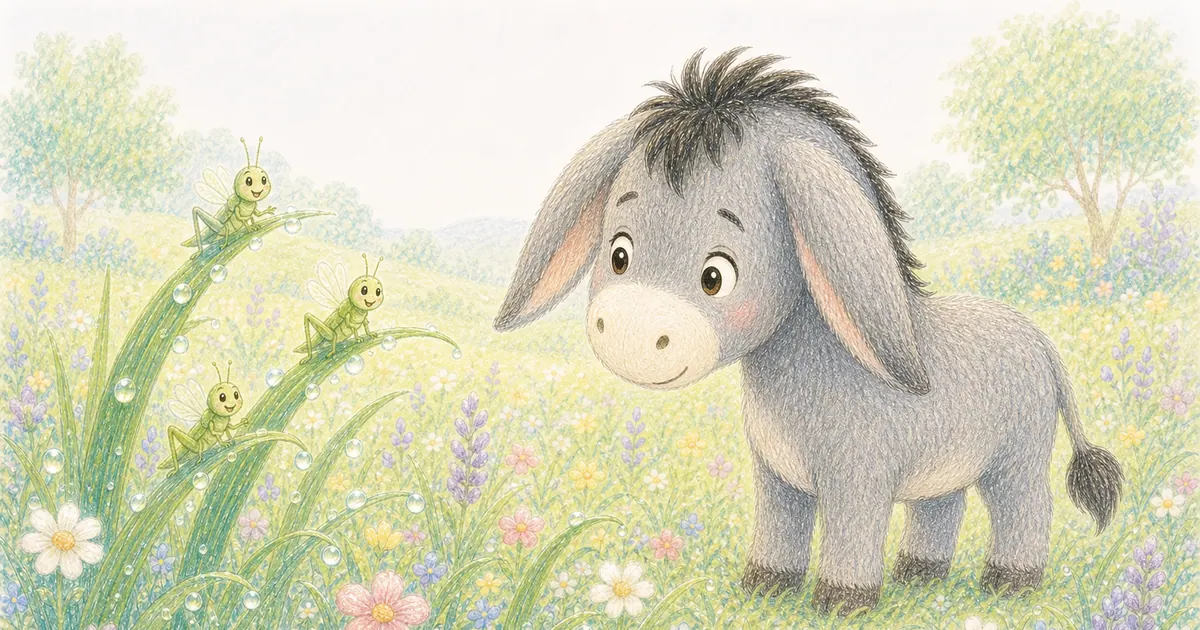
The next morning, the ass struggled slowly back onto his feet. He drank a little water first, then lowered his head and began, mouthful by patient mouthful, to chew the familiar grass, and little by little his strength returned to his legs. On the grass tips nearby, the grasshoppers were still singing their song. The ass lifted his ears and listened for a moment, a peaceful smile spreading over his face — no longer envious, simply content to go on eating the breakfast that was truly his own.
Story takeaway
It is good to admire another's gift, but copying someone else's whole way of life without understanding your own true needs will only bring you harm.
 Talk together
Have you ever wished you could do something a friend was good at? How did you figure out which of their ways would actually work for you, and which would not?
 For grown-ups
Parent note
A gentle read for children learning the difference between admiring a friend and truly knowing themselves. The ass isn't foolish — he simply got so eager to be admired like the grasshoppers that he forgot to ask what his own body actually needed. It's a good moment to talk about how wanting to learn a friend's strengths, like drawing or dancing, is natural and good, but copying their whole routine without thinking it through is a different thing altogether — and that taking care of your own hunger or tiredness always comes before trying to imitate someone else.
 Words to learn
- harsh: rough and unpleasant to hear. e.g. The ass's harsh voice sounded like a creaking gate.
- made up his mind: decided firmly, without more doubting. e.g. As soon as he heard the answer, the ass made up his mind.
- weak: without much strength, unable to hold up well. e.g. After two hungry days, the ass's legs felt weak and soft.
 Reading activity
Play a quick "learning a strength, or just copying?" game with your child — read a few lines and see which one they can spot: "My friend loves sharing snacks, so I try sharing mine too." → learning a strength — this fits anyone and feels good to do. "My friend skips breakfast and still has energy, so I skip mine too." → just copying — it could leave you hungry and tired. "My friend exercises for thirty minutes, so I try ten minutes first, based on what feels right for me." → learning a strength, while still listening to your own body. Wrap up by wondering together: the next time you really want to learn something from a friend, what is the first question you could ask yourself?
From the same story series
Read next
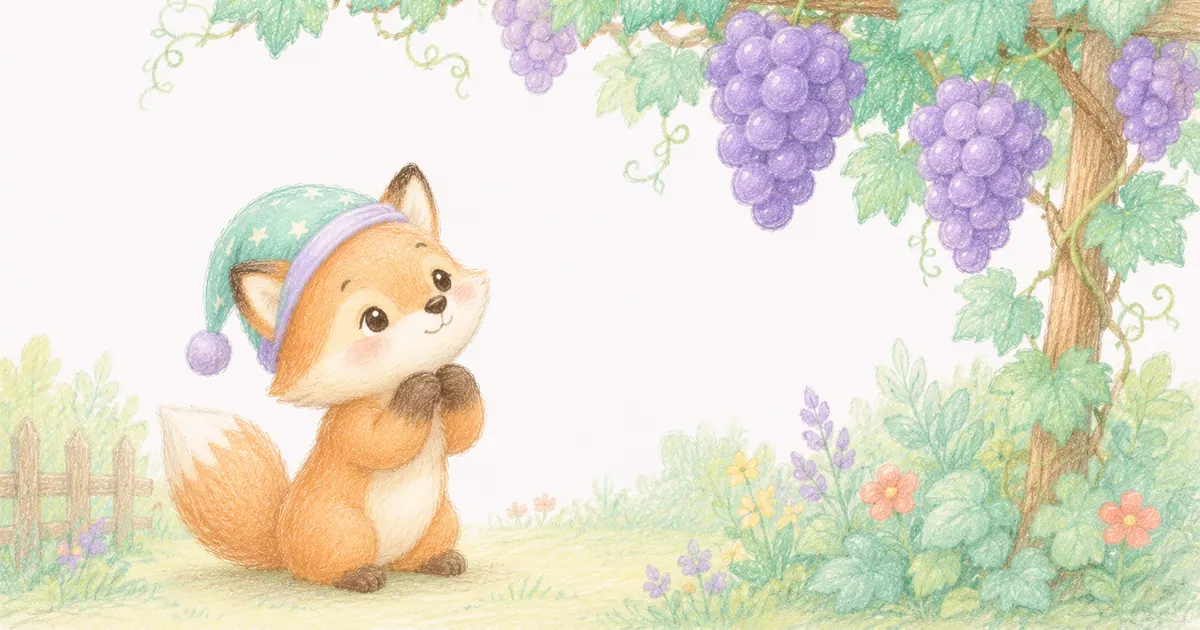
The Fox and the Grapes
A hungry fox fails to reach ripe grapes and calls them sour rather than admit his disappointment.
Read now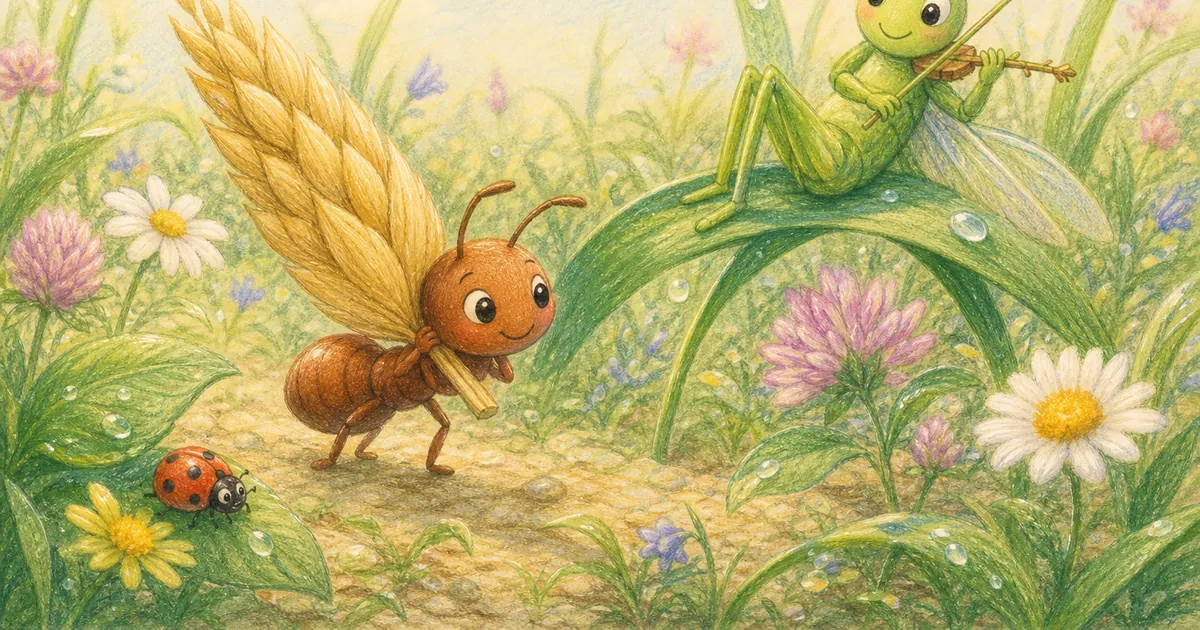
The Ant and the Grasshopper
A grasshopper sings and plays all summer while an ant quietly stores food, and when the snow falls, the grasshopper learns that joy needs a little preparation too.
Read now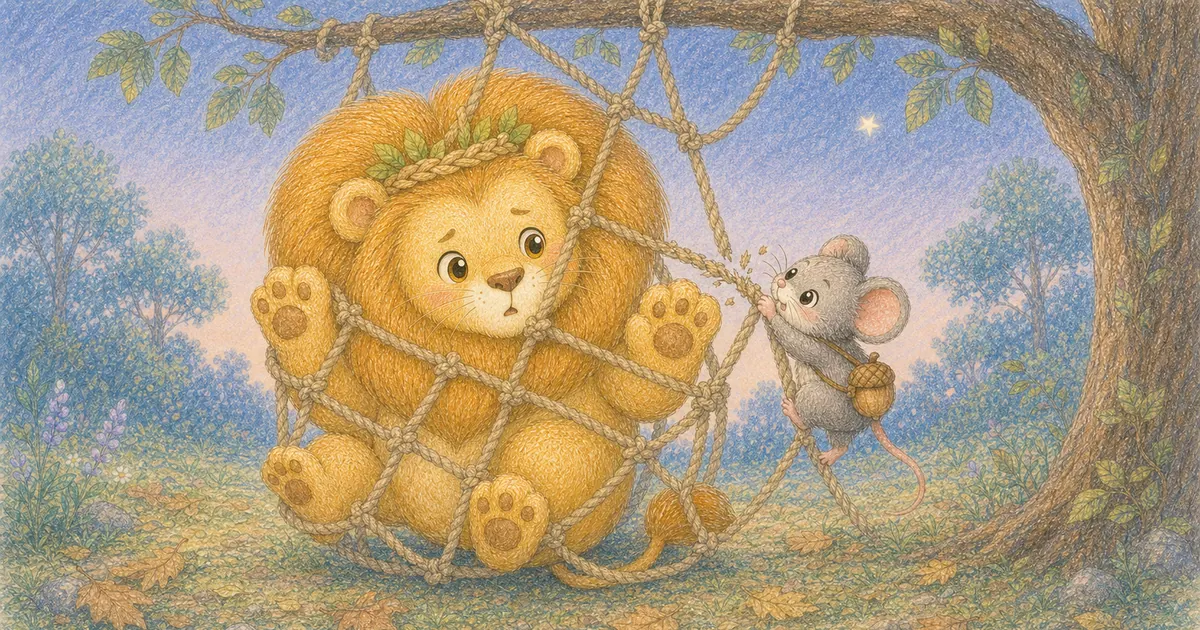
The Lion and the Mouse
A mighty lion spares a little mouse who tumbles onto his nose, and later, caught fast in a hunter's net, learns just how much a small friend can help.
Read now