
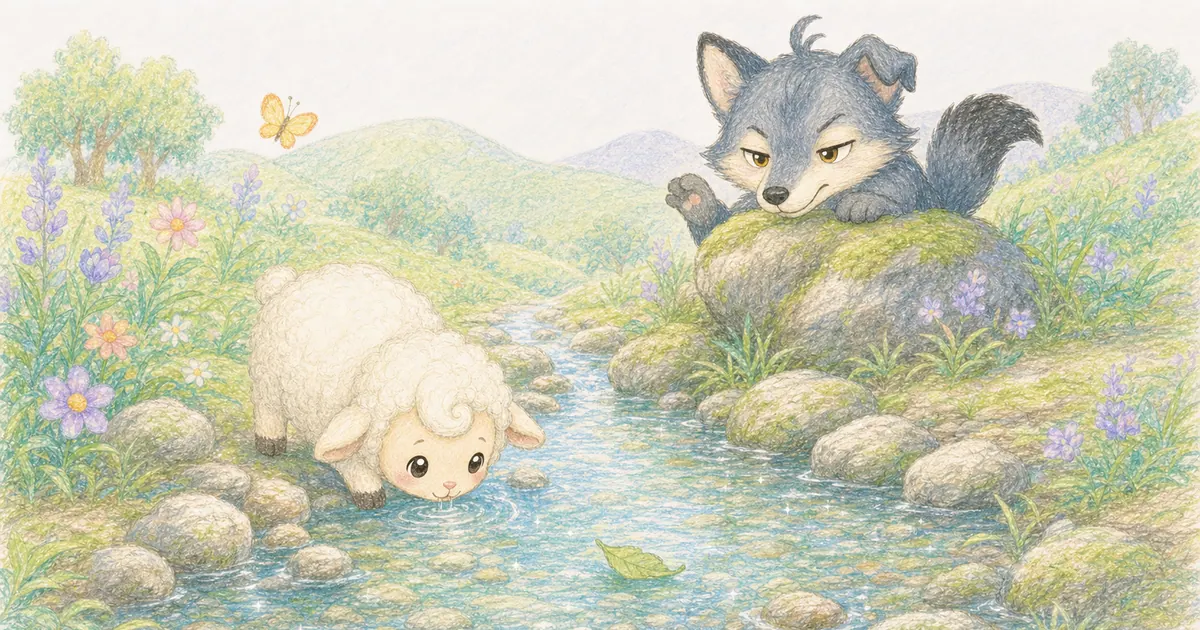
The Wolf and the Lamb
狼與小羊
A hungry wolf invents accusations against a lamb, showing how injustice often seeks excuses after it has chosen its victim.
The story
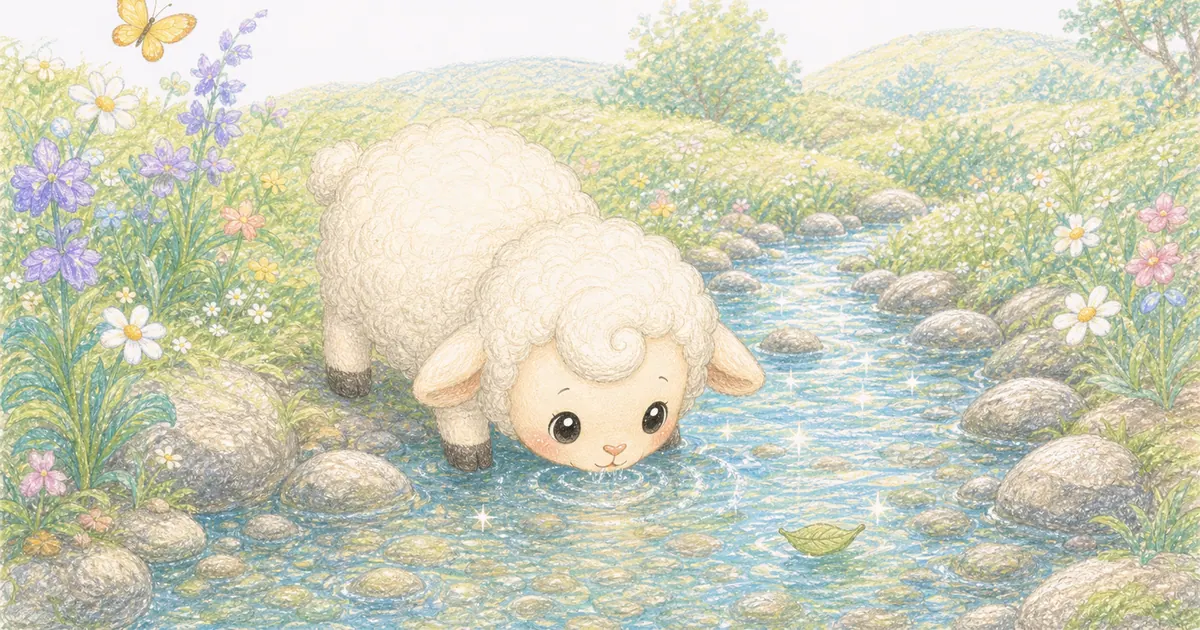
Once, below a green grassy hill, there was a clear little stream that ran softly all day and all night, with wildflowers growing along its banks. One day a little lamb came down to the water, lowered his head, and drank. He only wanted a few cool sips before going back to the meadow to find his mother. He did not stir up the stones or trouble anyone, and the water slipped past him, calm and clear.
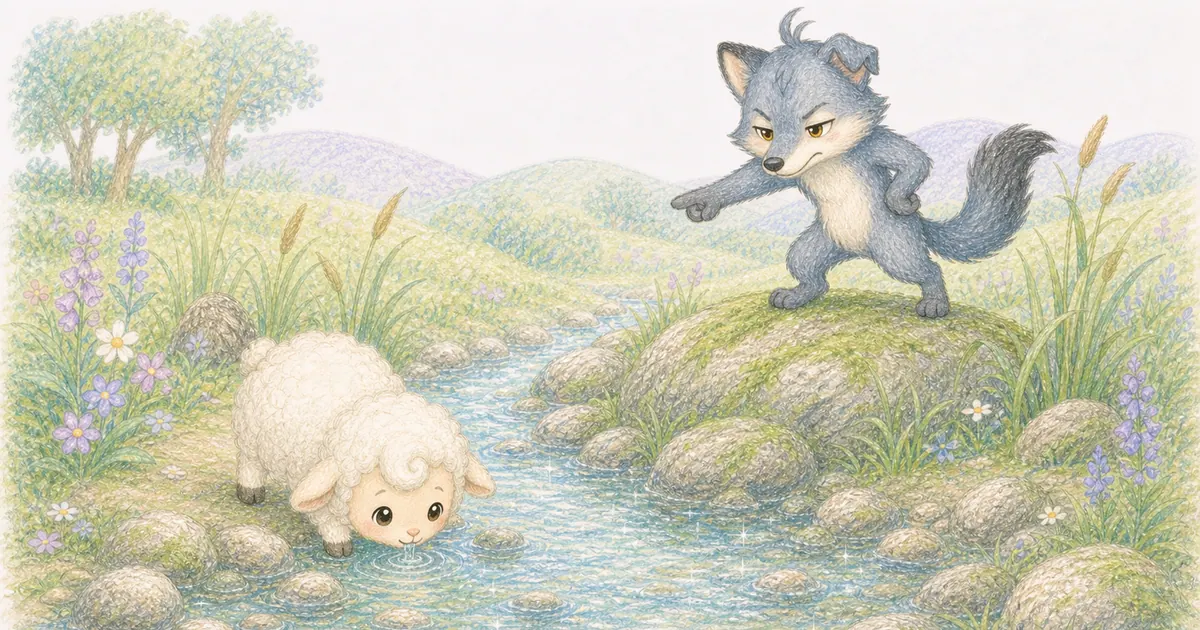
Just then a wolf came to the stream, a little way up the hill. He had not eaten for days, and his stomach was growling. The moment he saw the lamb, a wicked plan came into his head: “There is my dinner.” But the wolf did not want to say that he was only hungry and greedy, so he put on an angry face, frowned hard, and shouted, “You bad little thing! How dare you make the water muddy while I am trying to drink?”
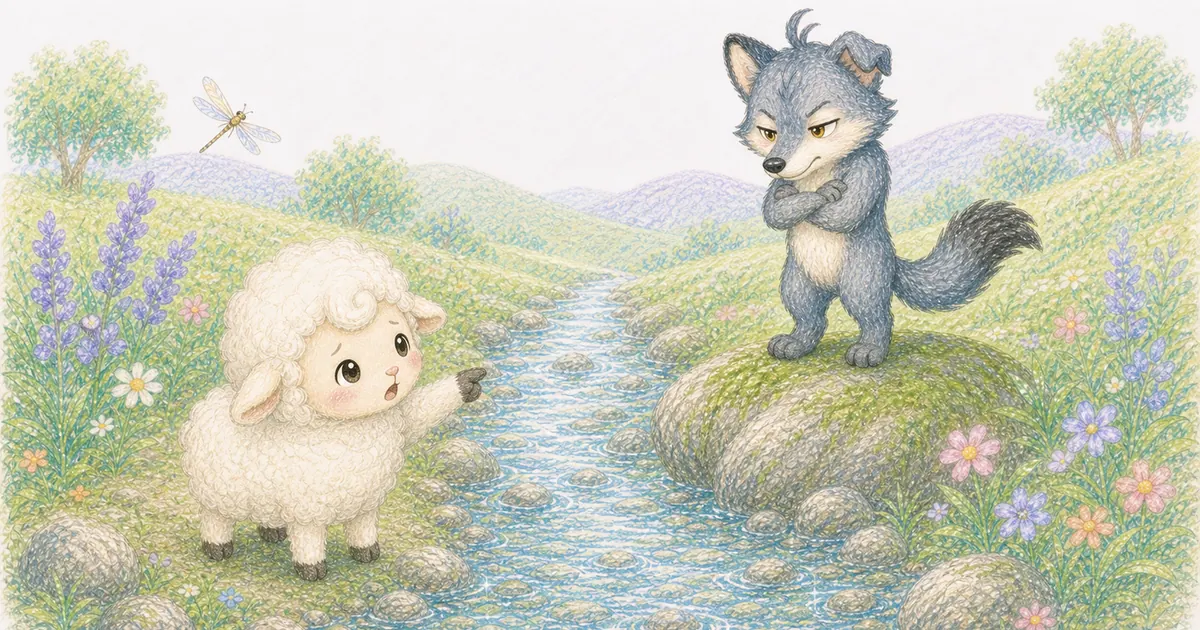
The lamb jumped, but he answered softly and politely, “Please look, sir. The water runs down from your side to mine. I am standing below you — how could I make your water muddy?” It was a clear and fair answer. But the wolf had not come to listen. His stomach was quicker than his ears, and he had already made up his mind to trouble the poor little lamb.
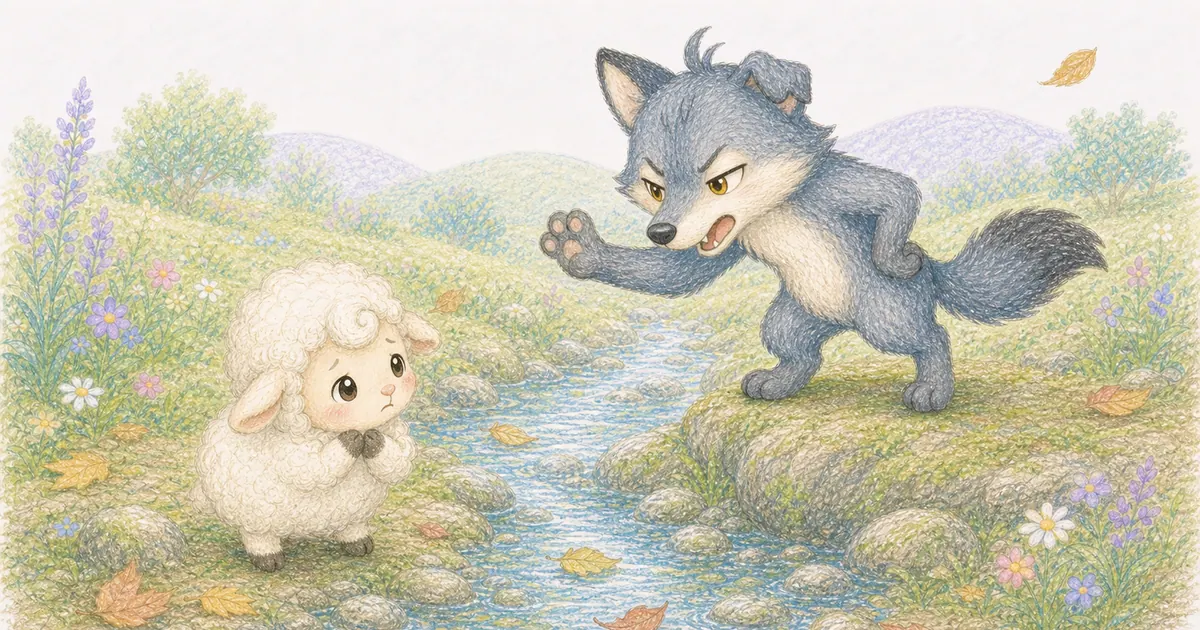
The wolf stopped for a moment, then found another excuse. “Well, even if it was not you, last year you said unkind things about me!” The lamb said carefully, “But sir, last year I was not even born. How could I have said anything?” The wolf had no answer, so he swished his tail and growled louder, “Then it was your father, or one of your family. You are all the same, every one of you!”
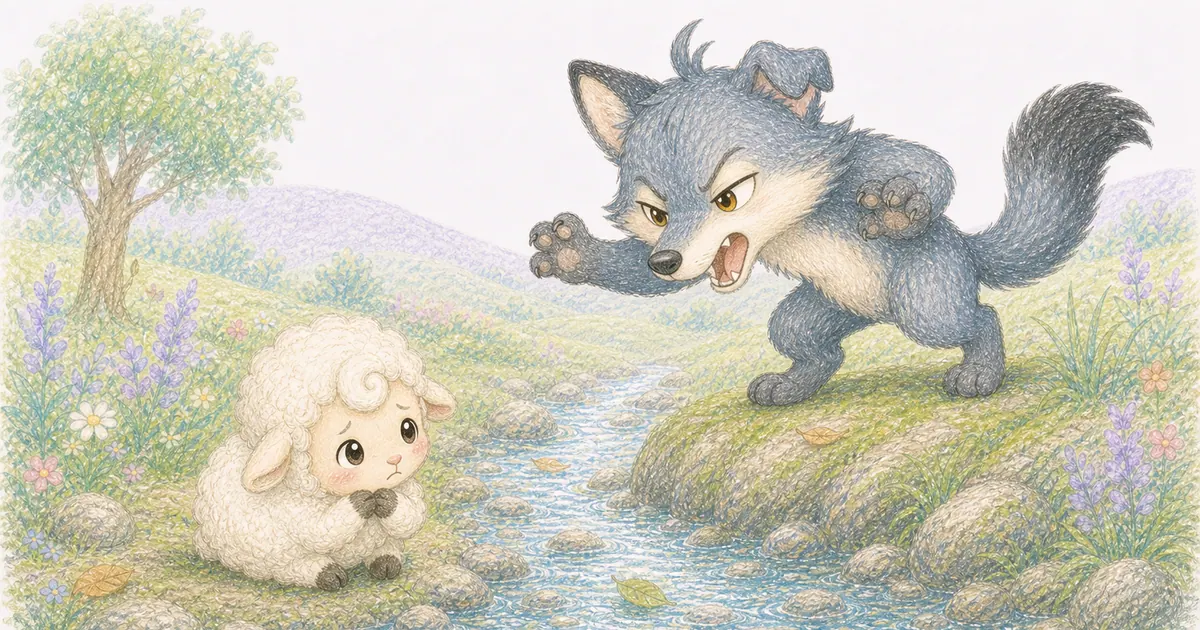
The lamb wanted to explain again, but no matter what he said, the wolf always had a new excuse ready. At last the wolf stopped pretending to be fair. In a rough, hard voice he said, “You can talk all you like — it will not help you. Today I am going to eat you.” And he sprang at the lamb.

The little stream ran on, clear as ever, with the white clouds shining in it. And this is the truth it showed: some make up their minds to do wrong first, and only look for reasons afterwards. No matter how many excuses they find, or how loudly they shout, they cannot hide the unfairness that was already in their hearts.
Story takeaway
Those determined to do wrong can always invent an excuse; justice begins by listening honestly to the facts.
 Talk together
What can help make a situation fair when someone powerful refuses to listen?
 For grown-ups
Parent note
A good story to share when your child has been blamed unfairly or feels they “can’t win” an argument. The wolf had decided to eat the lamb from the very start; every accusation was only an excuse. Talk together: when someone keeps blaming you no matter how you explain, it usually doesn’t mean you did something wrong — it means the other person never meant to be fair. Help your child tell the difference between someone who is truly reasoning and someone who just wants to bully, and remind them that asking a fair grown-up for help works better than arguing alone.
 Words to learn
- downstream: the part of a river where the water flows away, toward the sea. e.g. The lamb stood downstream, the wolf upstream.
- excuse: a reason made up to cover the real one. e.g. The wolf found one excuse after another.
- fair: treating everyone the same, without taking sides. e.g. A good referee listens to both sides fairly.
 Reading activity
Play a little game of “spot the real excuse” — say a few lines and see if your child can tell which are fair reasons and which are just excuses to be unkind: “You’re shorter than me, so you can’t play with us.” → an excuse; everyone can play. “You knocked over the paint, let’s clean it up together.” → fair reasoning. “You were noisy last time, so I get all the sweets.” → an excuse; the sweets should be shared. At the end, wonder together: which of these does the wolf sound like?
From the same story series
Read next
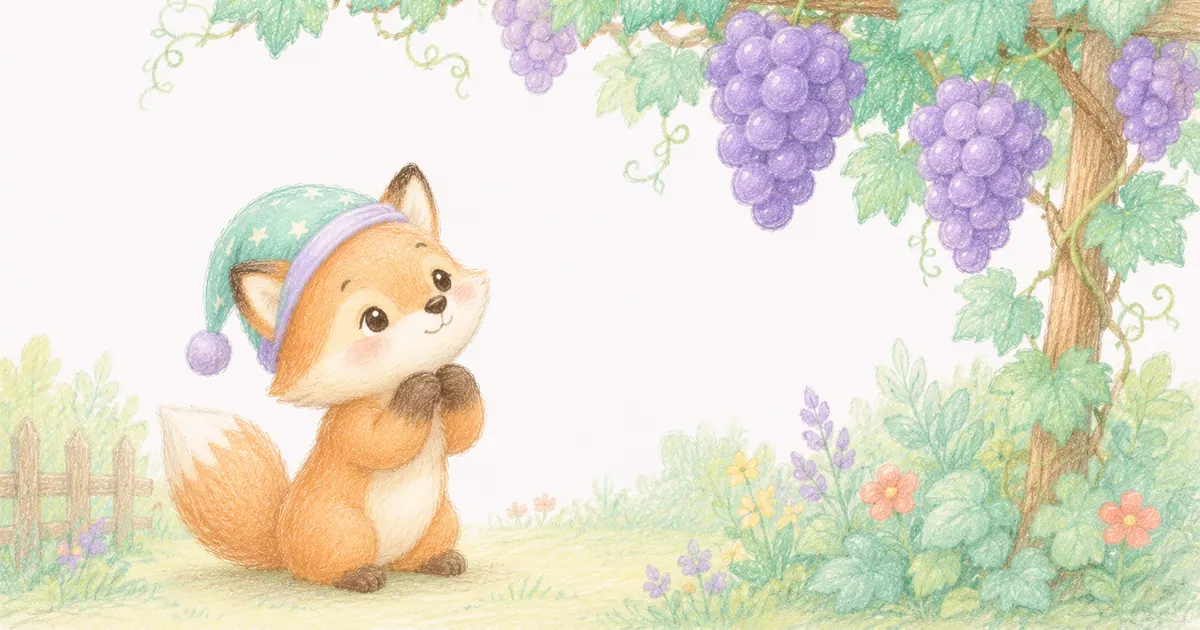
The Fox and the Grapes
A hungry fox fails to reach ripe grapes and calls them sour rather than admit his disappointment.
Read now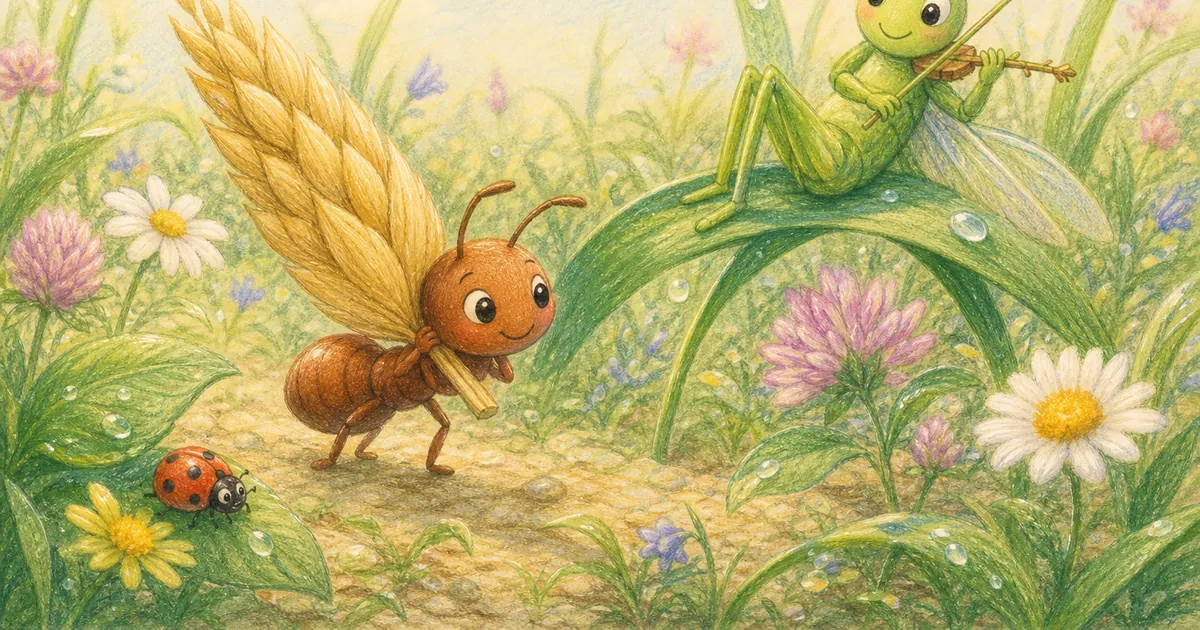
The Ant and the Grasshopper
A grasshopper sings and plays all summer while an ant quietly stores food, and when the snow falls, the grasshopper learns that joy needs a little preparation too.
Read now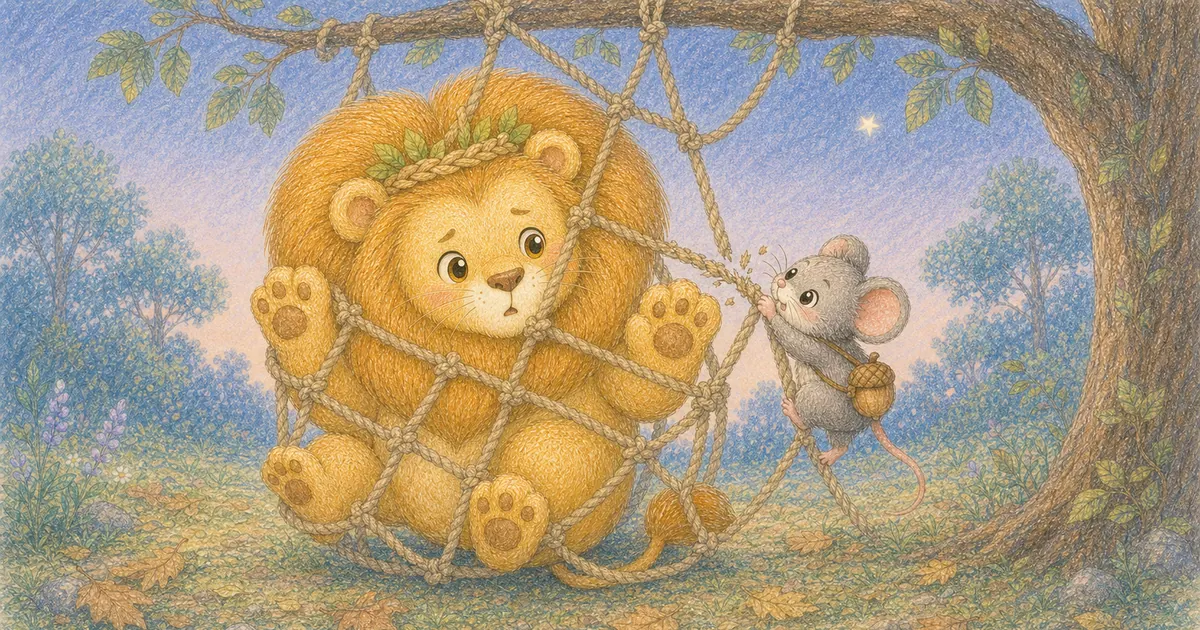
The Lion and the Mouse
A mighty lion spares a little mouse who tumbles onto his nose, and later, caught fast in a hunter's net, learns just how much a small friend can help.
Read now