The Dog and the Wolf
狗與狼
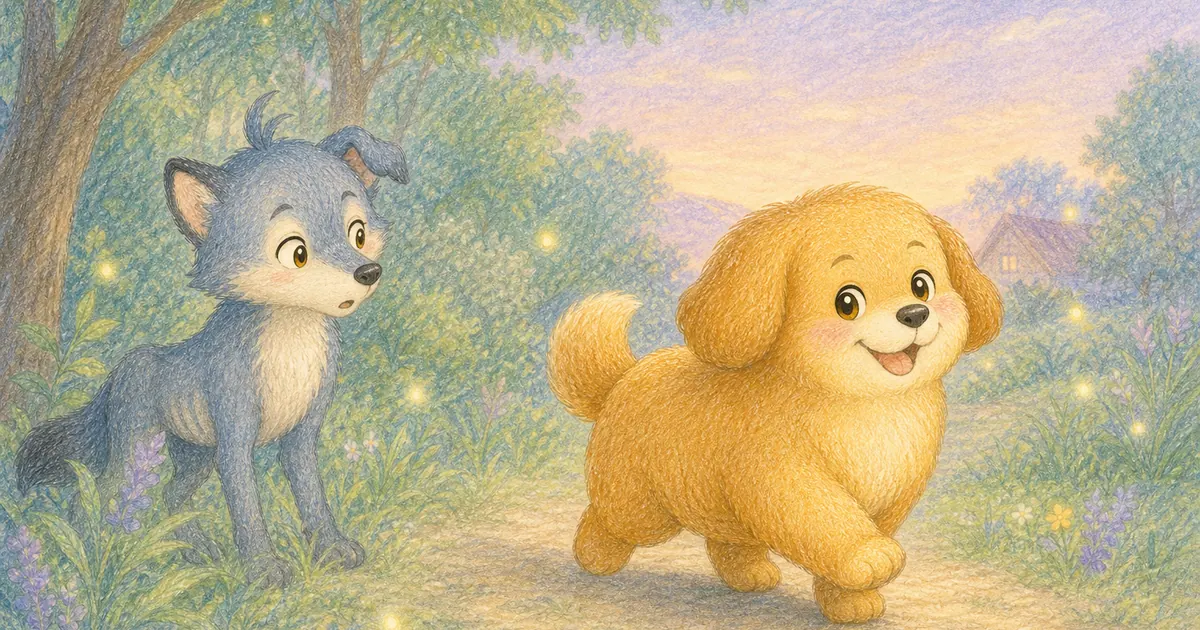
A thin, hungry wolf envies a well-fed dog's easy life — until he spots a worn mark on the dog's neck and chooses to go hungry rather than give up his freedom.
The story
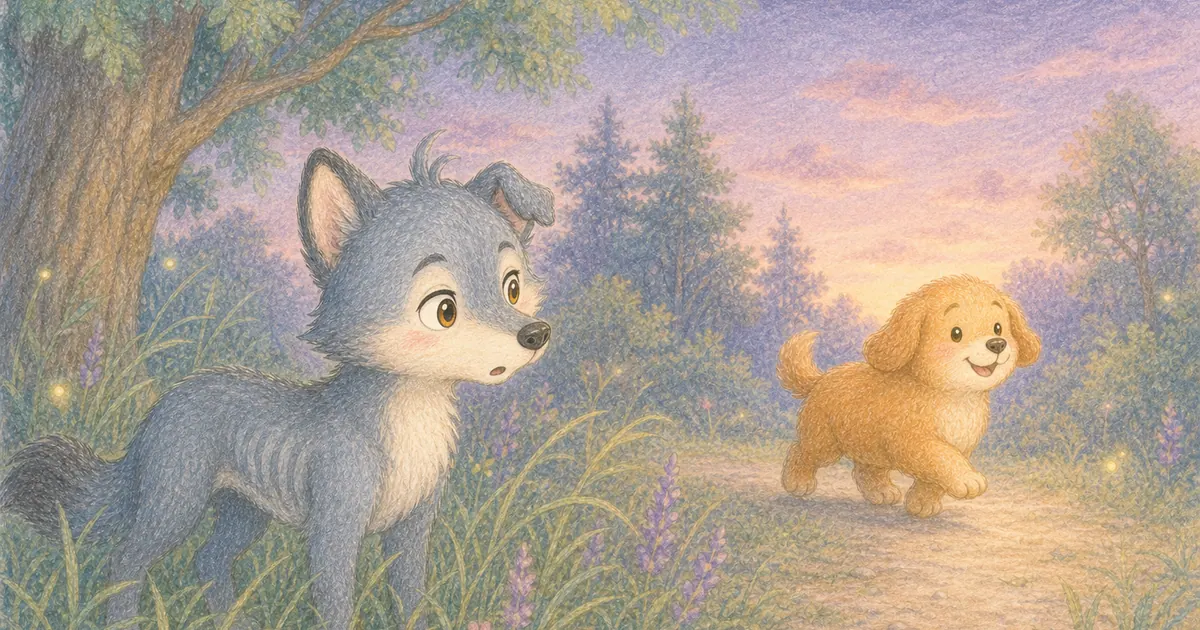
Once, at the edge of a deep green forest, there lived a wolf so thin that his ribs showed plainly beneath his dusty grey-blue coat. He had not eaten a good meal in days, and even his footsteps had grown slow and weary. One evening, as he wandered along the forest's edge looking for food, a rich, meaty smell drifted past his nose. He followed it and found a big dog, round and glossy-coated, strolling proudly down a path.
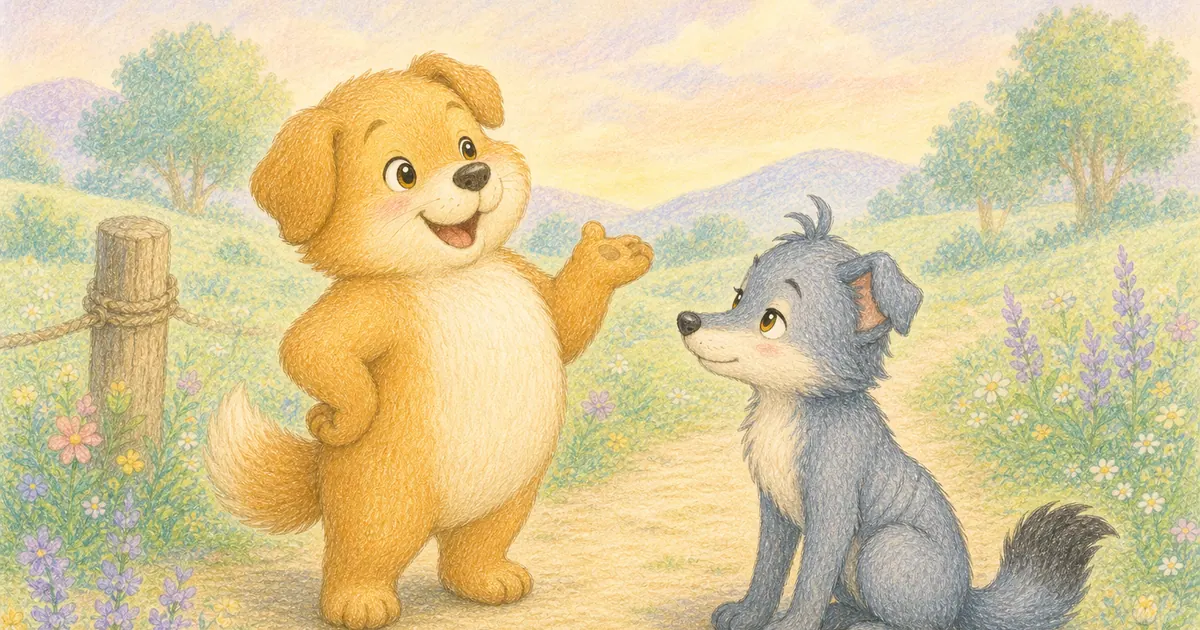
The wolf could hardly believe his eyes. "Friend dog," he said, "how did you grow so plump, with such a shining coat? I run through this forest every day and still barely find a bite to eat." The dog puffed out his chest proudly. "It is easy," he said. "I guard a farmhouse at night, and my master brings me a full bowl of meat and bones every single day. I never have to worry about anything — I only need to stay close to home."
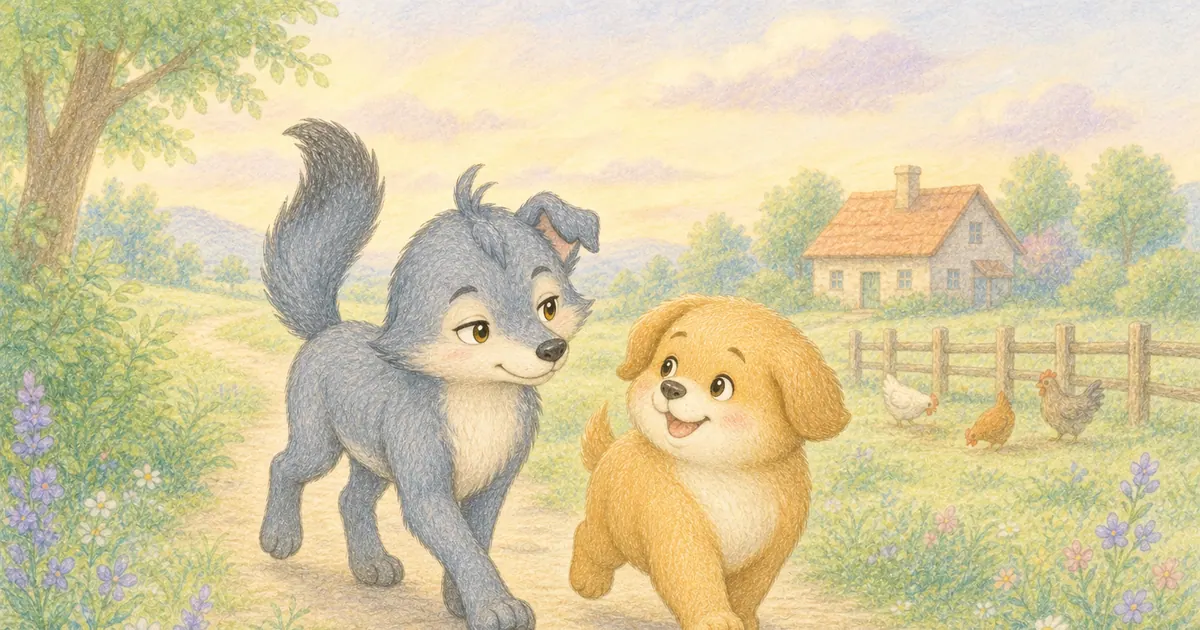
The wolf's stomach growled loudly at the thought. He pictured warm meals every day and a dry place to sleep under a roof, and he could not help saying, "That sounds wonderful — so much better than being cold, wet, and hungry in the forest. Do you think your master would take me in too?" "Of course," said the dog cheerfully. "Just come along with me!" So the two of them walked side by side down the path toward the farmhouse, the wolf's heart light with excitement and gratitude.
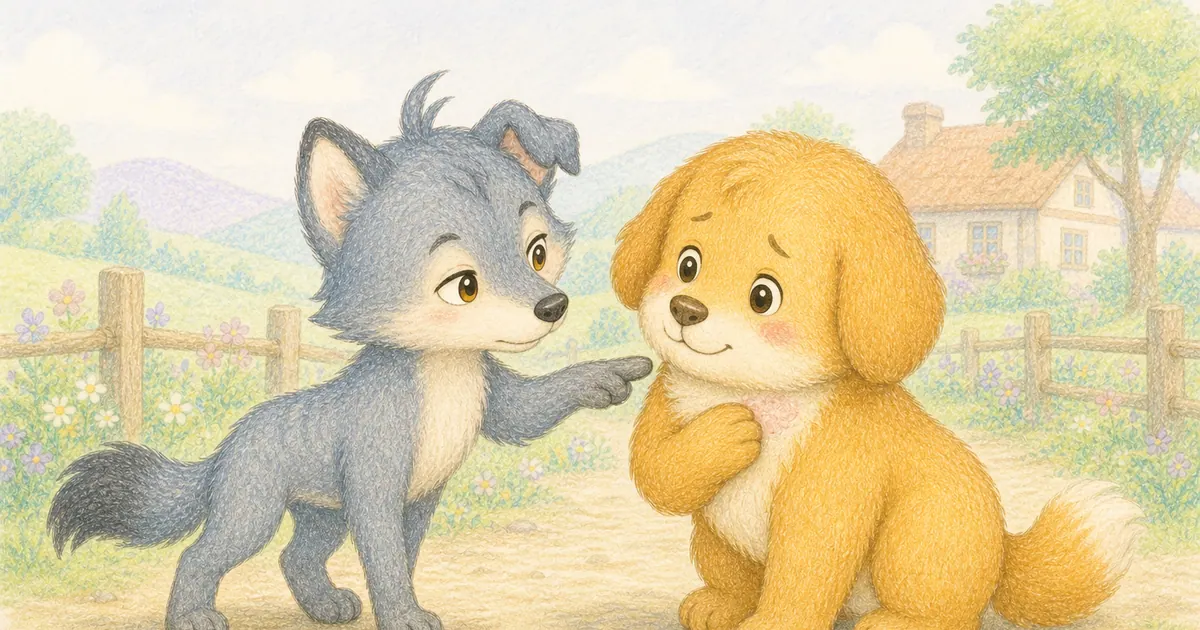
As they walked, the wolf noticed a strange bare patch on the dog's neck, where the fur had worn thin and a bit of pink skin showed through. Curious, he stopped and asked, "What happened there, on your neck?" The dog paused, touched the spot with a paw, and answered simply, "Oh, that? At night, my master ties a thick chain around my neck so I won't wander off. It rubbed a bit at first, but I've gotten used to it by now."
The wolf stopped walking. His excitement slowly faded as he stared at the worn mark on the dog's neck. "So," he said slowly, "you eat well all day, but at night you are chained up, and you cannot even go where you please?" The dog nodded, unbothered. "You get used to it," he said. "It's better than going hungry."
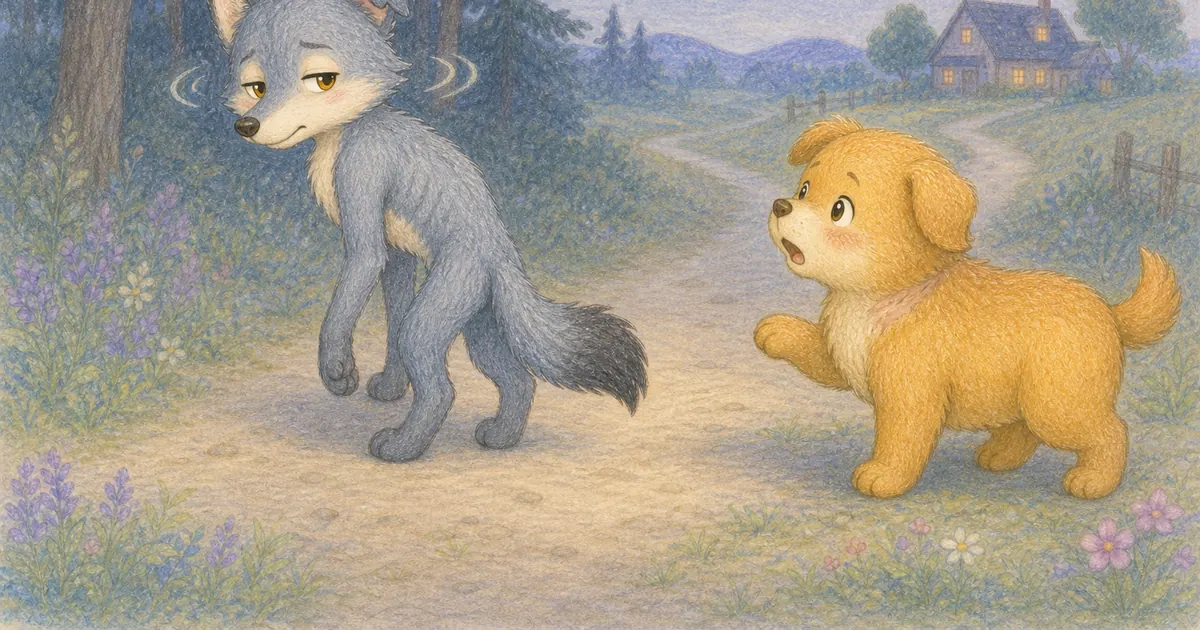
The wolf shook his head and stepped back. "Thank you for your kindness, friend, but I don't think I will come after all." The dog looked surprised. "Why not? You'll never go hungry again if you stay with me!" The wolf looked toward the deep forest, where moonlight fell softly through the trees, and said quietly, "A full belly is not worth losing my freedom. I would rather go without." And with that, he turned and walked back toward the trees.
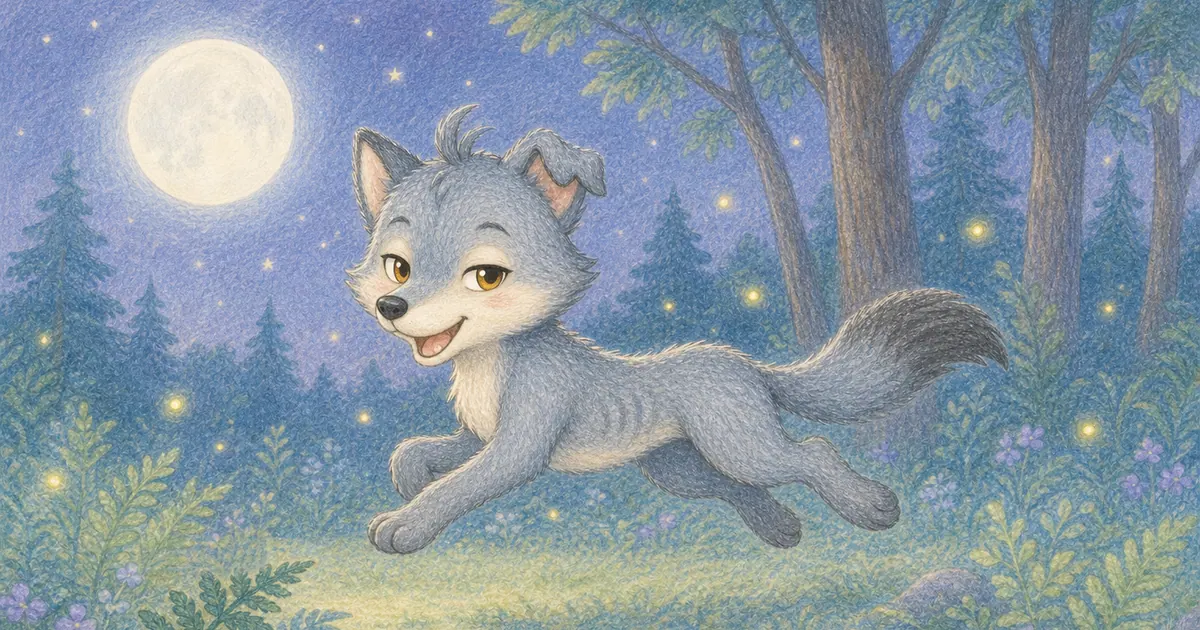
That night, the wolf made his way alone through the quiet forest. His stomach was still empty, but his steps felt lighter than before, and he ran and leapt through the moonlight, breathing in the free night air. Far away, beneath the farmhouse eaves, the dog had already been chained up for the night. He curled up, glanced toward the forest, wagged his tail once, and settled down quietly to wait for tomorrow's bowl of meat and bones.
Story takeaway
Comfort bought at the price of freedom may not be worth having — being able to choose your own life is worth more than a full belly.
 Talk together
If something could give you a full meal every day, but meant always doing what someone else decided — would you want it?
 For grown-ups
Parent note
This story is good for talking about comfort versus freedom. The dog eats well and has a warm home, but pays for it every night with a chain around his neck and no say in where he goes. The wolf stays hungry, but runs free through the forest. Ask your child if they've ever had to choose between a comfort and the freedom to decide for themselves — and talk about which kinds of comfort are worth it, and which ones hide a cost you can't see at first.
 Words to learn
- worn: rubbed thin or damaged from long use or rubbing. e.g. The fur on the dog's neck was worn thin from the chain.
- chained: tied up with a chain so you cannot leave. e.g. Every night, the dog was chained beside the post.
- freedom: being able to act and choose as you wish, without being held back. e.g. The wolf chose to go hungry rather than give up his freedom.
 Reading activity
Play a little game called "Is it worth the trade?" — read a few lines and see what your child thinks: "Trade your favorite toy for a whole day of not being allowed outside." → Probably not worth it — playing freely matters more. "Get an extra candy, but you have to lie to Mom." → Not worth it — honesty matters more than candy. "Finish homework early, and get to choose what to do all evening." → Worth it — that's real free time you earn. At the end, wonder together: would you rather be the dog or the wolf in this story?
From the same story series
Read next
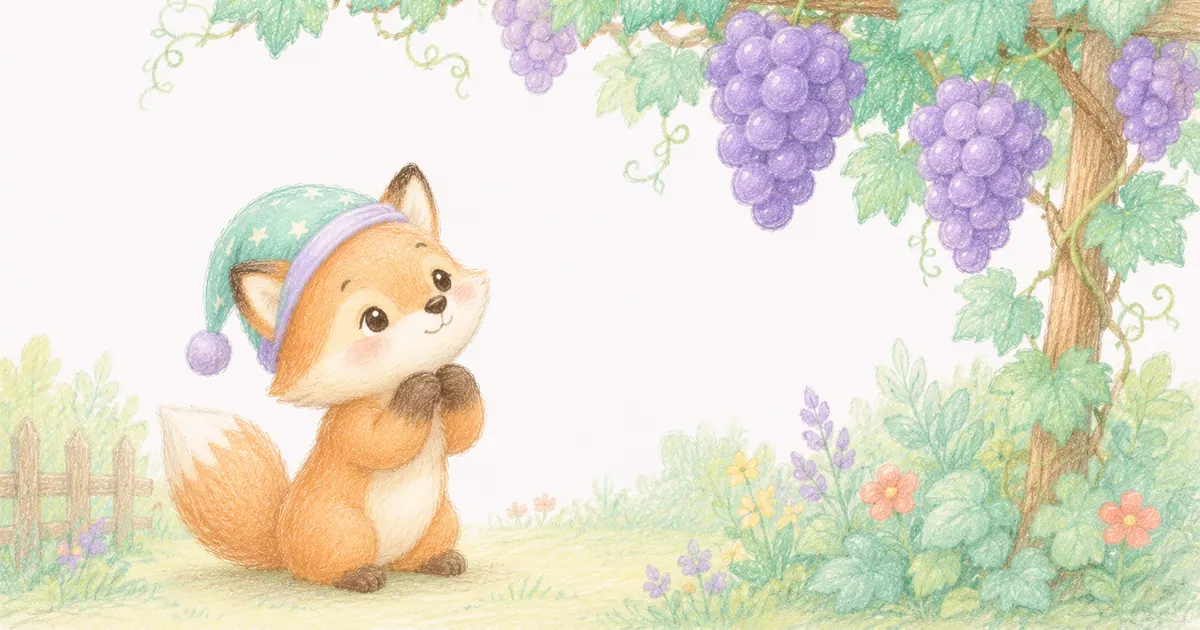
The Fox and the Grapes
A hungry fox fails to reach ripe grapes and calls them sour rather than admit his disappointment.
Read now
The Ant and the Grasshopper
A grasshopper sings and plays all summer while an ant quietly stores food, and when the snow falls, the grasshopper learns that joy needs a little preparation too.
Read now
The Lion and the Mouse
A mighty lion spares a little mouse who tumbles onto his nose, and later, caught fast in a hunter's net, learns just how much a small friend can help.
Read now