The Peacock and the Crane
孔雀與鶴
A vain peacock mocks a crane's plain feathers, until winter comes and shows which of them truly has something worth having.
The story
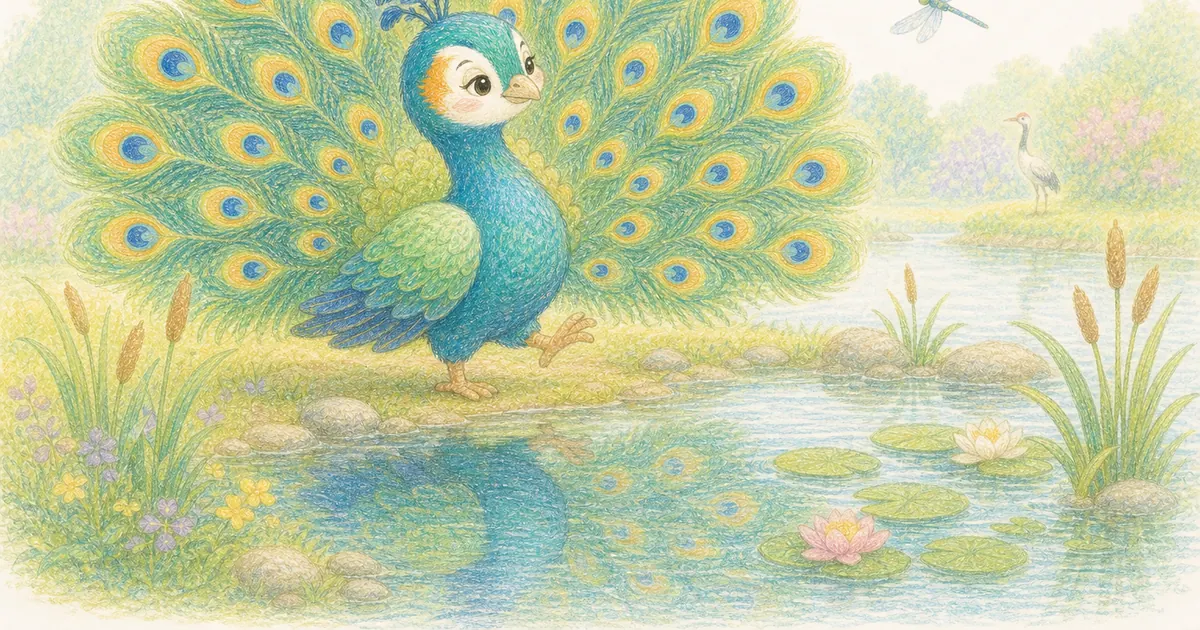
Once, beside a reedy pond, there lived a peacock. His tail was large and splendid, and when he spread it open it looked like a fan made of rainbows — layer upon layer of gold, deep blue, and shimmering green. Every morning he stood in the shallow water and admired his own reflection, opening and closing his tail again and again, never once tired of the sight.
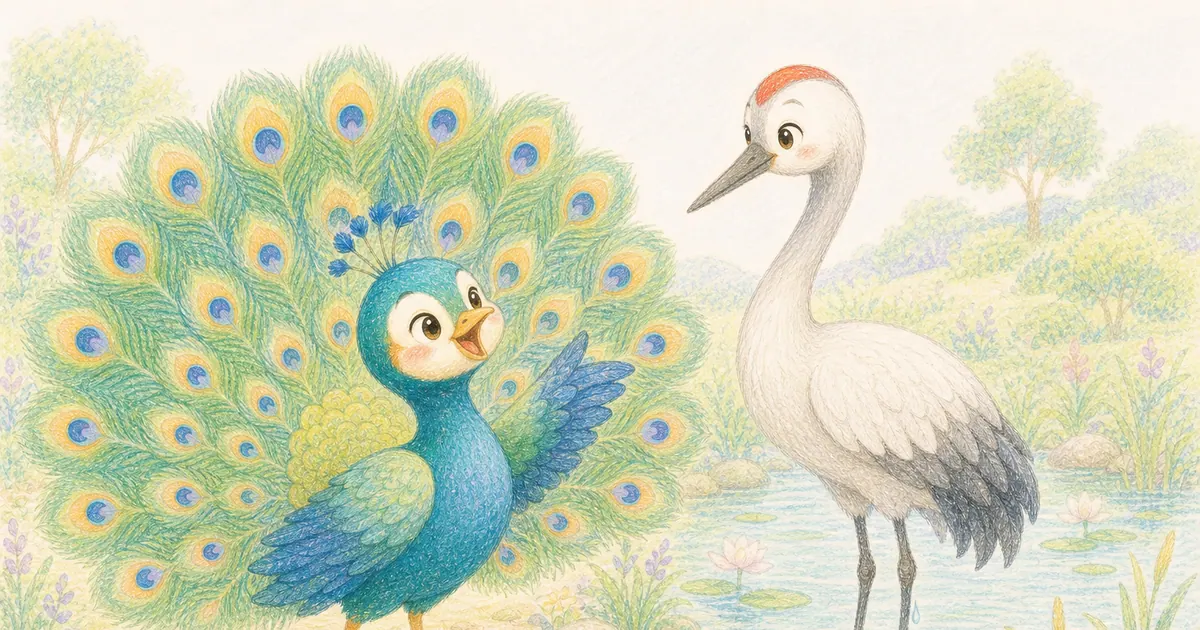
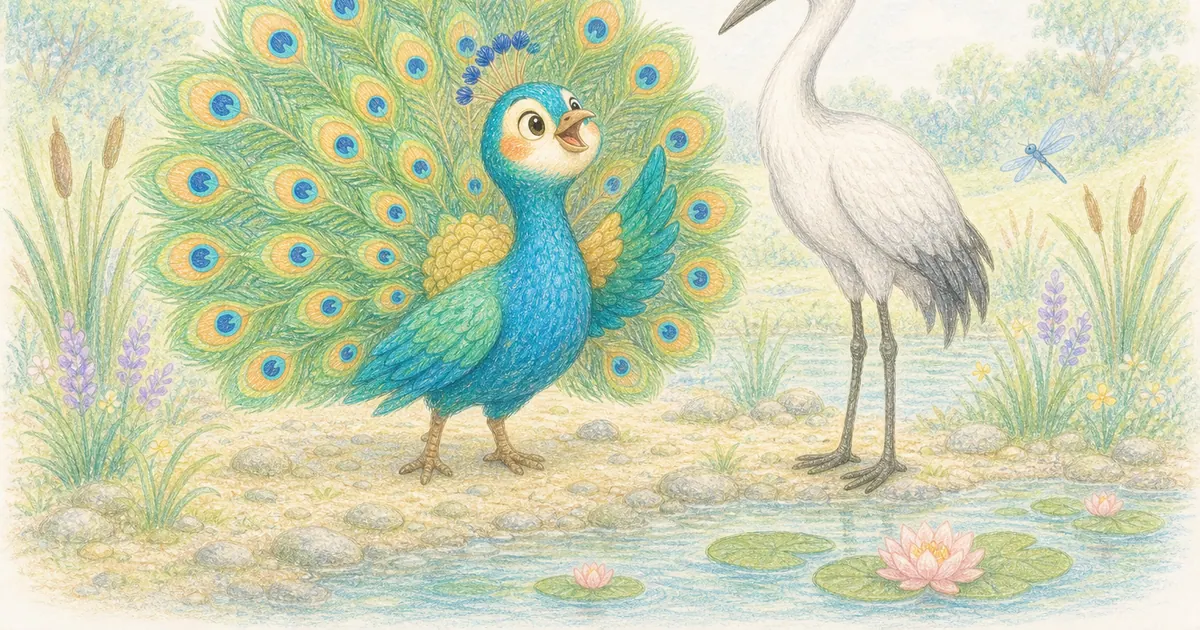
One day a grey-white crane flew in from far away, folded his long wings, and landed at the edge of the pond to rest and drink. The moment the peacock saw the crane's plain feathers, he could not help laughing. "Look at me, friend crane," he said. "I am dressed like a king, in gold and purple and every color of the rainbow. And look at you — nothing but grey and white, not a single bright pattern anywhere. What a pity."
The crane took a few sips of water, lifted his head, and looked calmly at the peacock. "You are right," he said, without any anger at all. "My feathers are plain. But I can fly over the highest mountains, up among the clouds, and sing to the stars. And you — you can only drag that beautiful tail along the ground, pecking for seeds with the chickens."
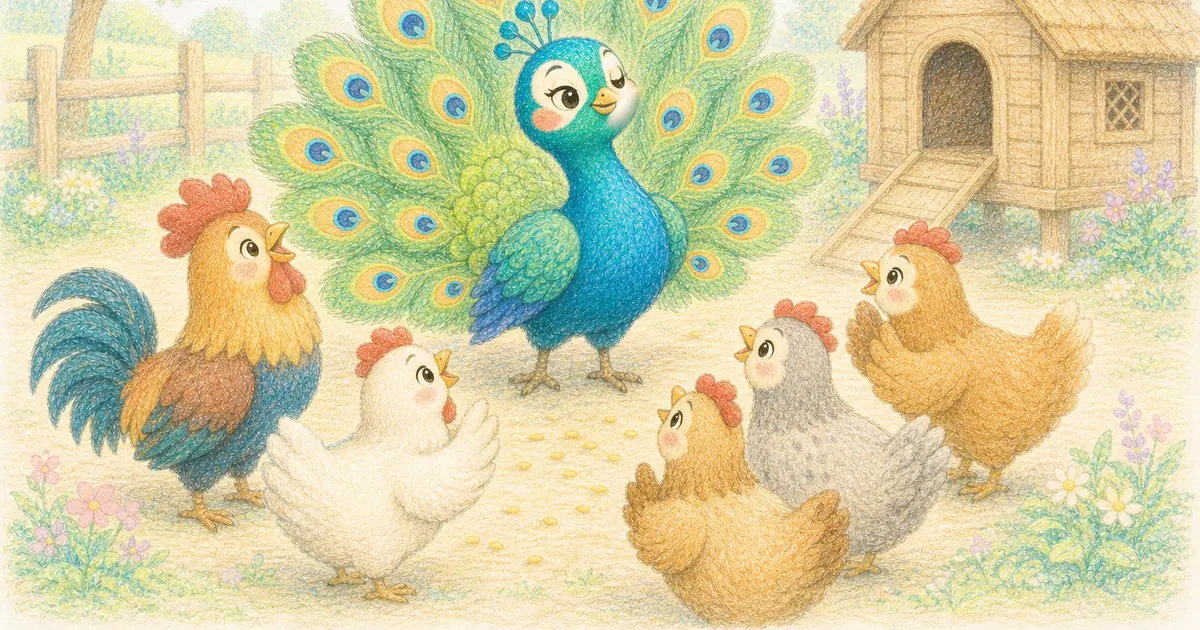
The peacock tossed his head. "What is the use of flying high?" he said. "Being beautiful is what matters most." He spread his tail even wider and strutted along the pond's edge, marching right over to the henhouse to show off his feathers to the hens and the rooster, who gathered round clucking in admiration. The peacock felt prouder than ever.
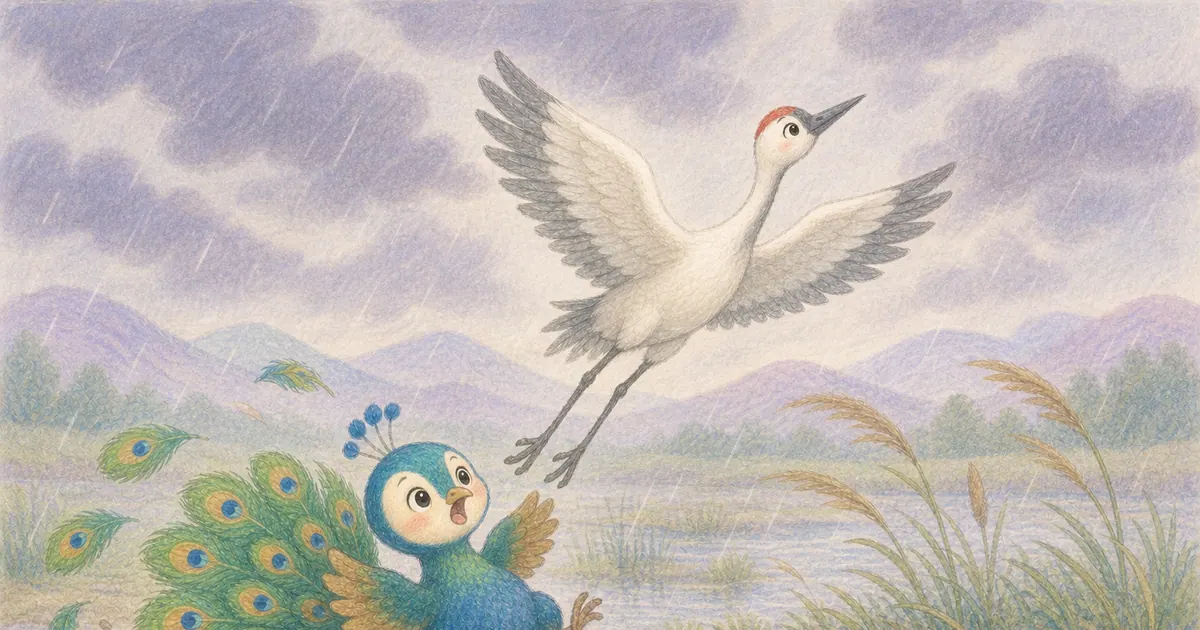
That evening dark clouds gathered and the wind grew strong; rain was coming. The crane gave a light leap, spread his broad wings, and rose steadily into the sky, flying off toward the distant mountains until he vanished into the mist. The peacock tried to follow, but his tail was too big and heavy — after two flaps he tumbled back to the ground and had to hide, dripping and miserable, under the henhouse eaves while the rain flattened his once-splendid feathers.
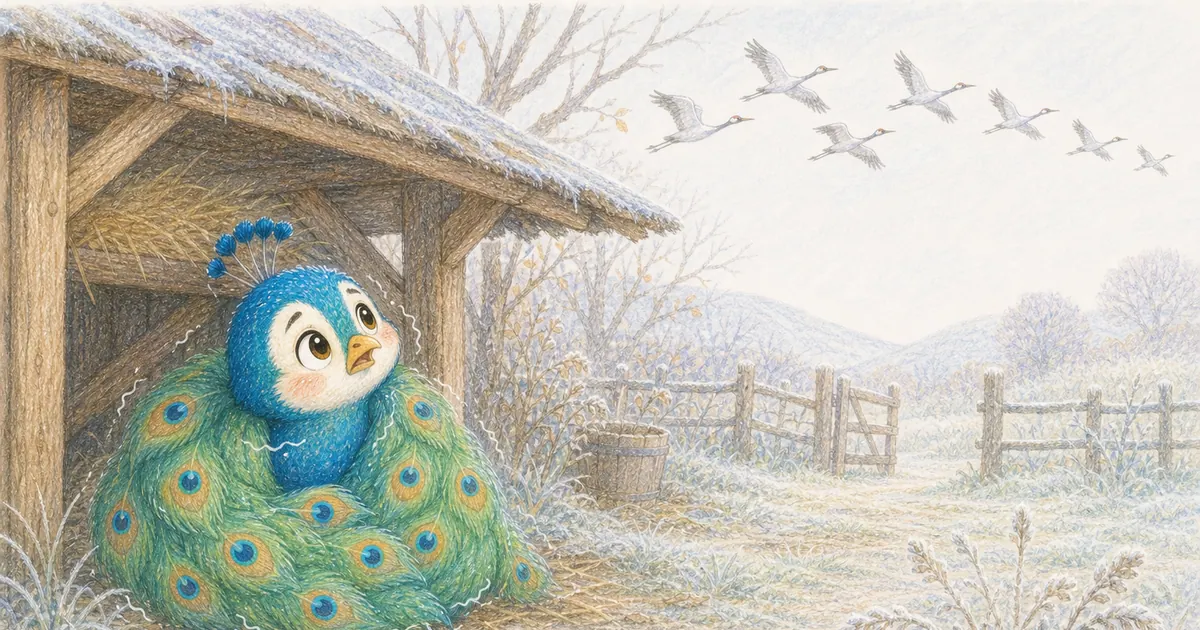
Autumn came, and each day grew colder, until a thin frost covered the ground by the pond. The peacock huddled in a corner of the henhouse, trying to keep warm, when he heard loud calls echoing from the sky above. He looked up and saw a long line of cranes, wings beating in steady rhythm, crossing the cold sky toward the warm south — and among them was the very same grey-white crane, calling out clear and far.
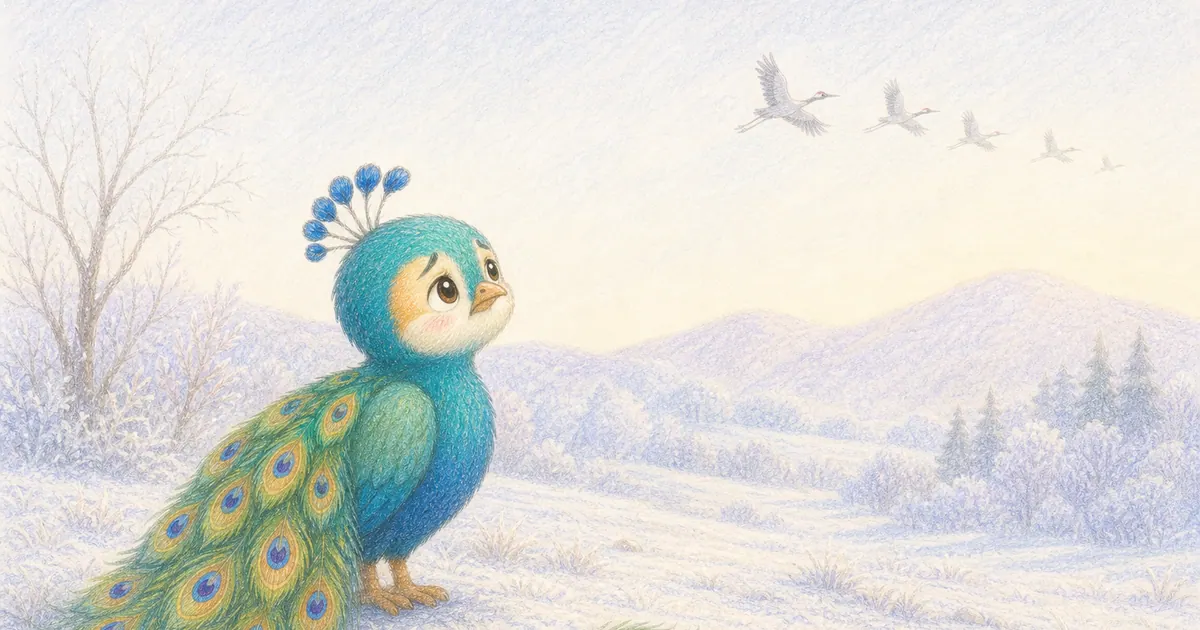
The peacock, dragging his damp and drooping tail, watched the cranes grow smaller and smaller until they were only a few tiny specks on the horizon, and slowly lowered his head. At last he understood: no matter how beautiful feathers are, they are worth far less than a pair of wings that can fly far and carry you safely through the winter.
Story takeaway
Fine feathers don't make fine birds — real ability matters more than how something looks, especially when hard times come.
 Talk together
If a friend seemed to have everything "nicer" than you, but you were good at something they weren't, how would that change the way you see yourself?
 For grown-ups
Parent note
This story is a good way to talk with your child about the difference between looking good and being capable. The peacock only cares who has the prettier feathers, never stopping to ask whether beauty can keep you warm or dry. The crane's plain feathers, though, carry him safely through wind, rain, and winter. You might ask your child whether they know someone who cares mostly about looking fancy, and then talk about the quieter, less flashy things people are good at — kindness, problem-solving, running fast — that often matter more than appearances.
 Words to learn
- plain: simple, without much decoration. e.g. The crane's feathers looked plain next to the peacock's.
- show off: to display something on purpose so others will admire it. e.g. The peacock showed off his tail to the hens.
- migrate: when animals travel together to another place as the seasons change. e.g. The cranes migrate south every autumn to stay warm.
 Reading activity
Play a quick "pretty vs. useful" game with your child — read a few examples and see if they can spot the difference: "These shoes look lovely, but they let the rain in." → pretty but not so useful, like the peacock's tail. "These shoes look plain, but they grip well on a mountain trail." → plain but truly useful, like the crane's wings. "One card is beautifully drawn, the other fixed a broken toy." → both good, just useful in different ways. Finish by asking together: when winter comes, would you rather be the peacock or the crane?
From the same story series
Read next
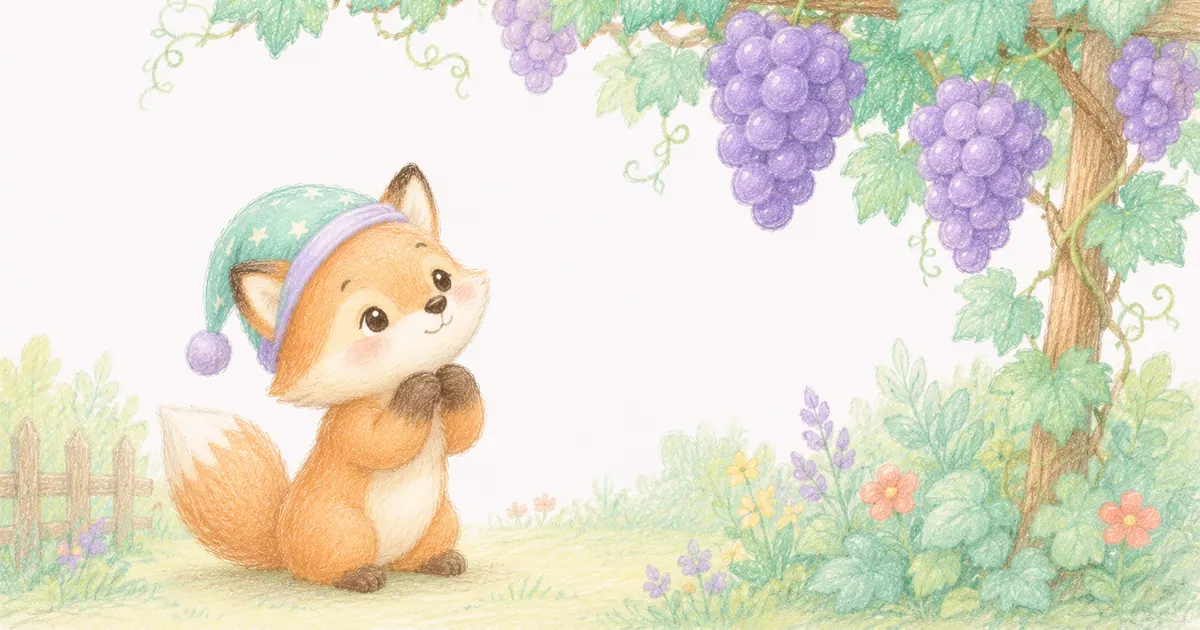
The Fox and the Grapes
A hungry fox fails to reach ripe grapes and calls them sour rather than admit his disappointment.
Read now
The Ant and the Grasshopper
A grasshopper sings and plays all summer while an ant quietly stores food, and when the snow falls, the grasshopper learns that joy needs a little preparation too.
Read now
The Lion and the Mouse
A mighty lion spares a little mouse who tumbles onto his nose, and later, caught fast in a hunter's net, learns just how much a small friend can help.
Read now