
The Boy Who Cried Wolf
放羊的孩子
A bored shepherd boy tricks the village again and again by shouting "Wolf!" for fun, until a real wolf comes — and no one believes him anymore.
The story
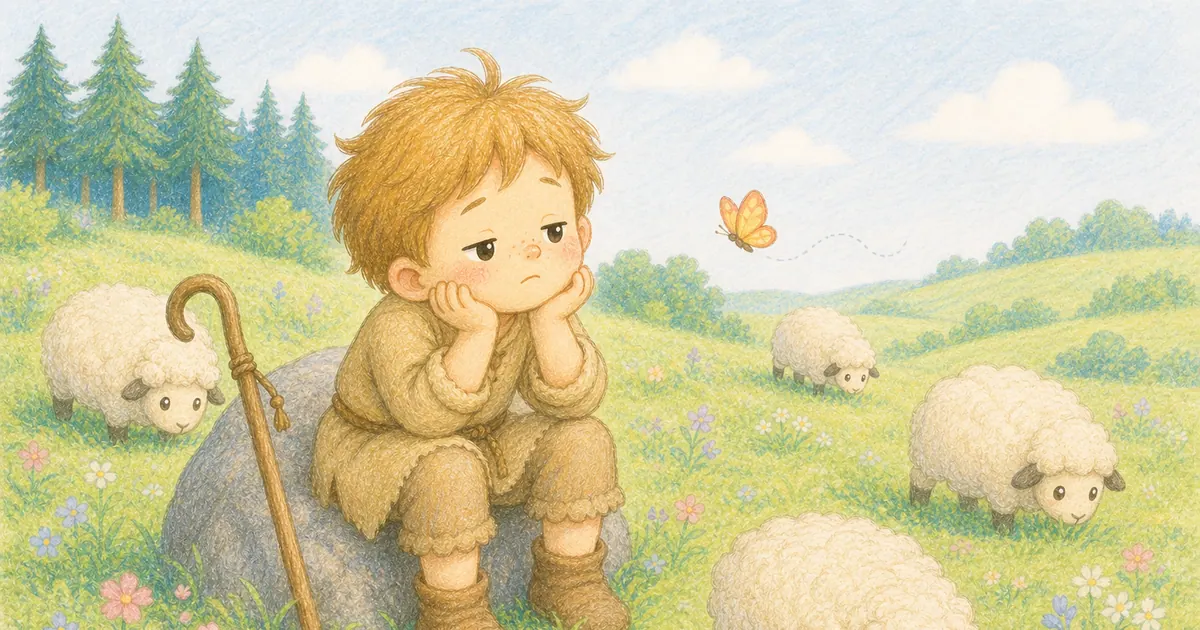
Once there was a grassy hillside near a dark forest, just outside a village, and a shepherd boy took his flock of sheep there to graze every day. Day after day, nothing happened on the quiet hill, and the boy grew so bored that he sat on a rock, chin in his hands, staring off toward the distant trees.
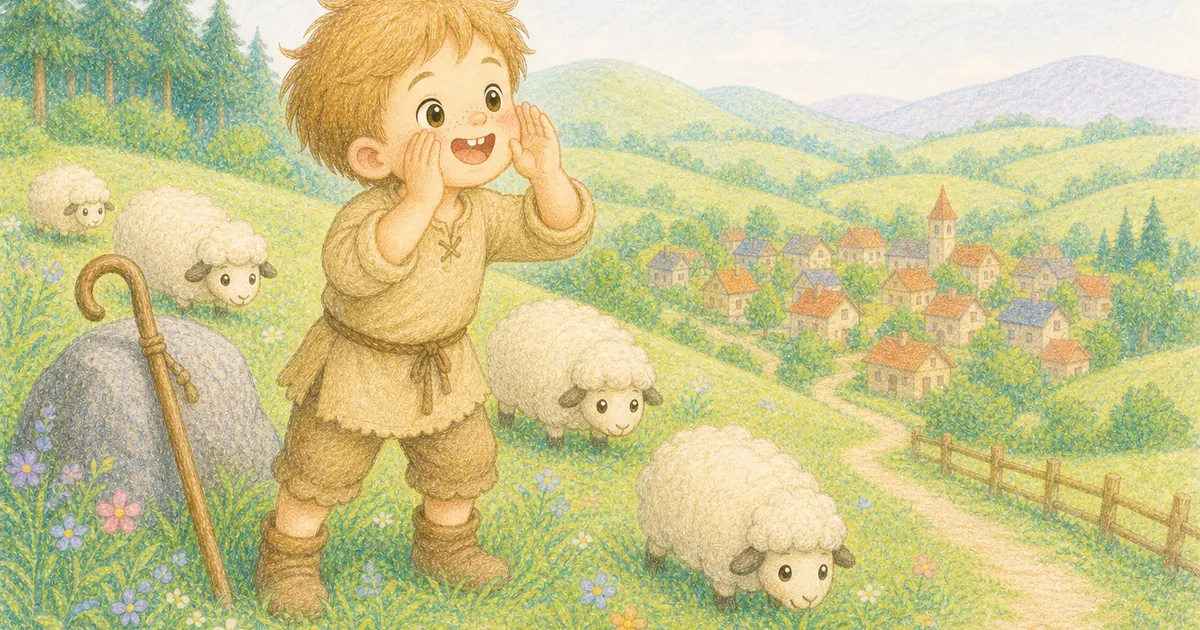
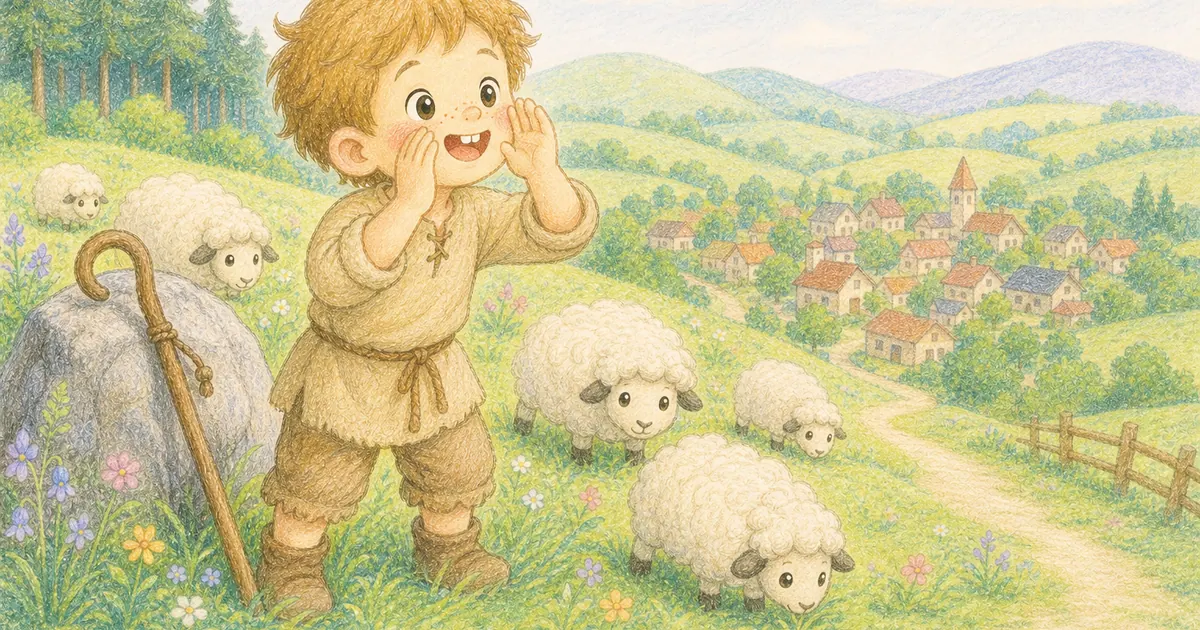
One day he thought of a fine game. He jumped up and shouted down toward the village with all his might, "Wolf! Wolf! Help!" The villagers dropped what they were doing, grabbed sticks and hoes, and hurried up the hill to save him. But when they reached the meadow, there was no wolf at all — only the sheep, calmly grazing. Watching the grown-ups pant and wipe the sweat from their brows, the boy could not help laughing. "Ha! You should have seen your faces!" Tired and cross, the villagers shook their heads and walked back down.
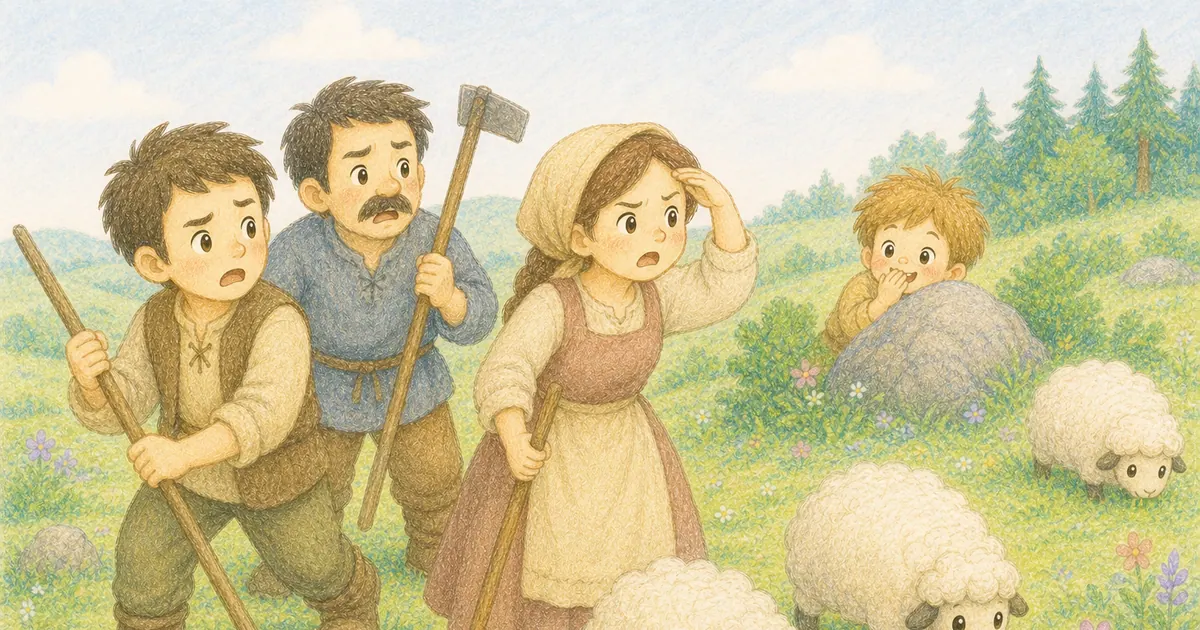
A few days later, feeling bored again, the boy tried the same trick, shouting at the top of his voice, "Wolf! Wolf!" Though half doubtful, the villagers came running once more, and once more there was not a single wolf hair to be found on the whole hillside. The boy laughed so hard he could barely stand straight. This time the grown-ups' faces were even darker, and one old man shook his head. "That is not a kind joke to play, boy."
Some days after that, the sky began to darken, and the shadows under the trees grew thick and deep. Just as the boy was about to gather his things and go home, he heard a low growl from the bushes. He looked up and saw a lean, grey-blue wolf slipping out from the edge of the forest, its eyes narrowed and its mouth curling, creeping closer to the flock.
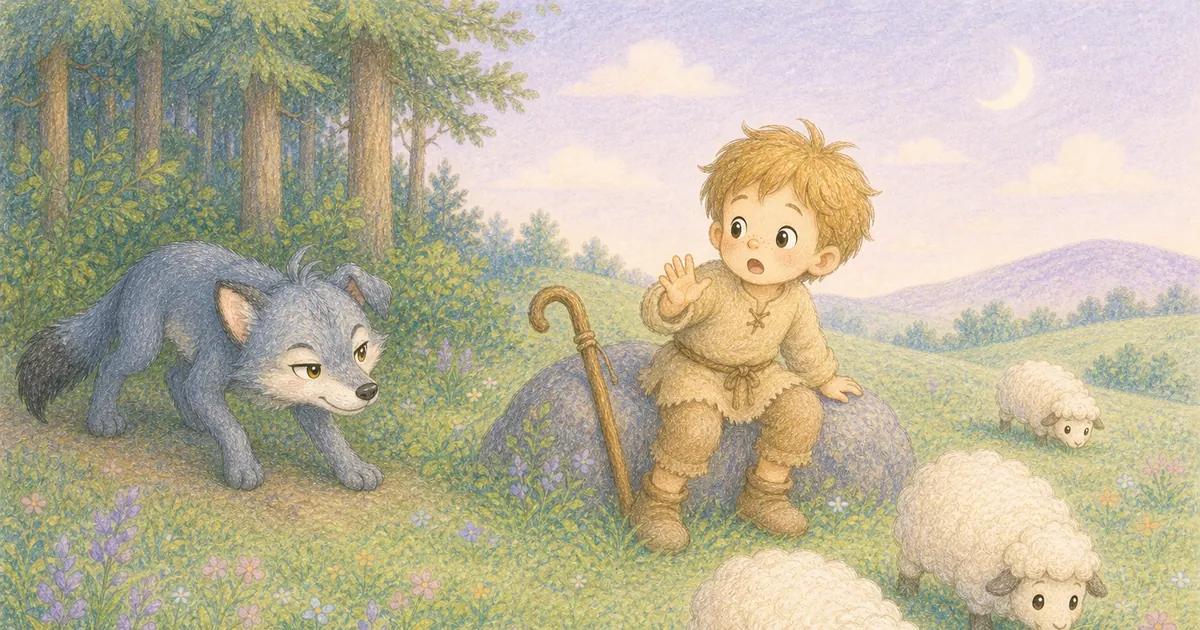
This time it was a real wolf! The boy's face went pale, and he tore off running toward the village, shouting with all his breath, "Wolf! Wolf! This time it's real! Help!"
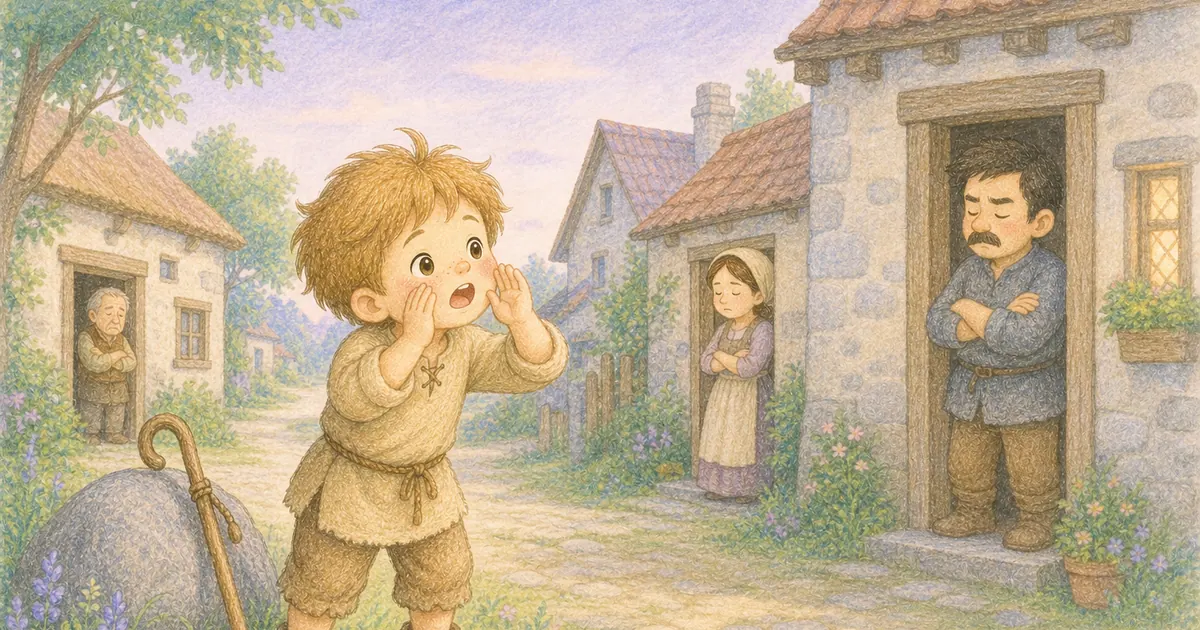
But the villagers, hearing his cries, only shook their heads and went on with their work. "He's just trying to fool us again," said one woman. "Let's not go this time." Not one of them climbed the hill to look.
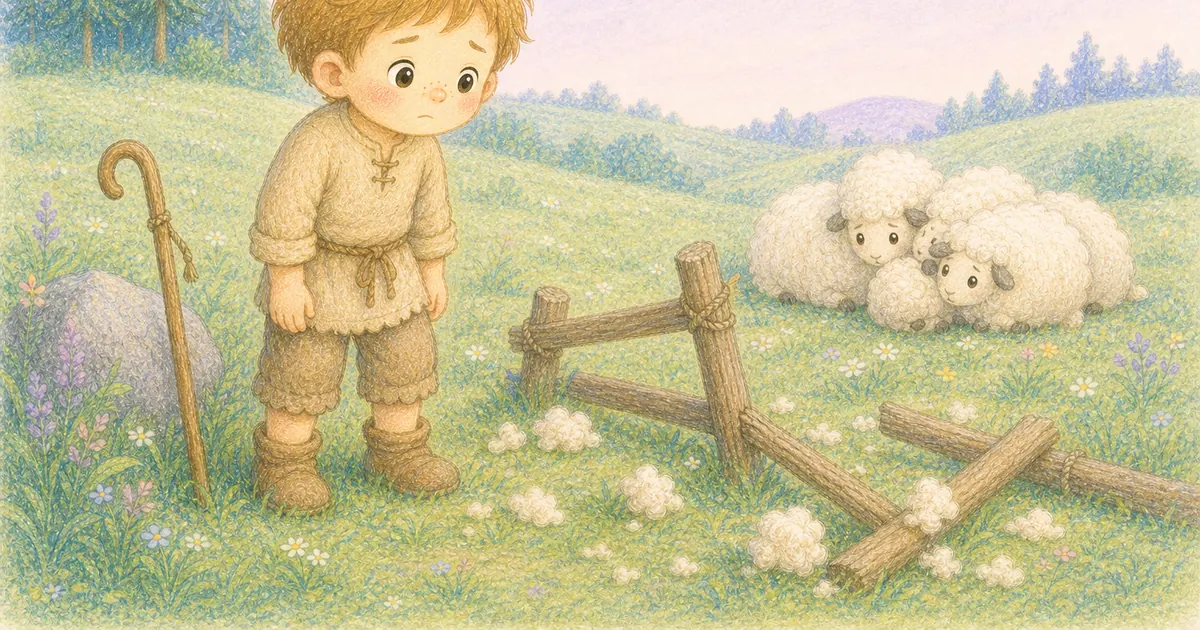
The boy stood at the edge of the village, shouting until his voice grew hoarse, but no one ever came. By the time he stumbled back to the meadow, the grey-blue wolf had already carried off a sheep and slipped back into the deep forest, while the rest of the flock scattered in fright across the trampled grass, part of the pen fence knocked down. Standing alone on the empty hillside, the boy finally understood: none of his old, funny lies could help him now.
Night quietly settled over the hill, and a thin crescent moon rose above the forest. Leading the sheep that remained, the boy walked slowly back to the village, step by step, thinking to himself that he would never tell that kind of trick again.
Story takeaway
Lying for fun may bring a laugh today, but when real help is needed, no one will believe you anymore.
 Talk together
If you want people to notice you, what is a better way than saying something that isn't true?
 For grown-ups
Parent note
This story is a natural way to talk about lying and trust. The shepherd boy isn't a bad child — he's simply bored and looking for fun, never imagining that his tricks would cost him the one thing he needed most: to be believed when it truly mattered. You might talk together about how trust is a little like savings, built up slowly but spent all at once by a single lie. It's also worth wondering aloud about other, honest ways to find excitement or company when boredom strikes.
 Words to learn
- 故技重施 (try the same old trick again): to use the same method once more. e.g. A few days later, the boy tried the same trick again.
- 半信半疑 (half believing, half doubting): partly trusting, partly unsure. e.g. Half doubtful, the villagers still climbed the hill to check.
- 狼藉 (scattered in disorder): things left messy and scattered about. e.g. The startled flock scattered, leaving the meadow in disorder.
 Reading activity
Play a little game of "can this be believed" — read a few lines together and talk about how the listener might react: "I've borrowed your storybook three times and said I'd return it, but never did — this time I really will." → People might not quite believe it anymore. "I took my temperature, and I really do have a fever." → If someone usually tells the truth, this time they'll be believed right away. "I told my classmate the classroom was on fire, but it was just a joke." → Next time something is really wrong, no one may want to listen. At the end, wonder together: if the shepherd boy had never told a lie in the first place, would the ending have turned out differently?
From the same story series
Read next
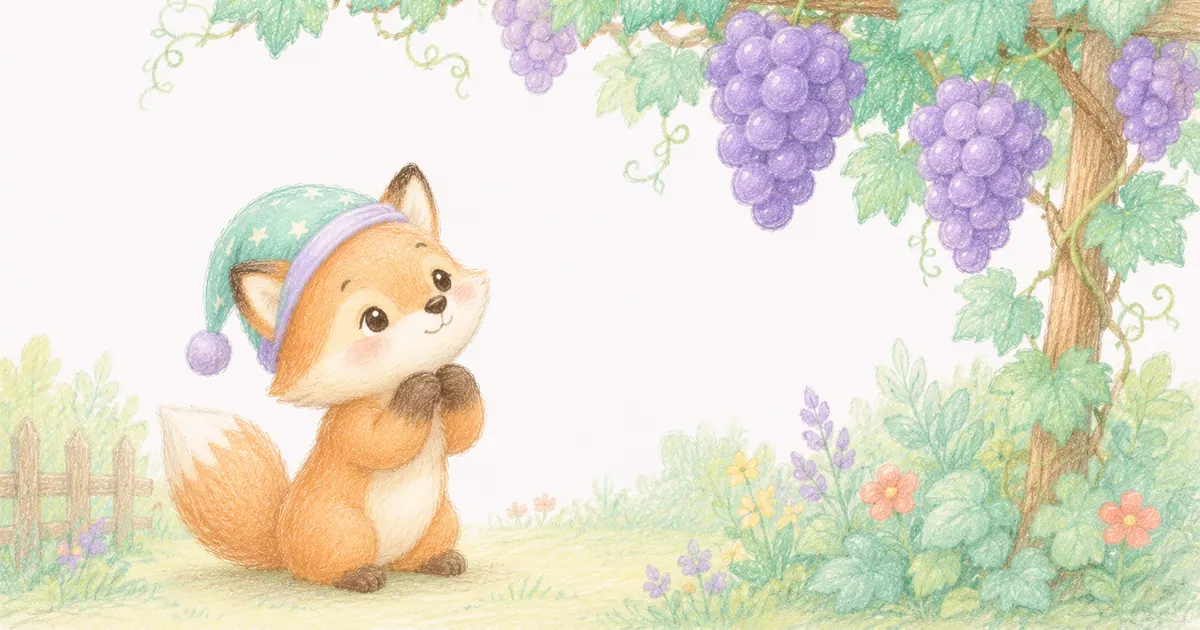
The Fox and the Grapes
A hungry fox fails to reach ripe grapes and calls them sour rather than admit his disappointment.
Read now
The Ant and the Grasshopper
A grasshopper sings and plays all summer while an ant quietly stores food, and when the snow falls, the grasshopper learns that joy needs a little preparation too.
Read now
The Lion and the Mouse
A mighty lion spares a little mouse who tumbles onto his nose, and later, caught fast in a hunter's net, learns just how much a small friend can help.
Read now