

The Fisherman Piping
吹笛的漁夫
A fisherman tries to charm fish into his net with music, then learns that action succeeds where wishing fails.
The story
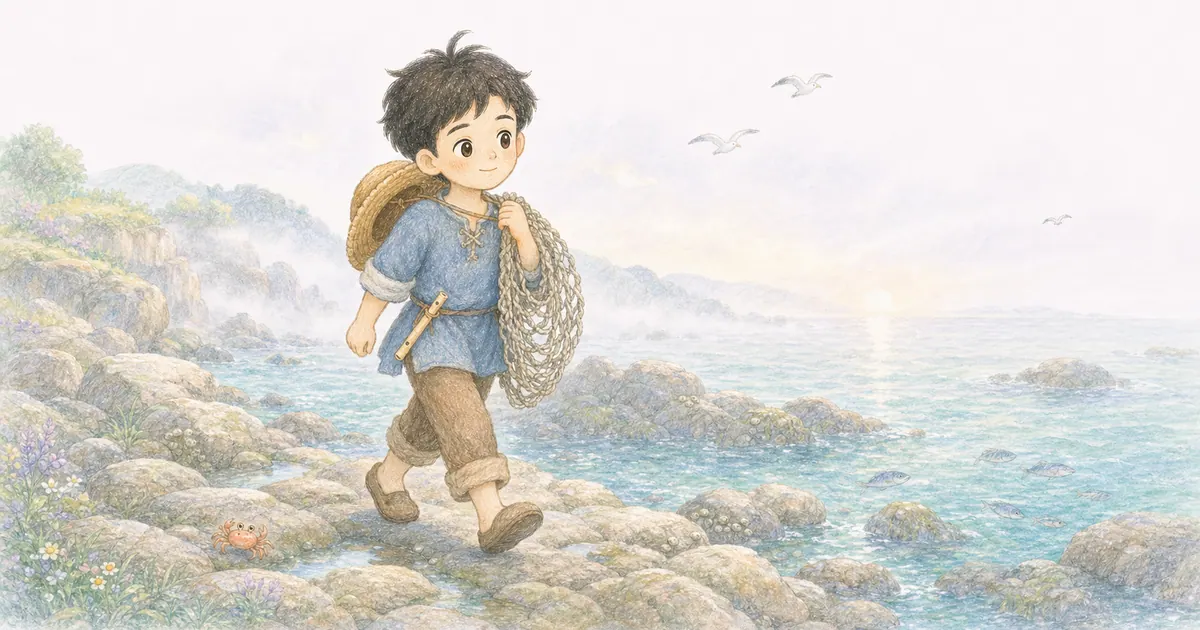
Once there lived a young fisherman who was skilled not only at casting a net, but also at playing a sweet, clear flute. Before the sky was fully light, he set out along the seaside rocks, his net slung over one shoulder and his beloved wooden flute tucked in his belt. The sea wind carried a salty tang, waves slapped softly against the stones, and gulls circled and cried far above.
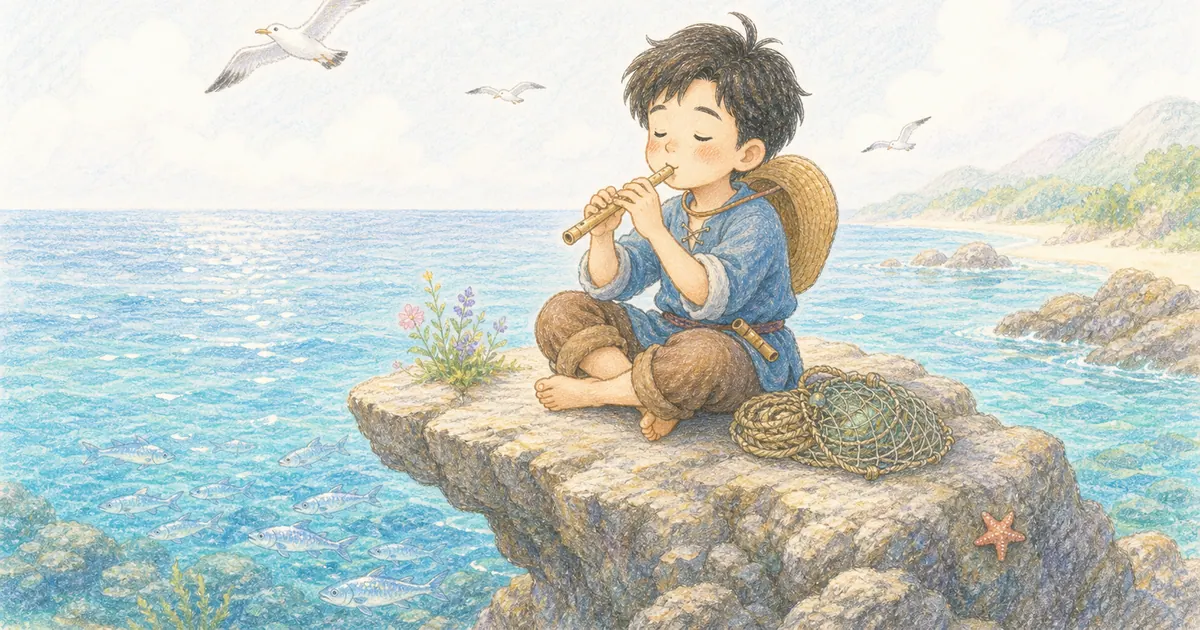
When he reached a rock that jutted out over the water, he set his net down at his feet and watched the silver flash of fish beneath the waves. A cheerful idea came to him. "If I play a fine tune," he thought, "perhaps the fish will be so charmed that they leap into my net themselves, and I won't need to cast it at all." Delighted with his own plan, he lifted the flute and began to play.
Tune followed tune — some quick and merry, some slow and sweet — drifting out over the water on the wind, then washing gently back with the waves. But the fish paid him no attention at all. They swam wherever they pleased, some drifting close to look, then flicking their tails and swimming away again. Not one leaped up to join him.
The sun climbed higher and higher until the rock grew warm beneath him. His fingers ached from playing, his lips grew dry, and his stomach rumbled with hunger. Still he waited, and still the fish swam on exactly as they always had, not one of them dancing into his net.
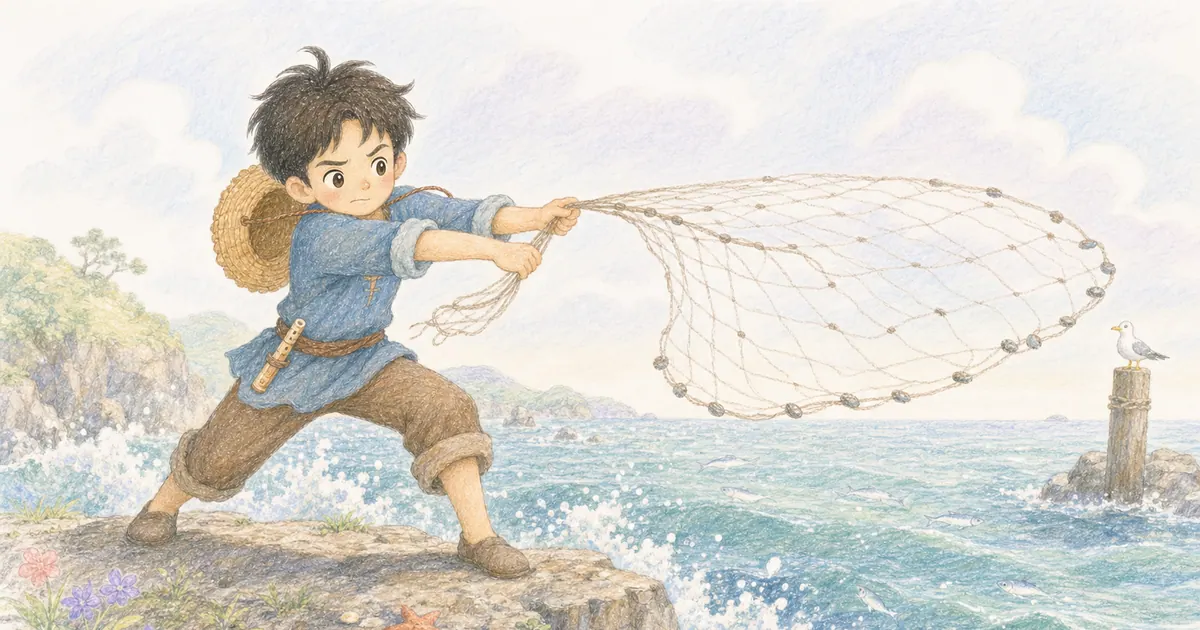
By the time the sun hung low and the sky began to dim, the fisherman finally tucked his flute away and picked up the net he had left untouched all day. He planted his feet firmly at the rock's edge, gathered his strength, and cast the net out in one strong throw. It opened wide in the air like a round parasol, then dropped smoothly into the water where the fish gathered.
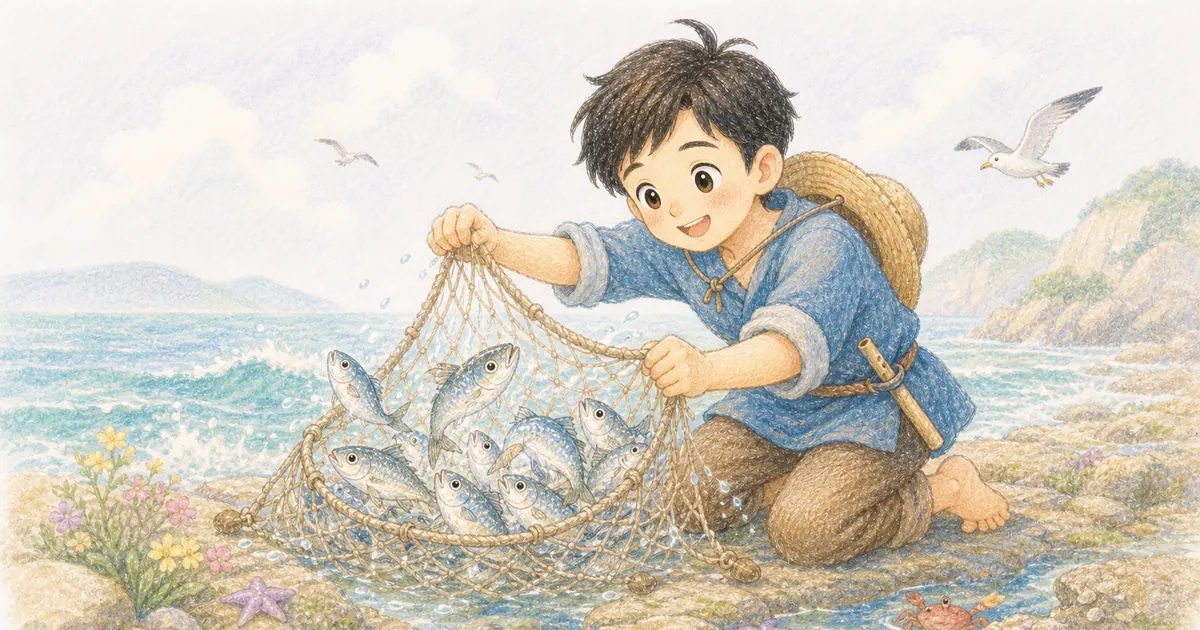
Before long he hauled the net back in, and it was full of fish leaping and slapping their tails, scattering droplets that caught the last gold light of evening. The fisherman laughed and said, "What strange creatures you are! When I played for you, not one of you would dance — yet now that I have stopped, you leap about so merrily!"
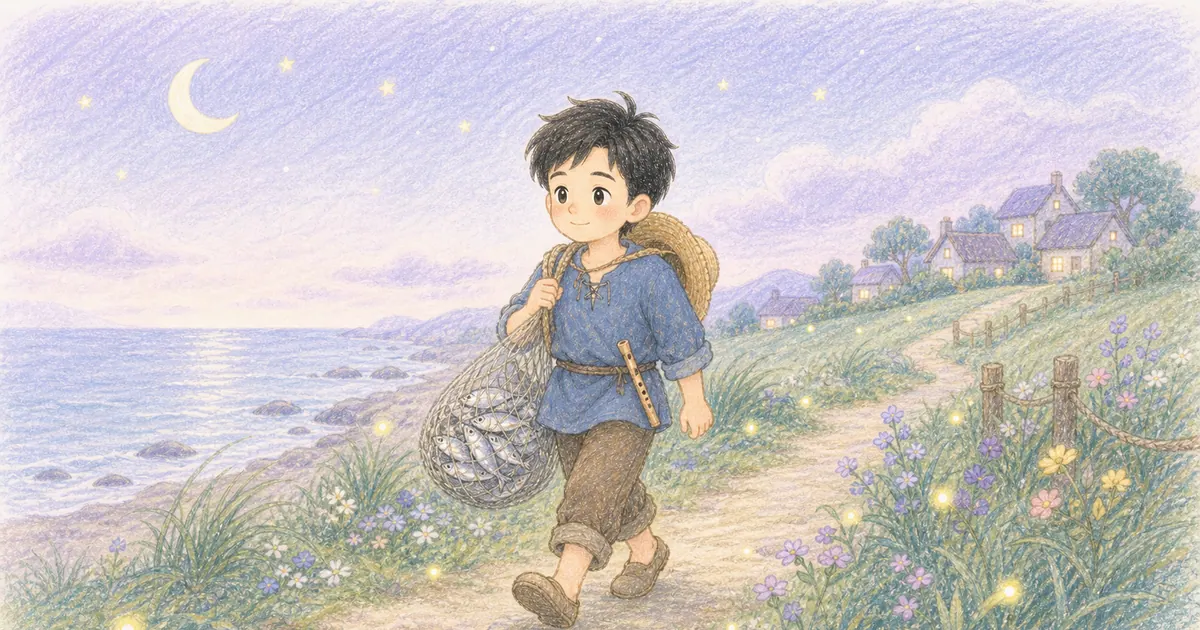
Night settled softly over the sea, and one star after another blinked awake. The fisherman shouldered his heavy catch, his flute still safe in his belt, and walked slowly home along the path between the rocks. As he walked, he thought about what the day had taught him: a sweet tune can lift the heart, but it is the net cast by one's own hands that truly brings the catch home.
Story takeaway
Pleasant hopes do little unless they are joined to timely action.
 Talk together
When is it useful to stop waiting for things to happen and begin doing the needed work?
 For grown-ups
Parent note
This story is a good fit for moments when your child is full of ideas but slow to actually start. The fisherman believes his sweet flute music alone will bring the fish into his net, and waits all day with nothing to show for it — until he finally casts the net himself. Talk together about times this happens at home, like wishing toys would tidy themselves or homework would finish on its own. It's a gentle reminder that good ideas matter, but it's the doing that brings real results.
 Words to learn
- net: a woven tool used to catch fish. e.g. The fisherman put away his flute and cast his net into the sea.
- drift: to move slowly and freely, without hurrying. e.g. The fish drifted through the water, paying no attention to the music.
- catch: what you gain after working hard at something. e.g. Only after casting the net himself did the fisherman get a real catch.
 Reading activity
Play a quick "just wishing vs. really doing" game with your child — describe a few situations and see if they can tell which is only wishing and which is real action: "Hoping your room will clean itself." → Just wishing — you have to tidy it yourself. "Picking up a bucket and cloth and wiping the table." → That's real action. "Imagining a test will turn out easy." → Just wishing — studying first actually helps. When you're done, wonder together: at the start of the story, which one was the fisherman doing?
From the same story series
Read next

The Fox and the Grapes
A hungry fox fails to reach ripe grapes and calls them sour rather than admit his disappointment.
Read now
The Ant and the Grasshopper
A grasshopper sings and plays all summer while an ant quietly stores food, and when the snow falls, the grasshopper learns that joy needs a little preparation too.
Read now
The Lion and the Mouse
A mighty lion spares a little mouse who tumbles onto his nose, and later, caught fast in a hunter's net, learns just how much a small friend can help.
Read now