
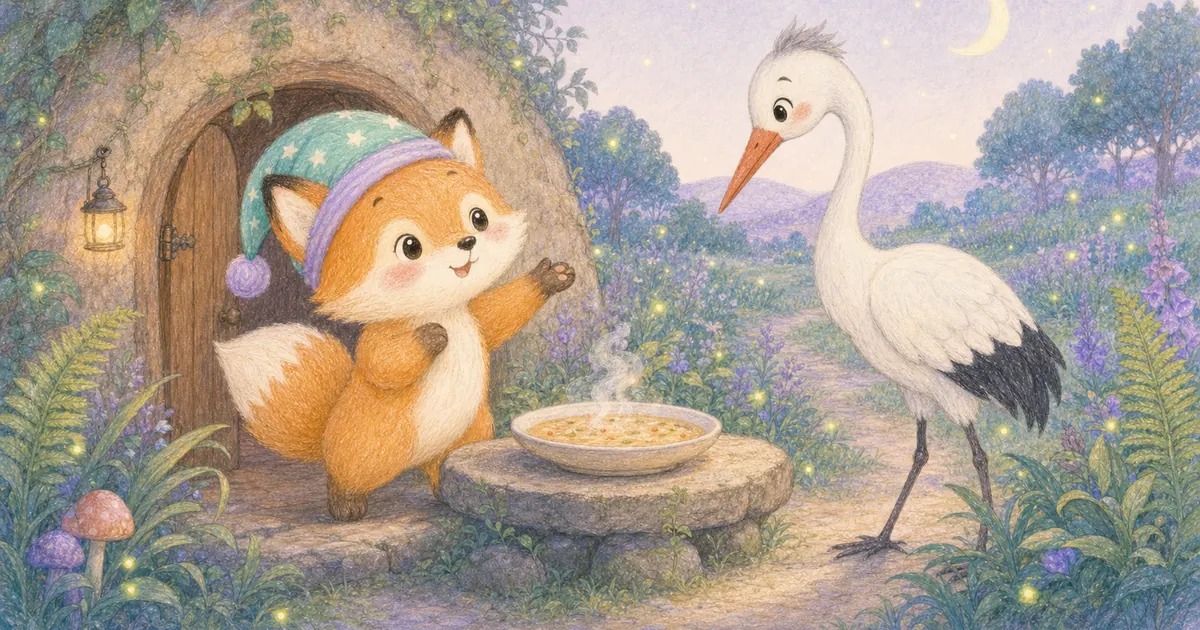
The Fox and the Crane
狐狸與鶴
A fox tricks a crane with soup served in a shallow dish, and the crane's gentle reply helps him feel what it is like to be forgotten as a guest.
The story
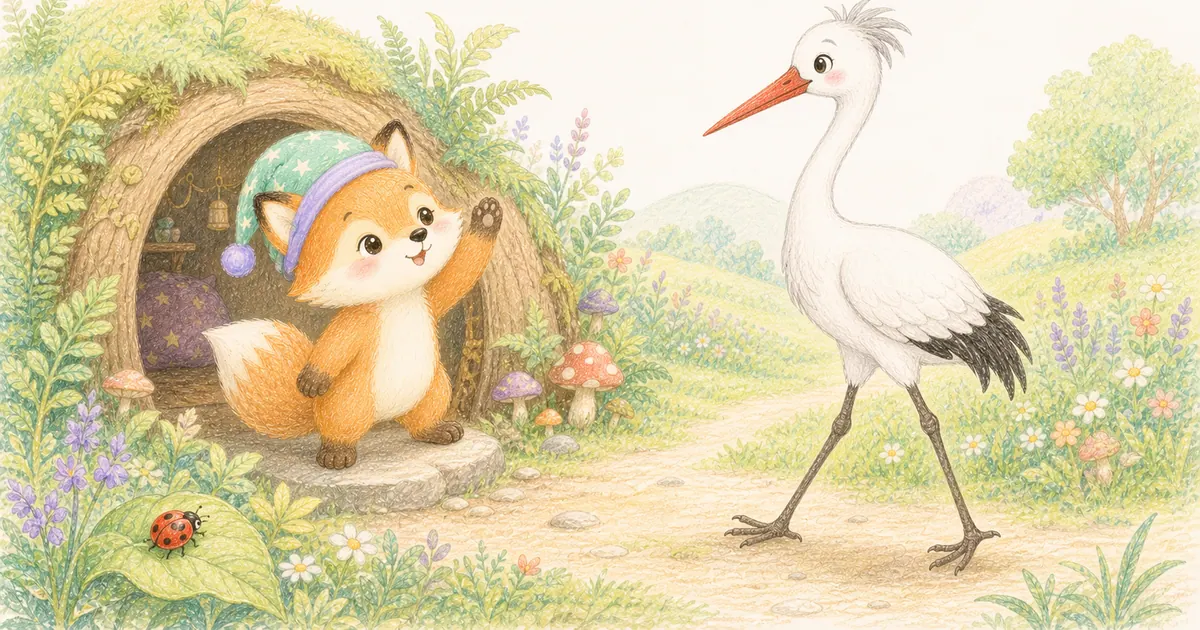
One sunny afternoon, at the edge of the forest, a fox peeked out from his den and saw a crane strolling on her long thin legs across the meadow. An amusing idea popped into his head, and he called out cheerfully, "Dear crane, you must come to supper at my house tonight! I have a pot of delicious soup waiting for you." The crane was delighted. She smoothed her white feathers and promised to arrive at dusk.
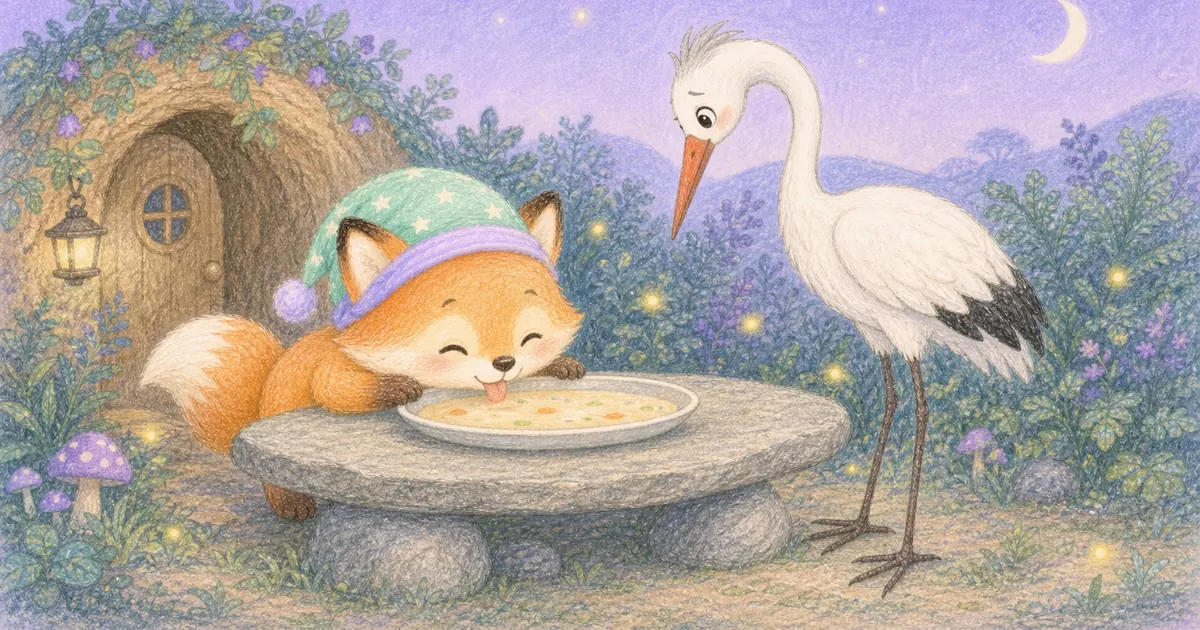
When evening came, the crane picked her way through the low bushes on her long thin legs and arrived at the fox's den. The fox had already set out supper on a flat stone table by the door — a pot of hot soup, poured into a wide, shallow dish. He lapped it up easily with his tongue, smacking his lips and saying, "Mmm, what a treat!"
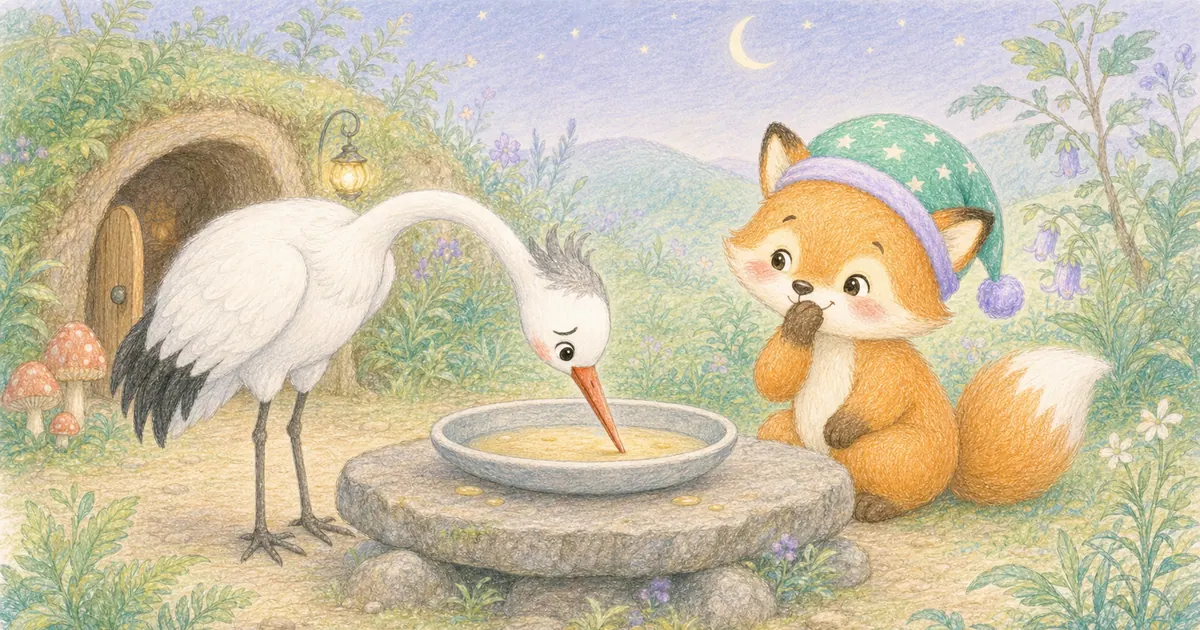
The crane looked down at the shallow dish and felt a flutter of worry. Her bill was long and slender, and no matter how she bent her head, she could only tap the bottom of the dish and catch almost nothing to eat. The fox noticed her trouble and hid a sly little smile, asking with false concern, "Why aren't you eating more, dear crane? Is the soup not to your liking today?" The crane did not complain aloud. She rose politely, thanked him for his hospitality, and said gently before she left, "Thank you for having me — you must come and visit my home sometime too."
Back at her pond, the crane thought it over for several days and decided she would serve the fox a proper supper too — this time, in whatever way felt easiest to her.
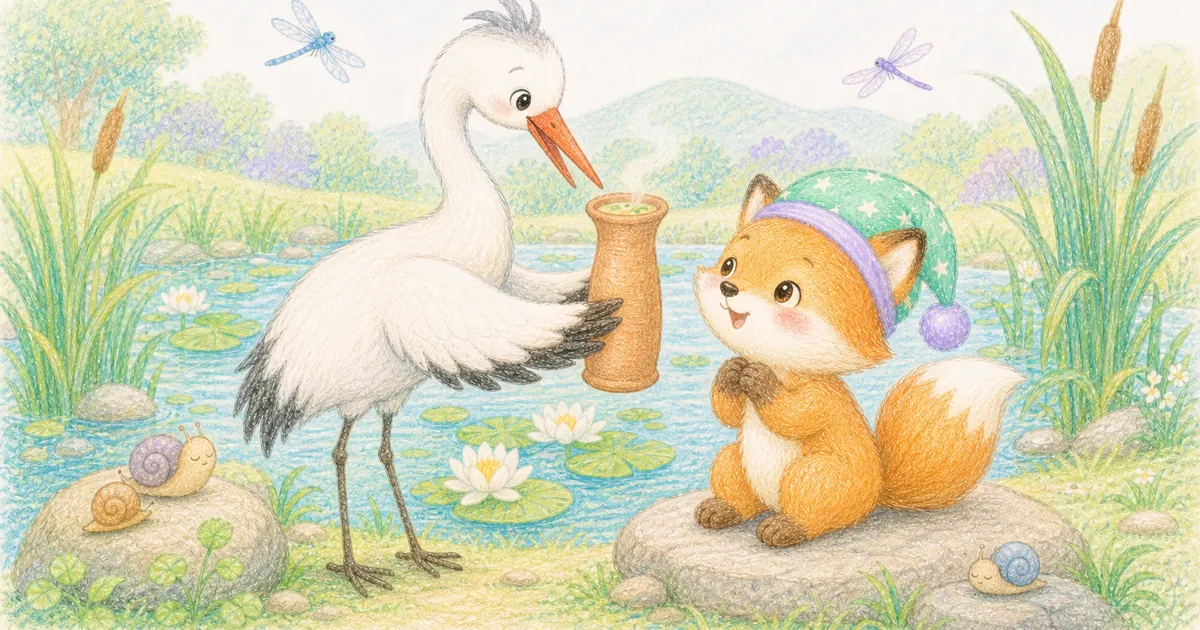
A few afternoons later, the fox arrived at the reed-lined pond as promised. The crane's home stood right at the water's edge, ringed with white water lilies, and a few small snails dozed on the sun-warmed stones nearby. The crane welcomed him warmly and set out a fragrant soup, poured into a tall, narrow jar. "I made a fine soup today too," she said proudly. "Please, help yourself."
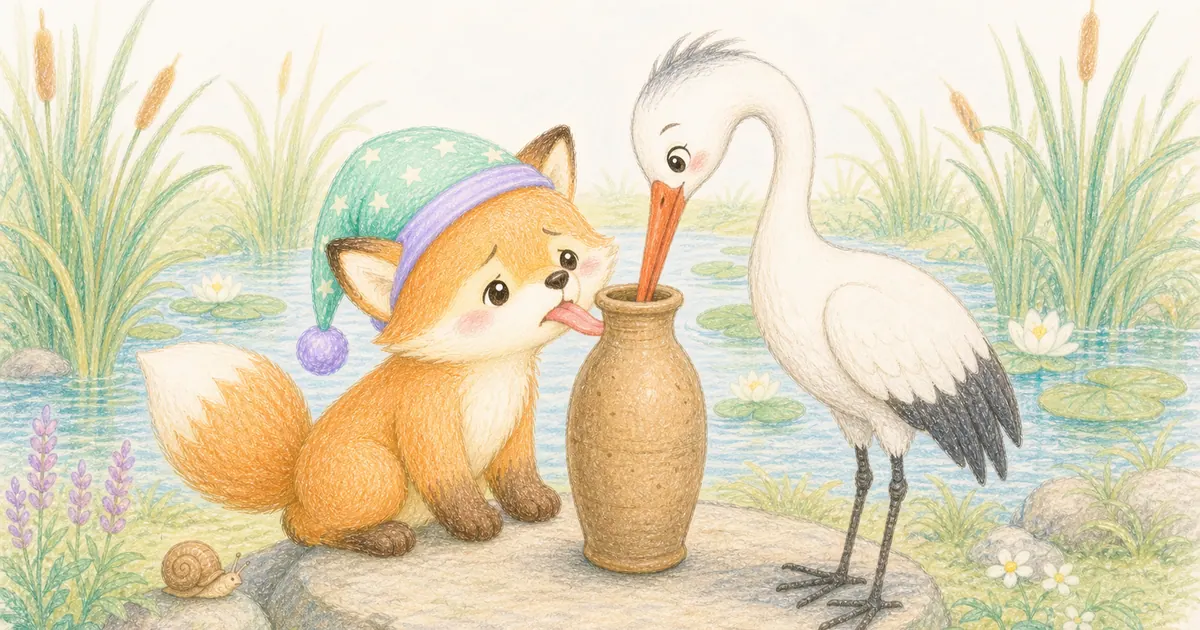
The fox stretched his tongue as far as it would go, but he could not reach the soup inside the narrow jar. He could only sniff at the delicious smell while his stomach growled louder and louder. He pressed his nose to the rim, but his tongue never touched a single drop. The crane, meanwhile, slipped her long bill easily into the jar and ate her fill, calm and content.
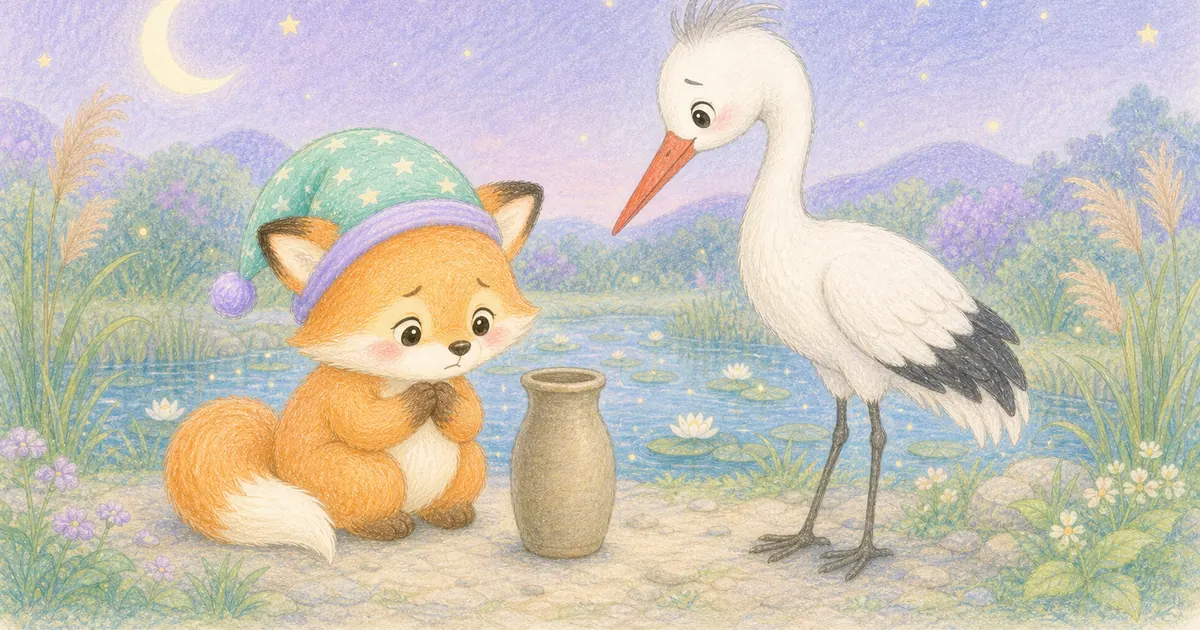
This time it was the fox who sat hungry beside the table. The crane set down the jar and looked at him gently. "When we welcome a friend to eat," she said, "it isn't only whether the food tastes good that matters — it's whether our friend can actually enjoy it." Dusk was settling over the pond, and a thin new moon rose above the water. The fox lowered his head, his cheeks warm with embarrassment, and understood at last: before playing a joke on someone else, it is worth asking how it would feel to be on the other side of it.
Story takeaway
True hospitality, and a fair joke, both consider the other person's feelings — thinking only of yourself catches up with you sooner or later.
 Talk together
If you were planning a game or a snack for a friend, how could you make sure they could really join in and enjoy it too?
 For grown-ups
Parent note
A good story to share when talking about whether a joke considers other people's feelings. The fox tricked the crane, and the crane answered in the very same way — not out of revenge, but to gently help him understand empathy. Talk together about planning games, snacks, or even jokes: how can you make sure everyone involved truly feels included and has fun, instead of only thinking about what's easy for yourself?
 Words to learn
- shallow: wide and low, not deep. e.g. The fox poured the soup into a shallow dish.
- calm and content: relaxed and at ease, with nothing to worry about. e.g. The crane ate calm and content from the tall jar.
- empathy: imagining how someone else feels by thinking from their side. e.g. The fox finally learned empathy and understood how hard that supper had been for the crane.
 Reading activity
Play a quick "is this really thoughtful hosting?" game with your child — read a few setups and see which ones truly consider the guest: "Serving a big plate of snacks, but only the kind you like and your friend doesn't." → Not thoughtful — your friend might not get to eat anything. "Asking your friend what game they'd enjoy before deciding together." → Thoughtful — everyone gets to have fun. "Keeping the best treat for yourself and giving the rest without much thought." → Not thoughtful — that isn't really hosting with care. Finish by wondering together: next time a friend visits, what could you ask them first?
From the same story series
Read next
The Fox and the Grapes
A hungry fox fails to reach ripe grapes and calls them sour rather than admit his disappointment.
Read now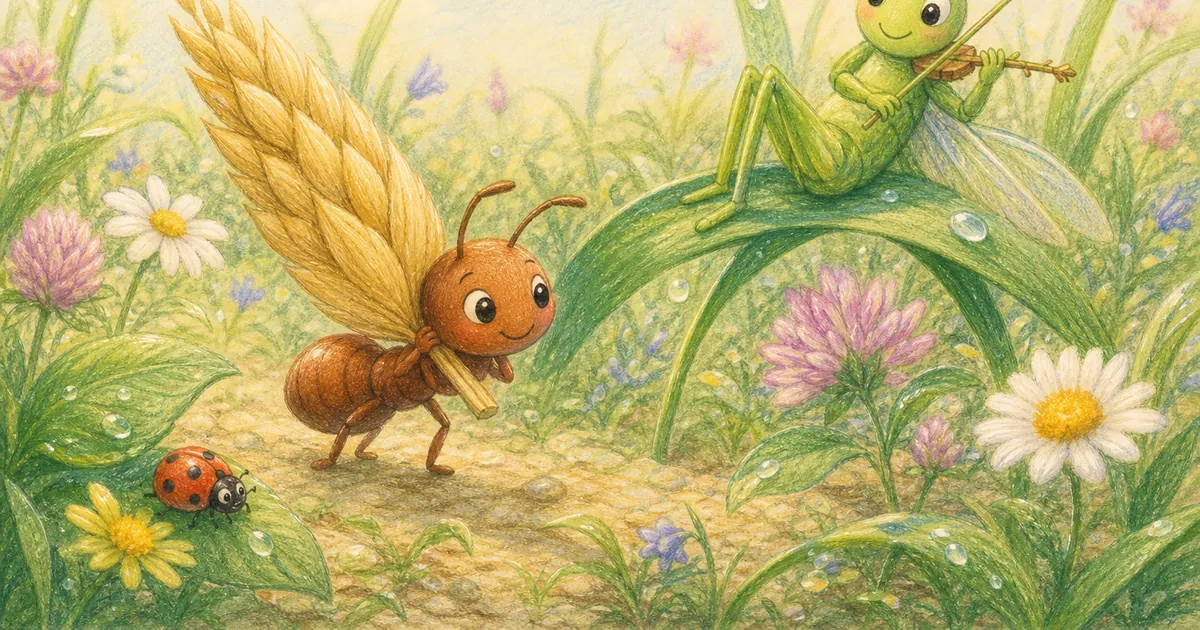
The Ant and the Grasshopper
A grasshopper sings and plays all summer while an ant quietly stores food, and when the snow falls, the grasshopper learns that joy needs a little preparation too.
Read now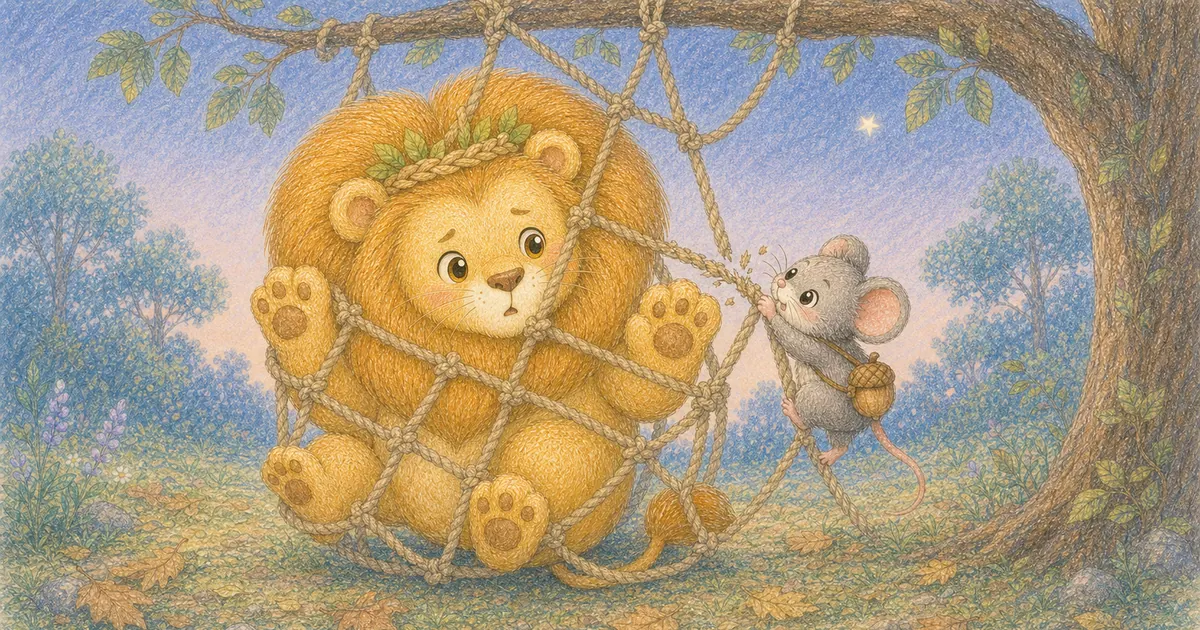
The Lion and the Mouse
A mighty lion spares a little mouse who tumbles onto his nose, and later, caught fast in a hunter's net, learns just how much a small friend can help.
Read now