The Boy Hunting Locusts
捕捉蝗蟲的男孩
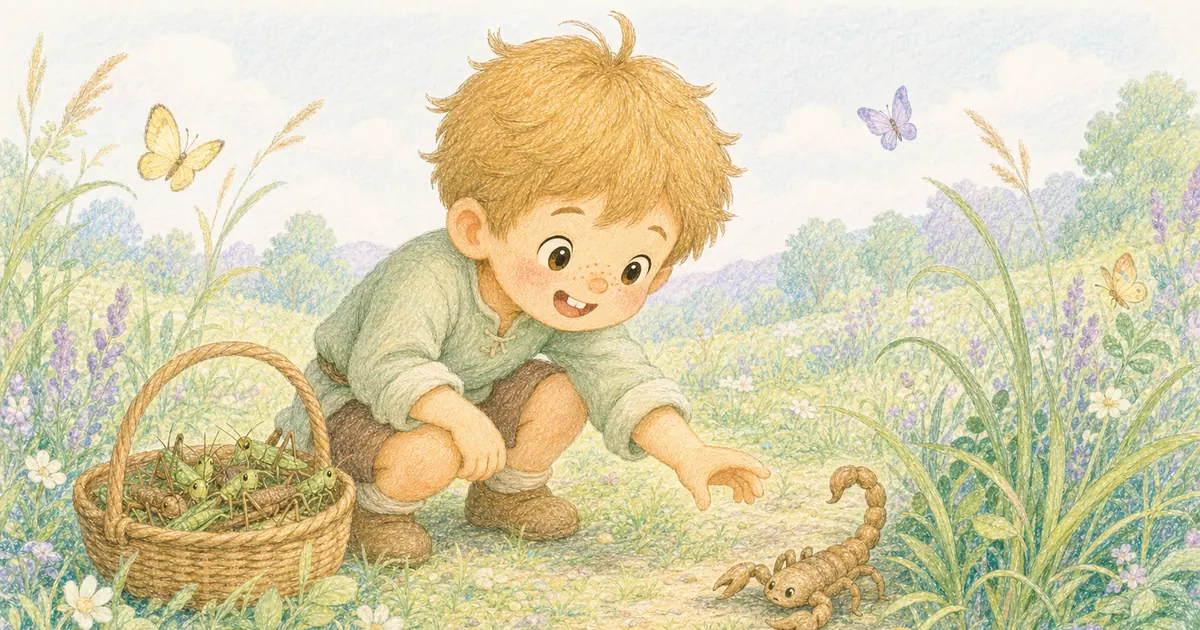
A boy hunting locusts nearly grasps a scorpion and learns that quick hands need careful eyes.
The story
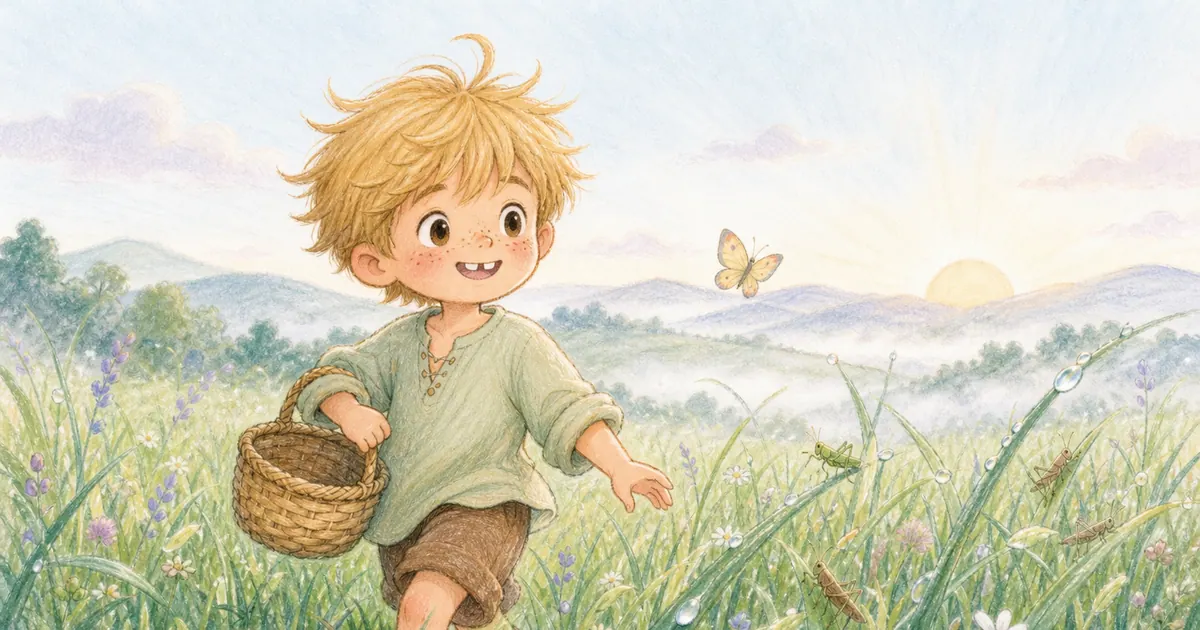
Morning sunlight had just touched the meadow, and dew still sparkled on the tips of the grass. A boy skipped into the tall grass by the field with a small basket on his arm, ready to catch his first locust of the day. The grass grew high and thick, rustling softly whenever the wind passed through.
As the sun climbed higher, locusts sprang up one after another — some green as new leaves, some brown as dry earth. The boy bent low and chased them, until his shoes were dusty and the backs of his hands were lightly scratched by the sharp blades. Each time he caught one, he dropped it carefully into his basket, growing more and more pleased with how quick and sharp his eyes had become.
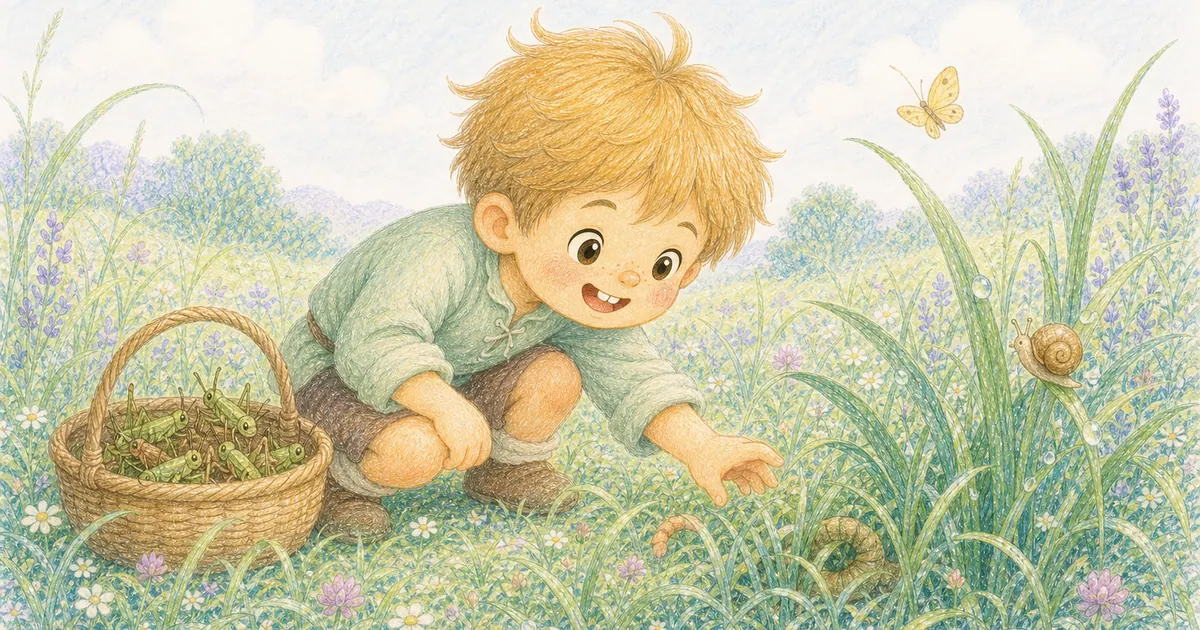
By afternoon his basket already held quite a few locusts, but he wanted just one more, to make the day's catch look even better. Suddenly something moved beside a tuft of grass. He saw only a curved shape and thought it must be an extra-large locust. Delighted, he stretched out his hand to grab it.
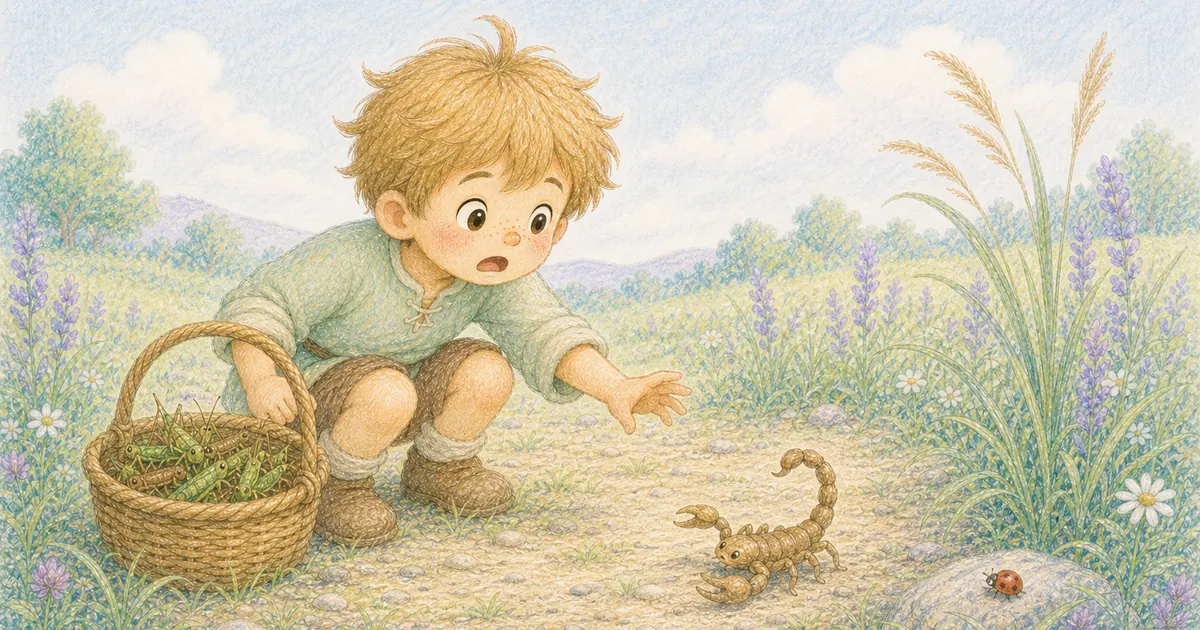
Just before his fingers touched it, the creature spun around and raised a stinging tail high in the air. It was not a locust at all — it was a scorpion! It glared at him and said coldly, "If you touch me, you will not only fail to catch me — you will lose every locust in your basket too, for the pain will make you drop it on the ground."
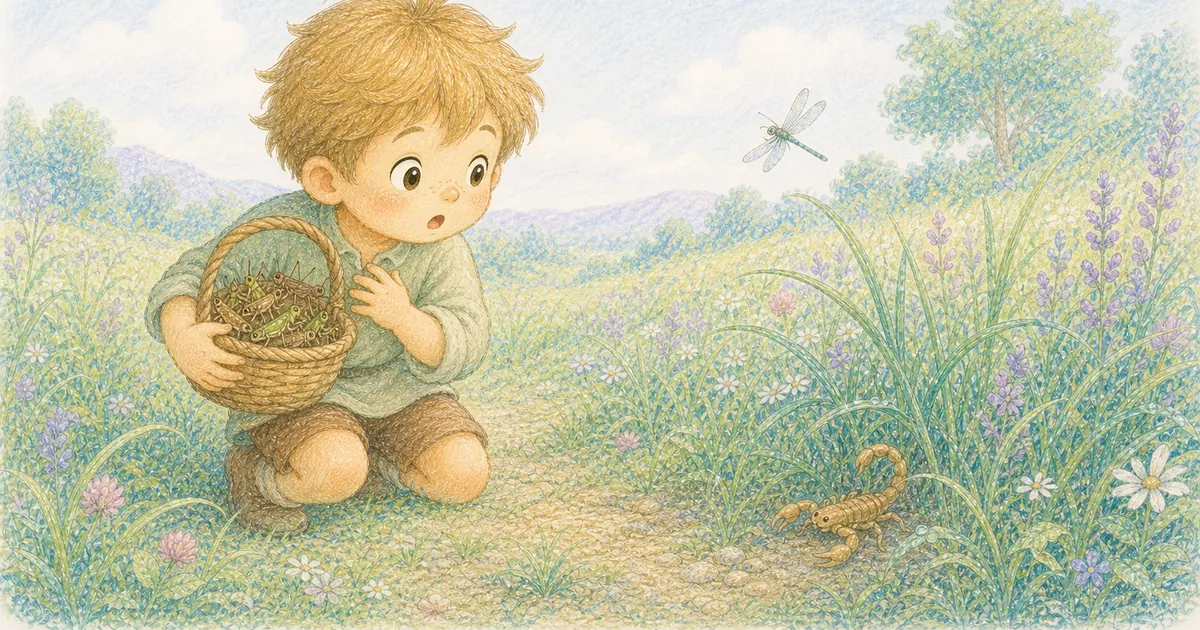
The boy snatched his hand back, his heart pounding like a drum. He stepped back several paces, holding his basket tightly, and looked again at every shadow in the grass. Only then did he realize how close he had come to a very costly mistake.
For the rest of the afternoon, he moved much more slowly. Before reaching for anything, he crouched down to look carefully first, making sure it truly was a locust before coming near. The sun sank lower in the sky, and his basket kept growing fuller.
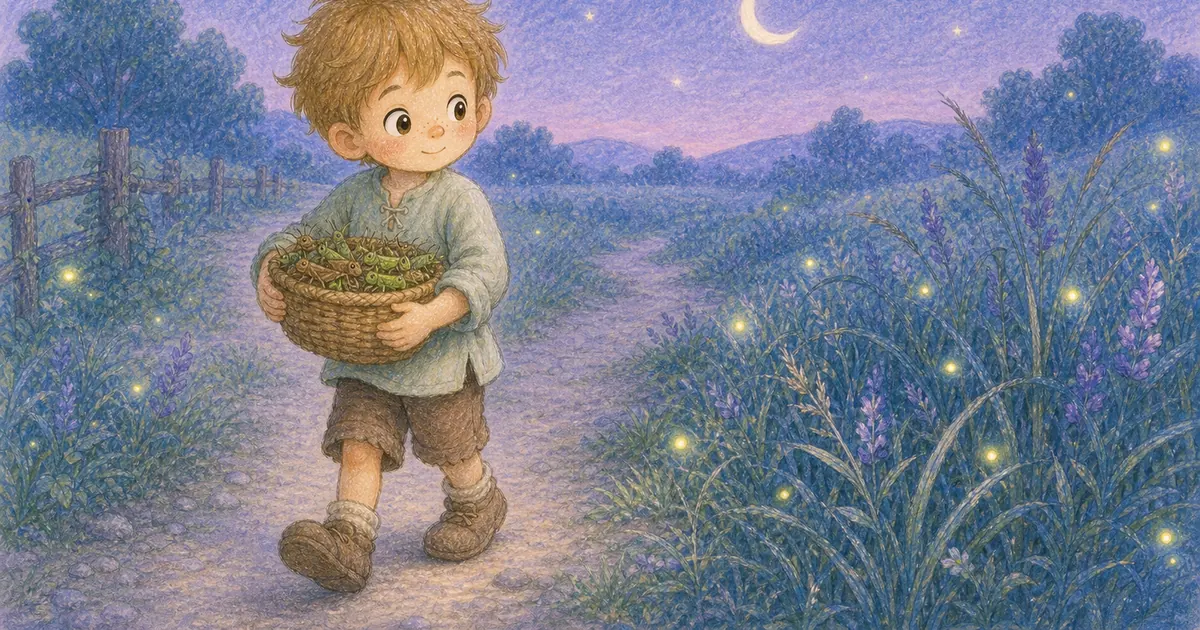
As dusk settled, the boy carried his full basket home along the quiet path, walking slowly. A thin crescent moon rose at the edge of the sky, and fireflies blinked softly among the grass. He came home with a fine catch that day — and with something even more valuable: the habit of pausing to look closely before reaching out.
Story takeaway
A hurried gain may become a greater loss when we act before looking carefully.
 Talk together
What signs could have helped the boy notice that the scorpion was not a locust?
 For grown-ups
Parent note
This story is a good fit for moments when your child rushes to touch or grab something before really looking at it. The boy is so eager to add one more locust to his basket that he nearly grabs a scorpion instead — luckily, its warning makes him pull back in time. Try talking together about times a quick look first would help, like reaching for an unfamiliar animal or object, or blurting out an answer before hearing the whole question. A moment of careful looking can save a much bigger problem later.
 Words to learn
- scorpion: a small creature with a stinging tail that can hurt if it strikes. e.g. A scorpion suddenly appeared in the grass and startled the boy.
- careful: thinking things through before acting, instead of rushing. e.g. After his scare, the boy became much more careful while hunting locusts.
- observe: to look closely at something to understand it. e.g. He stepped back and observed every shadow in the grass again.
 Reading activity
Play a quick "look first" game with your child — describe a few situations and see if they can tell which need a careful look first and which are safe to do right away: "Something furry is moving in the grass." → Look first — it could be a caterpillar or something else. "Your own water bottle is sitting on the table." → Safe to pick it up and drink. "There's a shiny little object on the ground you've never seen before." → Look first, and maybe ask a grown-up what it is. When you're done, wonder together: if the boy in the story had looked just a little closer at the start, what might have happened differently?
From the same story series
Read next
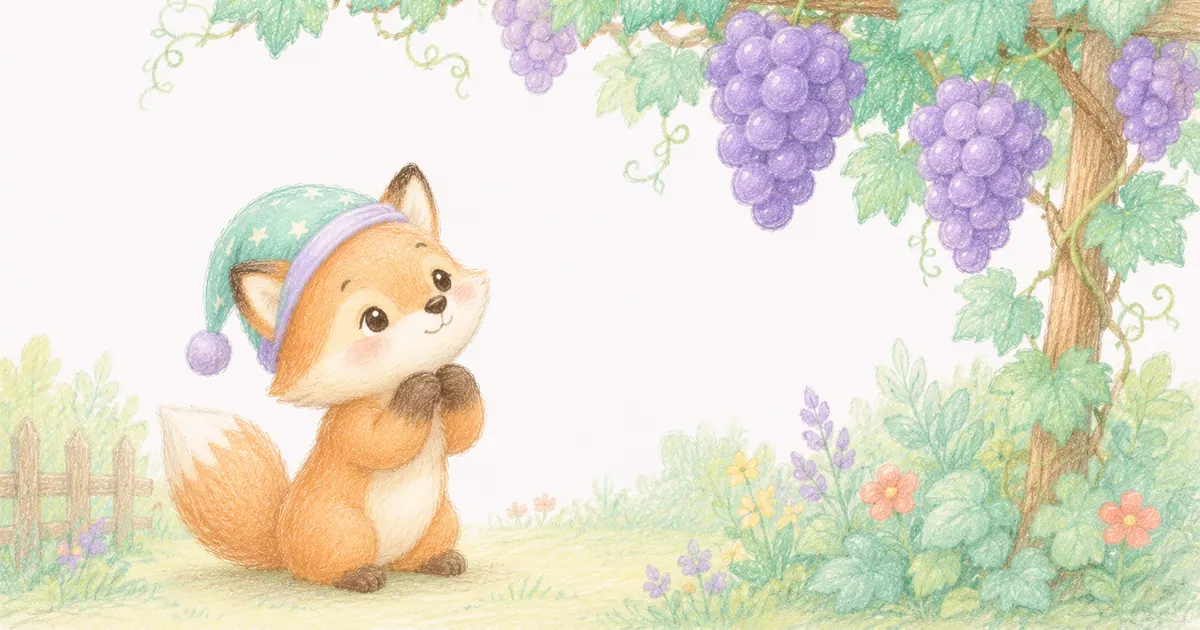
The Fox and the Grapes
A hungry fox fails to reach ripe grapes and calls them sour rather than admit his disappointment.
Read now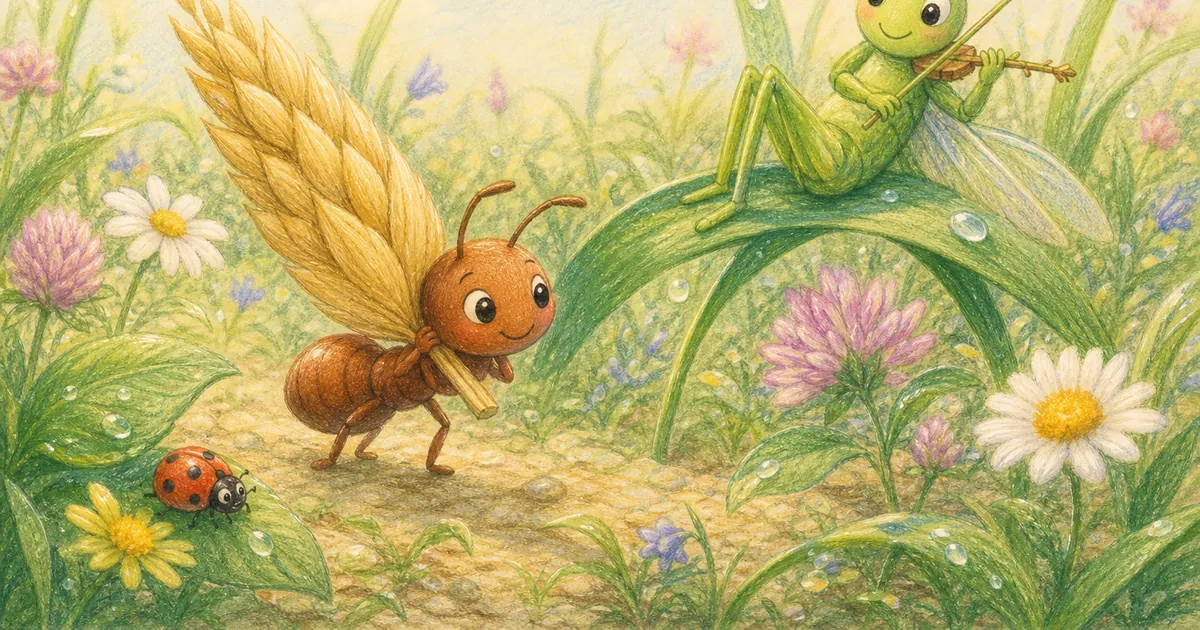
The Ant and the Grasshopper
A grasshopper sings and plays all summer while an ant quietly stores food, and when the snow falls, the grasshopper learns that joy needs a little preparation too.
Read now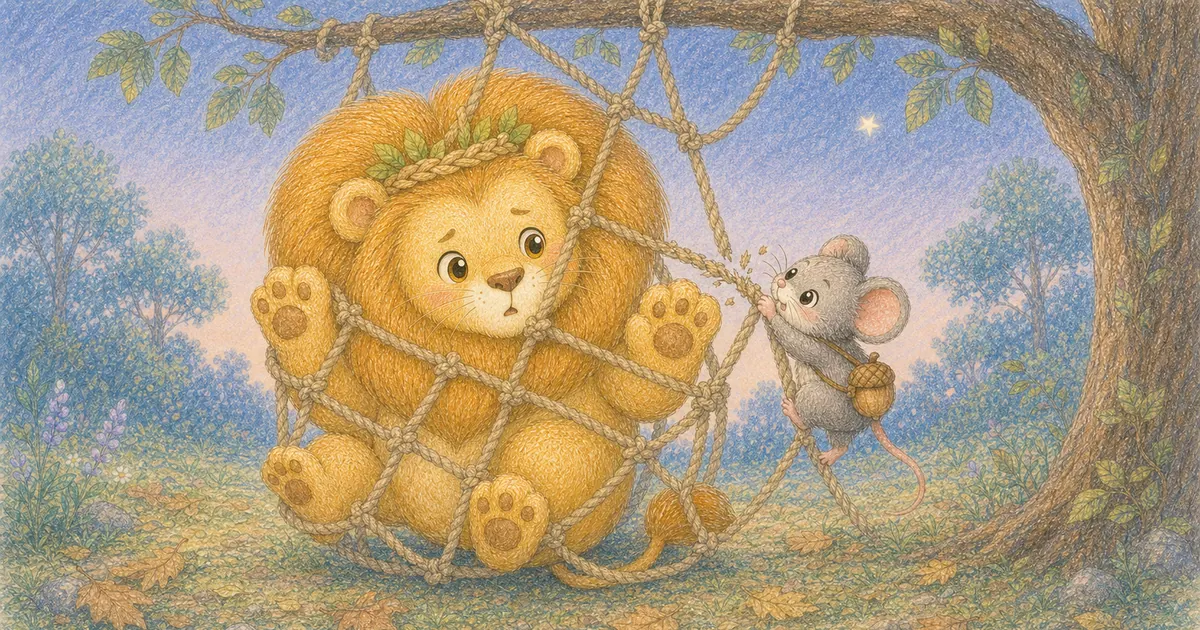
The Lion and the Mouse
A mighty lion spares a little mouse who tumbles onto his nose, and later, caught fast in a hunter's net, learns just how much a small friend can help.
Read now