The Elves and the Shoemaker
小精靈與鞋匠
A poor shoemaker's last piece of leather turns into a perfect pair of shoes overnight, and when he and his wife discover the tiny, ragged elves who have been helping them, they repay the kindness with gifts instead of secrecy.
The story
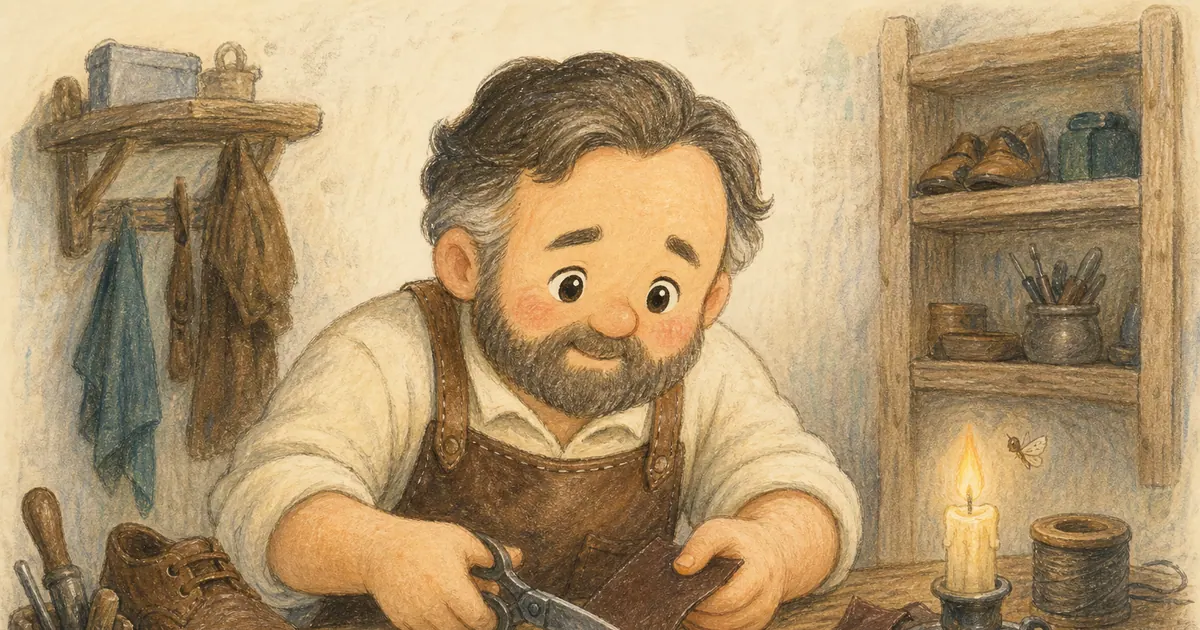
Once, in a small town, there lived a shoemaker. He was skilled and honest, but hard times had worn away nearly everything he owned, until only one piece of leather was left — just enough for a single pair of shoes. One evening he cut it carefully and laid the pieces on his workbench, planning to sew them in the morning, then went to bed with a heavy sigh.
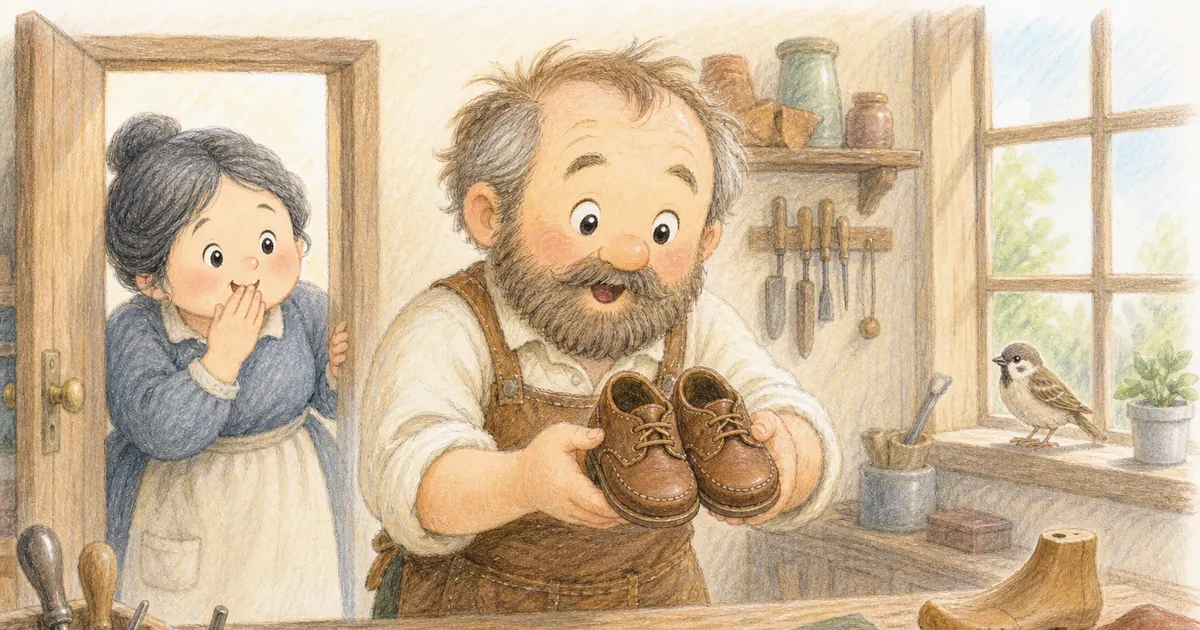
The next morning, the shoemaker rubbed his eyes and stared at his workbench. There, instead of cut leather, stood a finished pair of shoes, stitched so finely that no master craftsman could have done better. Before long a customer came in, admired the shoes at once, and paid a higher price than usual. With that money the shoemaker bought leather for two pairs of shoes.
That night he cut the leather again and left it on the bench, and again the next morning two perfect pairs of shoes were waiting for him. Day after day this went on, and the shoemaker's little shop grew busier and busier. He and his wife grew puzzled — and a little curious — about who could be helping them.
As the year drew toward Christmas, the wife said, "Why don't we stay awake tonight and see who has been so kind to us?" The shoemaker liked the idea. That night they blew out the candle, hid behind a curtain in the corner of the workshop, and waited quietly in the dark.
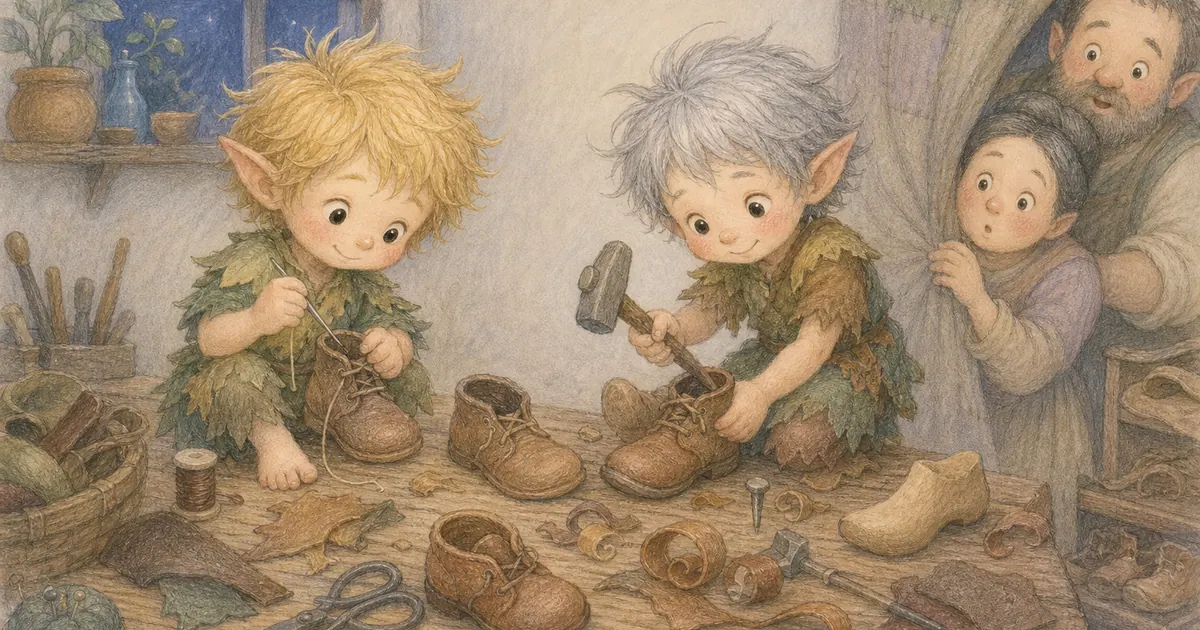
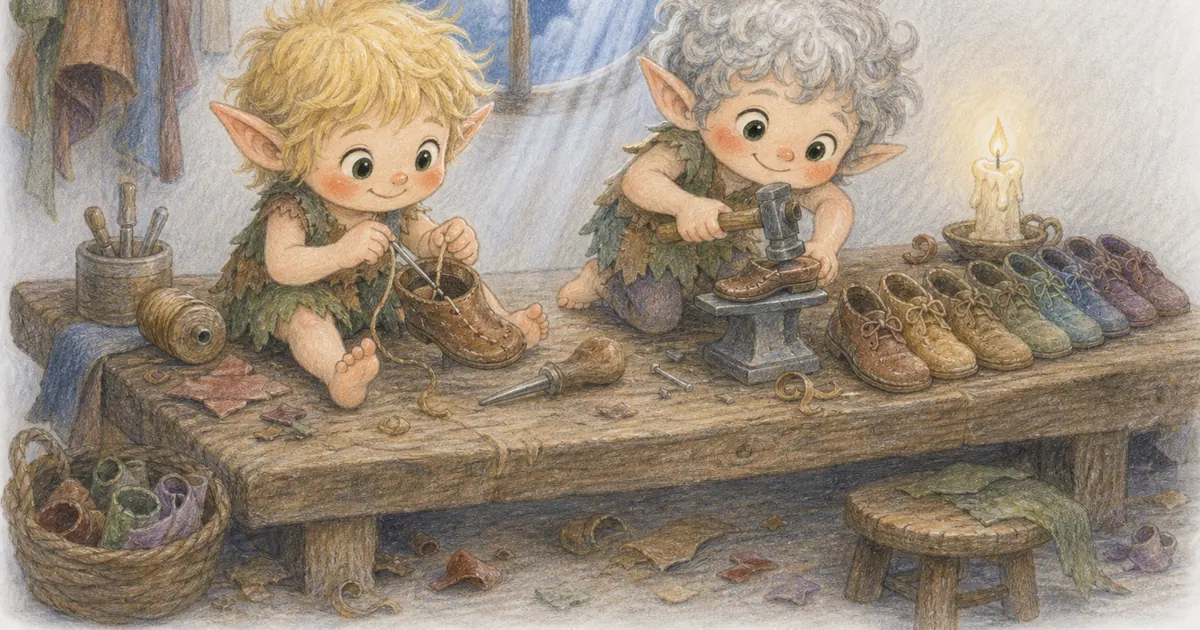
At midnight, two tiny elves came skipping in — one with a mop of straw-yellow hair, the other with curls of silvery grey. Both wore nothing but a few ragged scraps of leaf and cloth stitched crookedly together, and their little feet were bare. They hopped up onto the bench and set to work with needles and tiny hammers almost as big as themselves, stitching and tapping so quickly that the shoemaker and his wife could hardly follow their busy little hands. Before the first light of morning, the shoes stood finished, and the elves had vanished.
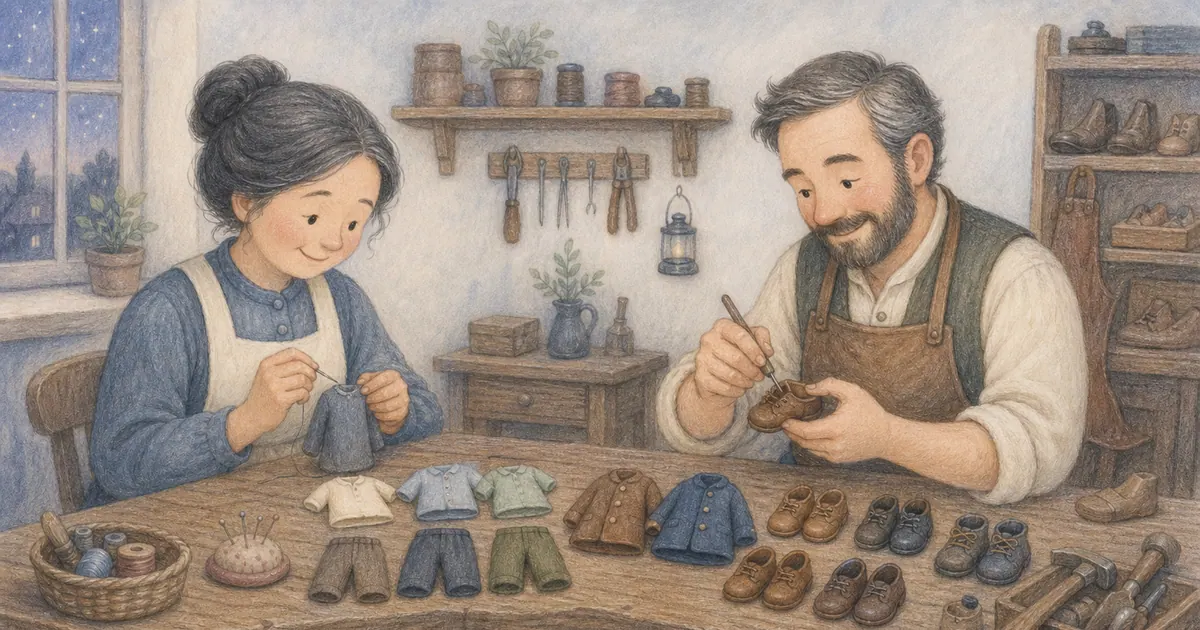
Full of gratitude, the shoemaker's wife said, "They have helped us so much, yet they go about in such thin, ragged little clothes, and the weather grows colder every day. Let me sew each of them a little shirt, a little coat, and a pair of little trousers." The shoemaker agreed at once. "And I will make each of them a tiny pair of shoes," he said. So the two of them worked late into the night, stitching away with as much care as the elves had ever shown them.
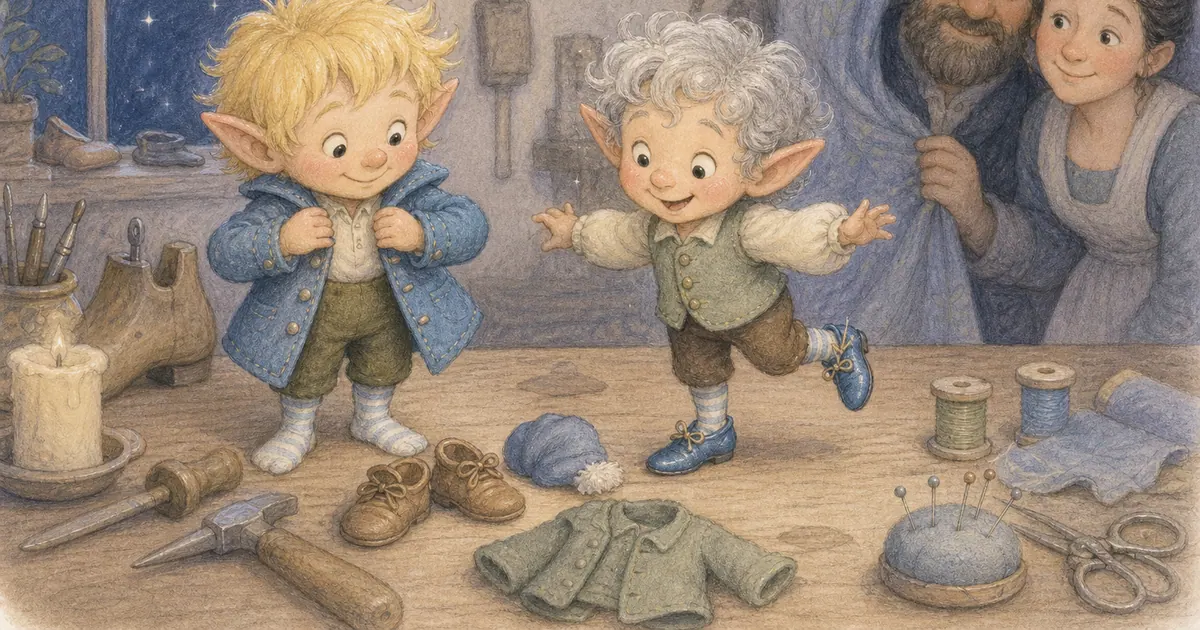
On the evening before Christmas, instead of leaving cut leather on the bench, they laid out the little clothes and the little shoes, then hid behind the curtain just as before. At midnight the two elves came skipping in again — and stopped short when they saw the gifts waiting for them. For a moment they simply stared, and then they laughed and clapped with delight. They pulled on their new shirts and coats and trousers, tugged on their tiny new shoes, and grinned at each other from ear to ear. Then, hand in hand, they danced merrily across the workbench and out through the door, vanishing into the night — and they never came back again.
The shoemaker and his wife never saw the little elves again, but from that night on, everything went well for them. Whenever they passed the workbench in the evening, they remembered the two happy little elves dancing away in their new clothes, and their hearts felt warm all over again.
Story takeaway
A kindness quietly done deserves a kindness quietly returned — gratitude often speaks best through thoughtful action.
 Talk together
If someone helped you secretly without asking for anything back, how would you like to thank them?
 For grown-ups
Parent note
This story is good for talking about "unseen help" and showing thanks. The shoemaker and his wife didn't try to keep the elves working for them forever — instead, they noticed what the elves truly needed and made thoughtful gifts instead. Talk with your child about someone who has quietly helped them, and think together about how to say thank you through a kind action, not just words.
 Words to learn
- leather: animal skin used to make shoes, bags, and other goods. e.g. The shoemaker cut his last piece of leather.
- elf: a tiny, magical creature in stories who often helps in secret. e.g. Two little elves finished the shoes overnight.
- grateful: feeling thankful for someone's kindness. e.g. The shoemaker and his wife were grateful for the elves' help.
 Reading activity
Play a little game called "how would you say thanks" — read a few situations aloud and think together about a kind way to respond: "A classmate lends you a pencil so you can finish your test." → Say thank you, and lend something back next time. "Your parents cook dinner for you every day." → Help clear the table and tell them you appreciate it. "A friend keeps a small secret for you." → Give them a little card to say thanks. At the end, think together: how did the shoemaker and his wife thank the elves?
From the same story series
Read next
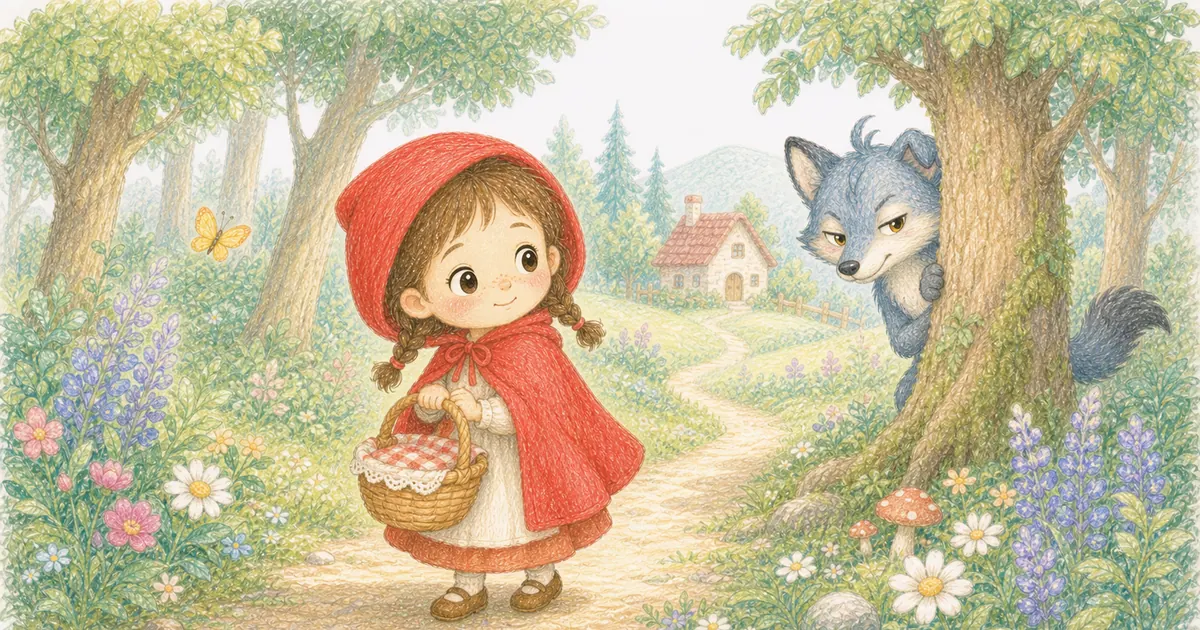
Little Red Riding Hood
Little Red Riding Hood meets a sly wolf in the woods and is nearly tricked, until she calls for help and a kind huntsman arrives just in time to save her and her grandmother.
Read now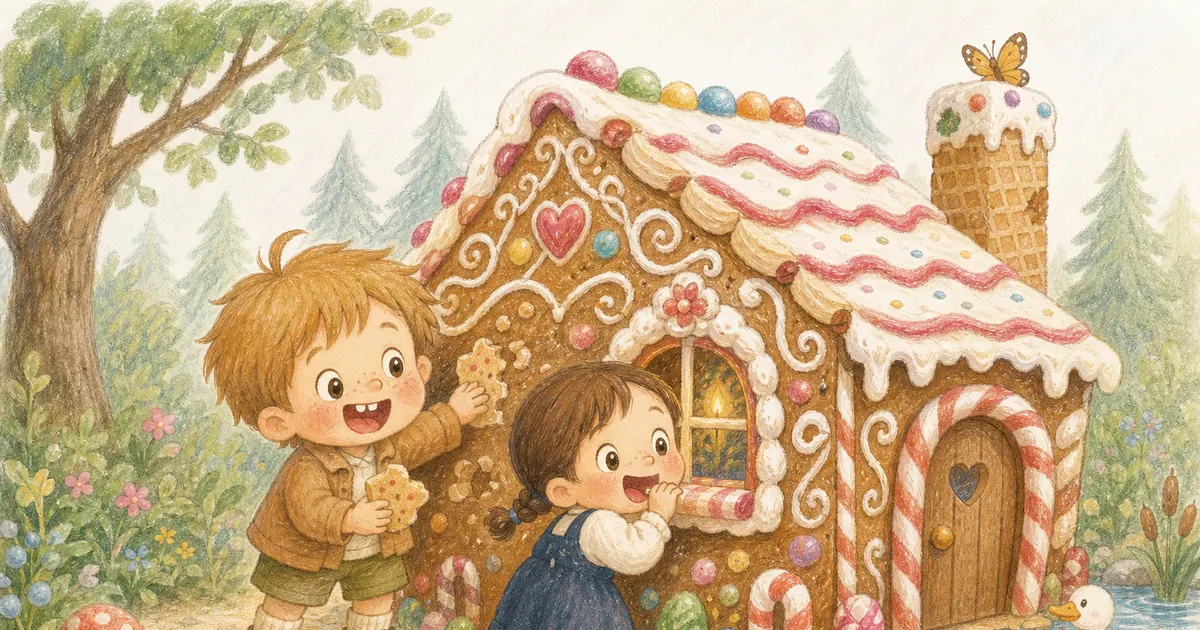
Hansel and Gretel
Lost in a dark forest and trapped by a witch, Hansel and Gretel find their way home through careful thinking, quick courage, and care for each other.
Read now