
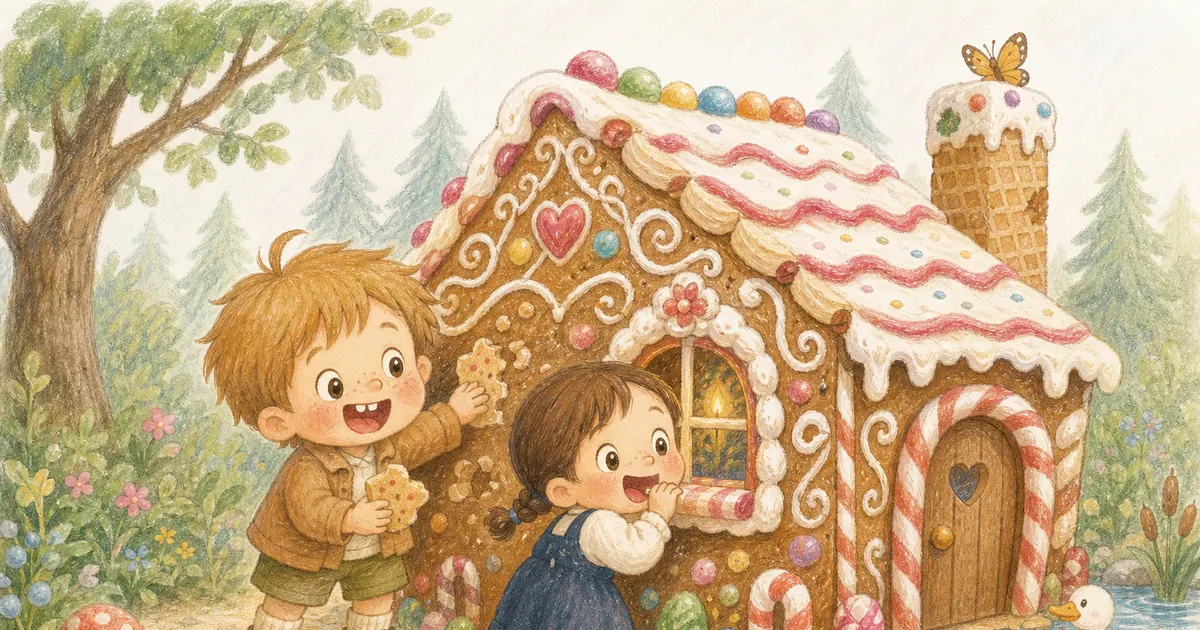
Hansel and Gretel
糖果屋
Lost in a dark forest and trapped by a witch, Hansel and Gretel find their way home through careful thinking, quick courage, and care for each other.
The story
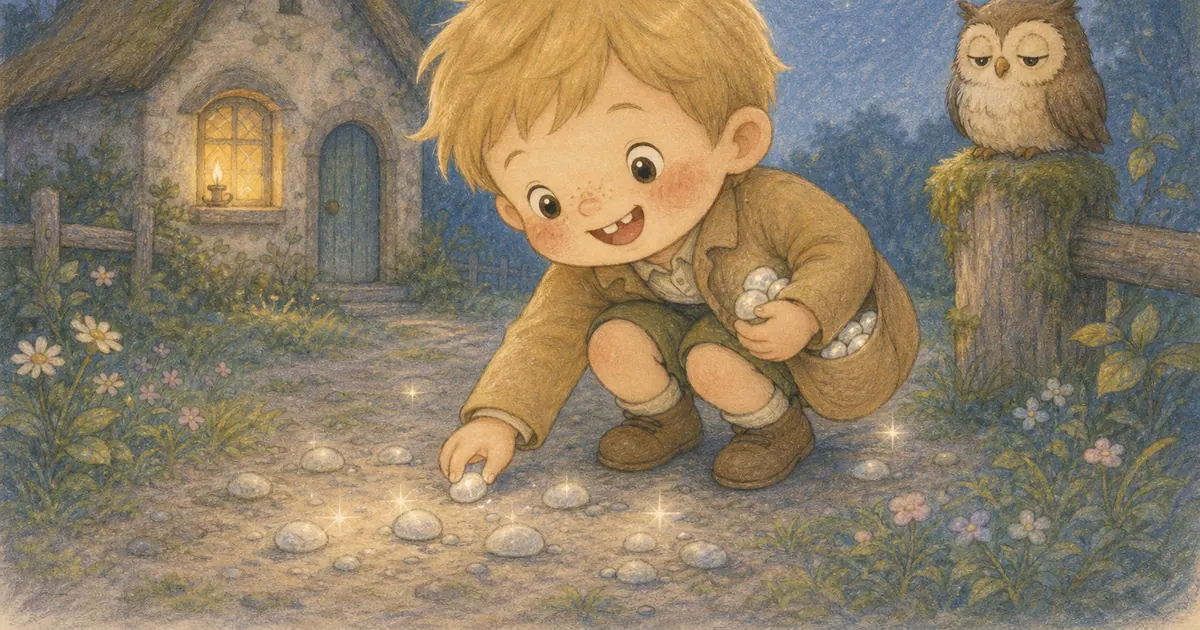
Once upon a time, at the edge of a great forest, a poor woodcutter lived with his two children — his son Hansel and his daughter Gretel. Food grew scarce, and when Hansel overheard a plan to lead them deep into the woods and leave them, he waited until all was quiet, then crept outside. Under the moonlight he filled his pockets with small white pebbles that shone like stars, and tiptoed back to bed.
The next morning their father led them far into the trees, lit a small fire, and quietly walked away. Evening fell, and Gretel began to cry. "Don't be afraid," Hansel whispered. "When the moon rises, the pebbles will show us the way." And so they did — every stone gleaming in the moonlight, leading the children safely home.
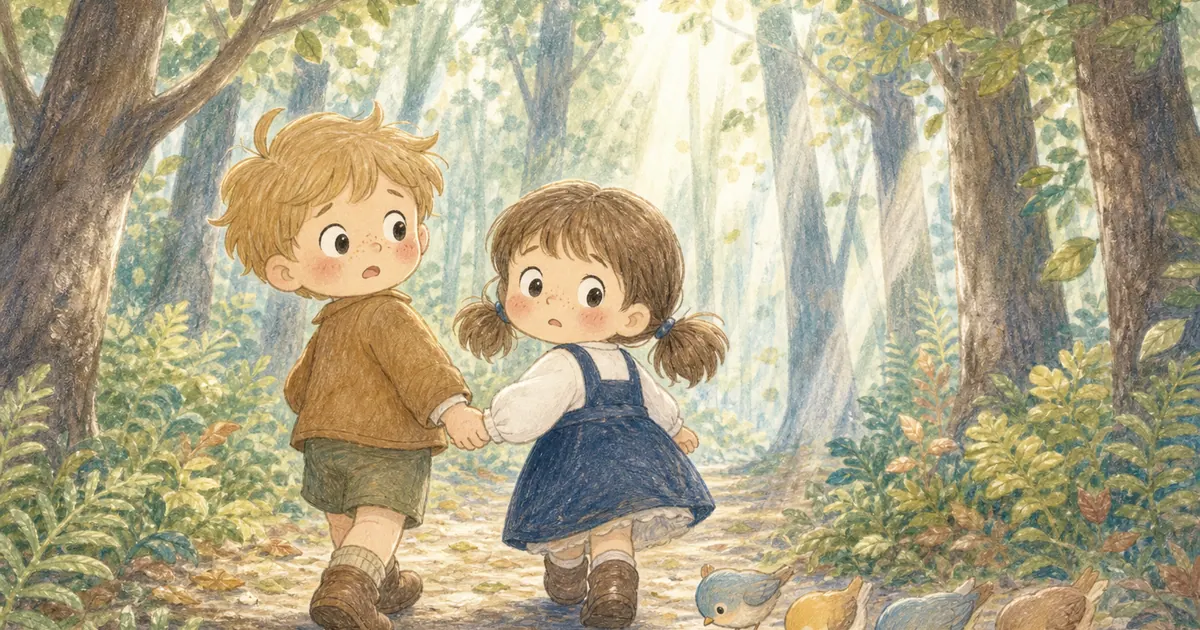
Their father hugged them tight, but the second time they were taken into the forest, the pockets were locked and Hansel could only scatter crumbs of bread along the path. The birds of the forest, knowing nothing of sorrow or plans, had pecked up every crumb before dark. Hansel and Gretel walked on and on, deeper and deeper, until their feet ached and their stomachs were empty, and they did not know which way was home.
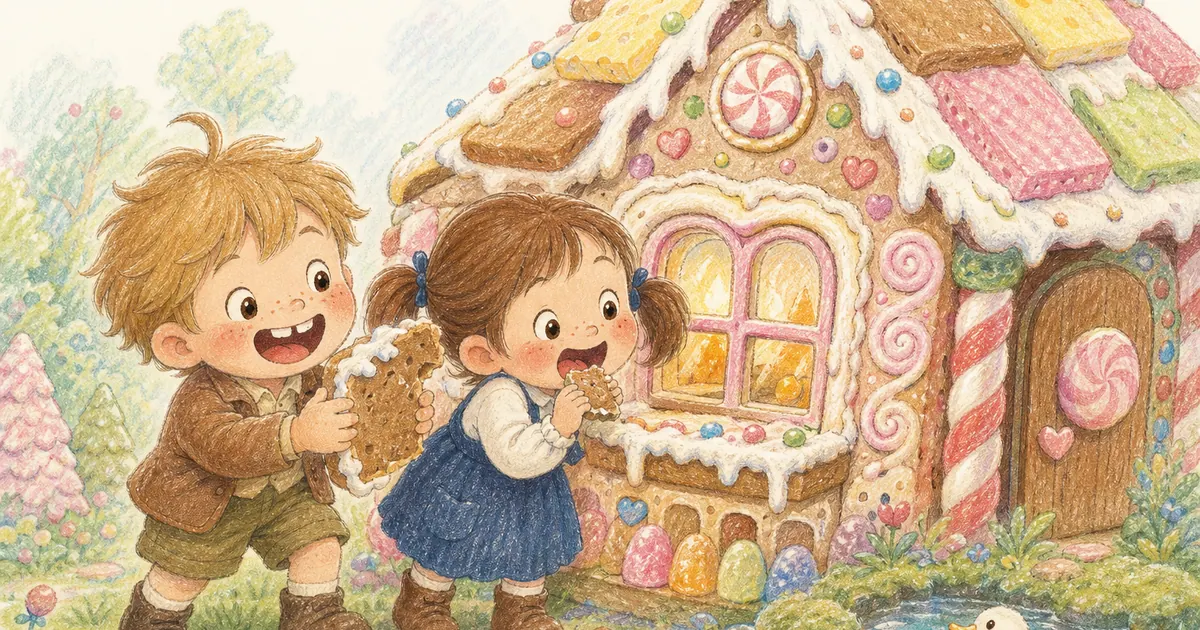
After a long and hungry day, a sweet smell drifted through the trees. There stood a little cottage unlike any they had seen: gingerbread walls swirled with icing, a cake-slab roof, windows clear as spun sugar, and a chimney of candy. The children nibbled in wonder — Hansel broke off a piece of the wall, Gretel nibbled the window ledge — too tired and hungry to stop.
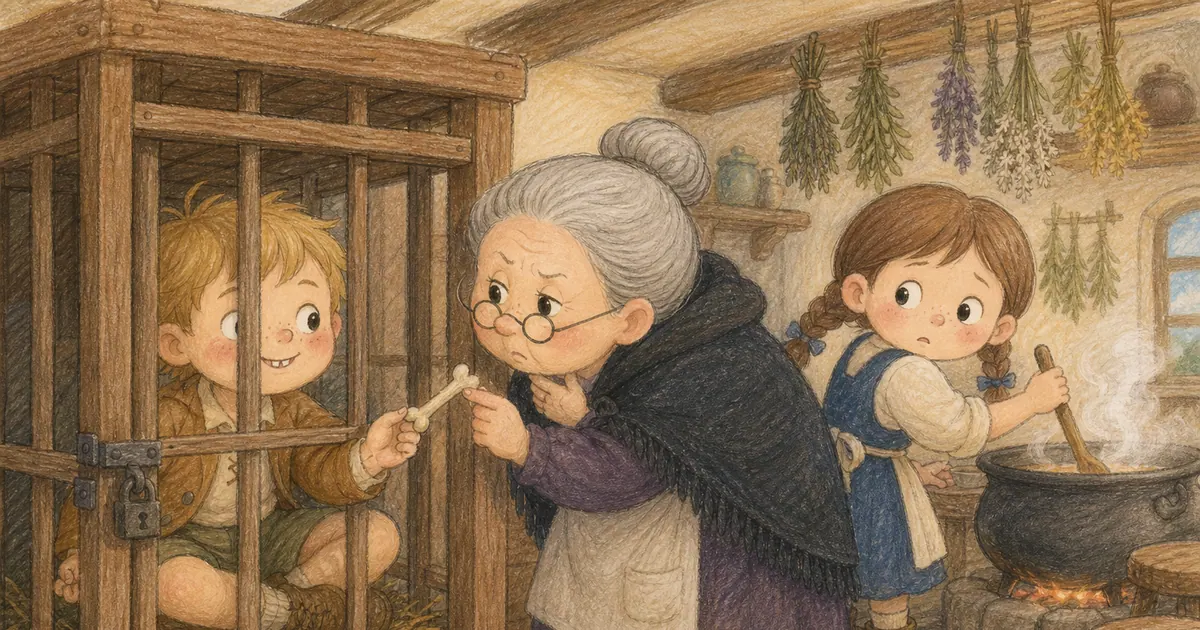
Then the door opened and an old woman came out, grey-bunned and round-spectacled, her voice as sweet as honey. She welcomed them inside, fed them and tucked them in. But in the morning Hansel found himself locked inside a sturdy wooden cage. The old woman was a witch with poor eyesight and a fine nose for plump little children. She kept Hansel well-fed and told Gretel to cook, then came to the cage each day to feel Hansel's finger and check if he was fat enough yet. Hansel always pushed out a small bone, and the witch, puzzled, thought he was still too thin.
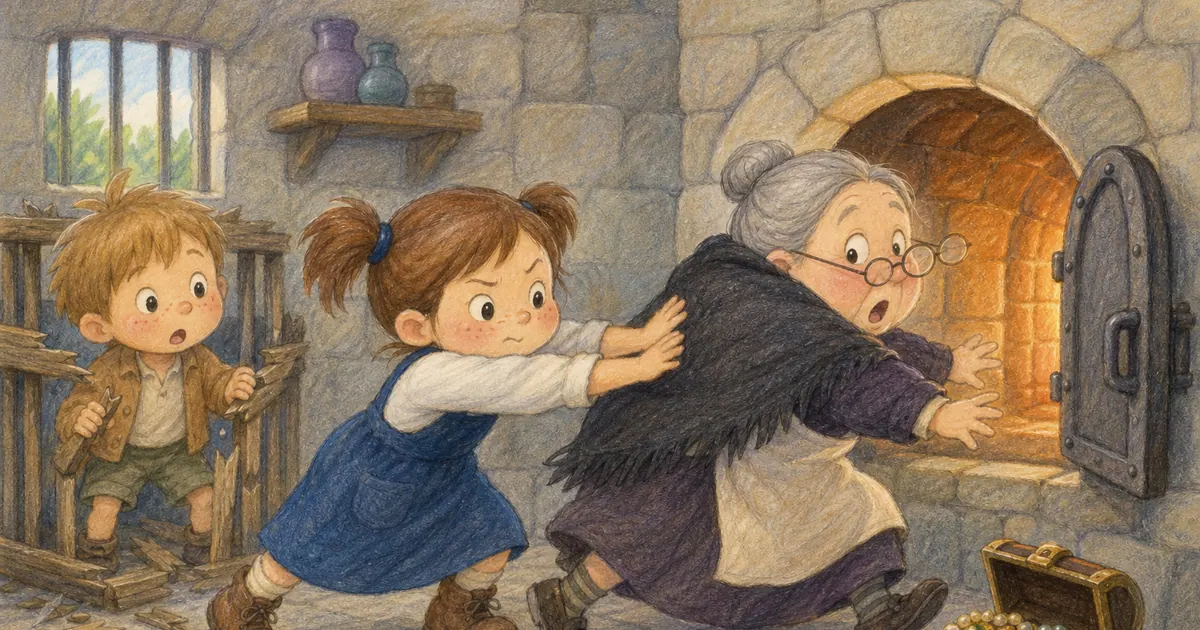
At last the witch's patience ran out. She fired up the great oven and ordered Gretel to check if it was hot enough. Gretel's heart hammered, but she said calmly, "I've never looked inside an oven — could you show me how?" As the witch bent forward to peer in, Gretel gave her one firm push, shut the oven door with a bang, and ran to break open her brother's cage. Hansel leapt out and held his sister tight. Together they found a chest of pearls and jewels in the house, filled their pockets, and walked away into the forest without looking back.
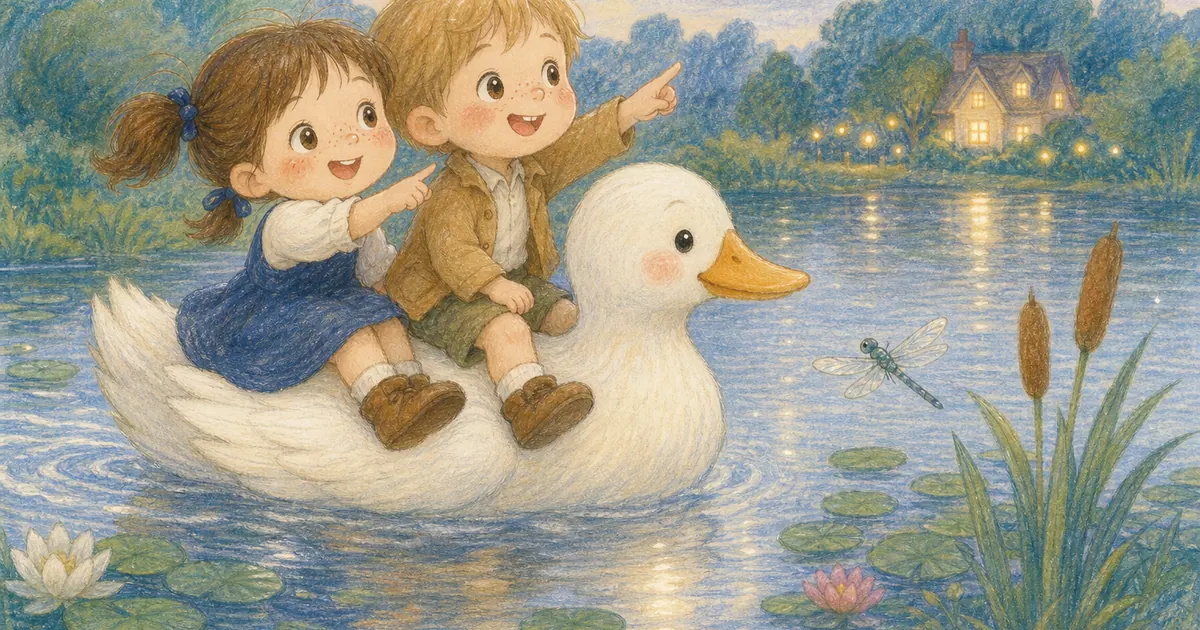
A wide stretch of water barred their way. There was no bridge and no boat — only a white duck gliding across the still surface. Gretel asked softly, and the duck carried her to the far bank, then returned for Hansel. The water sparkled as they crossed, the trees thinned, and soon they caught sight of their own roof. Their father threw open the door and held them close, eyes bright with tears. The stepmother had gone. The children tipped out the jewels, and the little room was filled with light. From that day on, they were never hungry again.
Story takeaway
Courage is not the absence of fear; it is the careful thinking and faithful love that help us act even while we are afraid.
 Talk together
Think of a moment when Gretel was frightened but kept watching and thinking. Have you ever needed to stay calm first before you could figure out what to do?
 For grown-ups
Parent note
This is a wonderful story to share when your child needs reassurance that clear thinking matters as much as bravery. Hansel plans ahead with his pebbles; Gretel watches, waits, and acts at exactly the right moment — two kinds of cleverness working together. Ask your child: "What was Hansel's cleverest idea? What about Gretel's?" This helps children see that helping can look different — sometimes it's foresight, sometimes it's patience and a well-timed action. The story also shows, gently, that even when grown-ups make mistakes, children can still find their way through by looking after each other.
 Words to learn
- breadcrumbs: very small pieces left over from bread. e.g. Hansel dropped breadcrumbs along the path, hoping to mark the way home.
- cage: an enclosure with bars used to keep someone inside. e.g. The witch locked Hansel in a cage so he couldn't run away.
- flaw: a weak spot or gap that gives someone an opening. e.g. Gretel spotted the witch's flaw and used it at just the right moment to set her brother free.
 Reading activity
Play "What would you do?" with your child — describe a tricky moment from the story and see what idea they come up with before you reveal what Hansel or Gretel actually did: "Your pockets are locked and you can't bring pebbles — how will you leave a trail?" → Hansel's answer: scatter breadcrumbs from his bread along the way. "You're at a wide river with no bridge and no boat — how do you cross?" → Gretel's answer: ask the white duck nearby for help. "The witch tells you to check the oven — but you don't want to go near it — what do you do?" → Gretel's answer: pretend not to understand, and ask the witch to show you instead. After each one, see if your child's idea matches the story — then wonder together whether there might be other clever ways too!
From the same story series
Read next
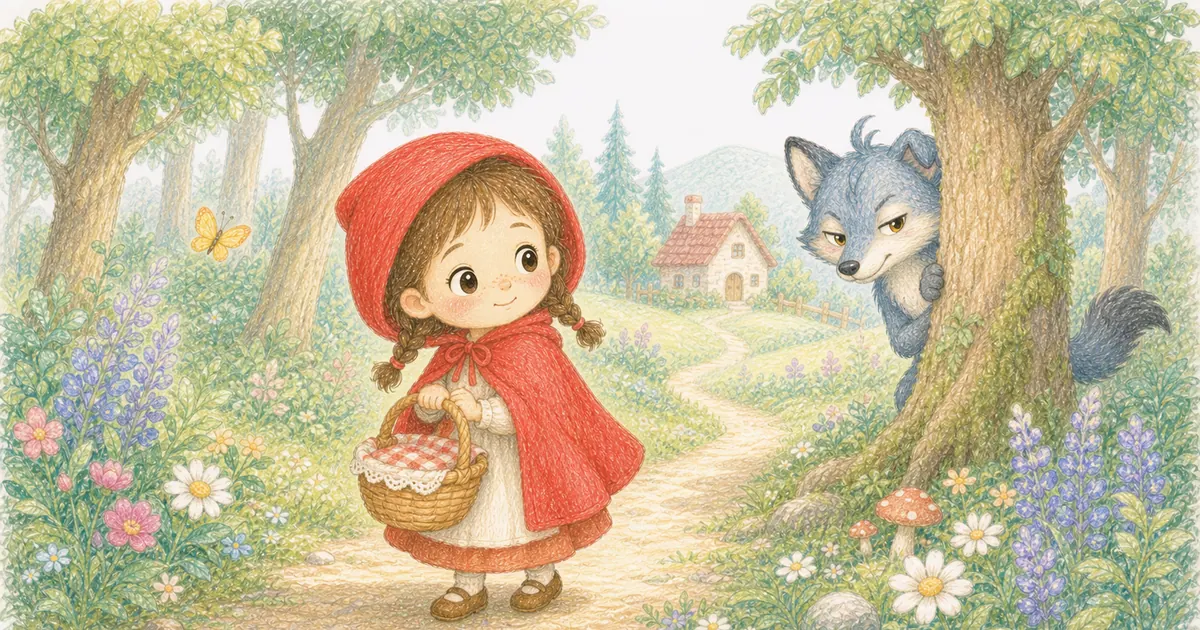
Little Red Riding Hood
Little Red Riding Hood meets a sly wolf in the woods and is nearly tricked, until she calls for help and a kind huntsman arrives just in time to save her and her grandmother.
Read now
Snow White
The kind and lovely Snow White is envied by the queen and tricked into a deep sleep by a poisoned apple, until the seven little friends and a prince help her wake again.
Read now